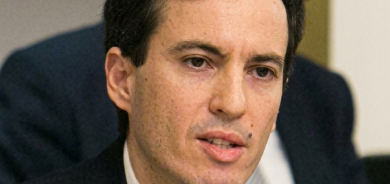
Ambassador Jeffrey D. Feltman to Gulan: A Sovereign State Should Be at the Table, Not Merely on the Menu

Jeffrey Feltman is a senior fellow at the United Nations Foundation and a visiting fellow at the Brookings Institution. He was U.S. Special Envoy for the Horn of Africa from 2021 until 2022. From 2012 until 2018, Ambassador Feltman was U.N. Under-Secretary-General for Political Affairs. Previously, he was a U.S. diplomat. From 2009 until 2012, Ambassador Feltman was the Assistant Secretary of State for Near Eastern Affairs. Prior to his 2004-2008 tenure as U.S. Ambassador to Lebanon, he served in Erbil, Baghdad, Jerusalem, Tel Aviv, Tunis, Amman, Budapest, and Port-au-Prince.
The Situation in Lebanon and the Future of Hezbollah’s Armed Forces
Gulan: You served as the United States Ambassador to Lebanon from 2004 to 2008 and witnessed the country’s complex political and security dynamics firsthand. Given Lebanon’s current financial and political crises, what kind of future do you foresee for the country? Is there a risk of the complete collapse of the Lebanese state?
Ambassador Jeffrey D. Feltman: While I don’t want to downplay the challenges, I see many encouraging signs about Lebanon’s future. The president, prime minister, and government appear to be serious in reversing decades of state neglect and abdication of responsibility. From persistent electricity shortages to control of key infrastructure such as Beirut’s airport and much more, Lebanese authorities are, at last, starting to take charge. Lebanon and Syria are developing constructive state-to-state relations, based not on one country dominating the other but on the basis of sovereign equality. Turkey [Turkiye – whatever you use in your publication], the United States, the Gulf States, and others are committed to helping Lebanon. I have many objections to parts of President Trump’s foreign policies, but I think his personal engagement on the Lebanon file is extremely important.
But of course, these positive developments do not cancel out the intertwined, serious issues of Hezbollah’s weapons and the Israeli occupation of southern Lebanon. It seems as though a growing number of Lebanese recognize that Hezbollah’s arms create the very dangers that Hezbollah claims its weapons will deter. Hezbollah actions invite Israeli attacks rather than protect Lebanon, and Hezbollah’s Shia constituency, given the physical location of Shia towns and villages, suffer disproportionately as a result. As long as Hezbollah has the physical ability to take Lebanon to war without any reference to Lebanon’s constitutional bodies or popular opinion, Lebanon will not be fully sovereign, and we should expect that Israeli aggression in the name of Israeli self-defense will continue. If there is a complete collapse of the Lebanese state, as your questions suggests might happen, it would derive from the combination of Hezbollah’s weapons and Israel’s occupation. But I don’t foresee such a collapse, as no Lebanese party has indicated an interesting in toppling the government or re-igniting civil war.
I can’t predict how the current U.S.-sponsored Israel-Lebanon direct talks will evolve, and I’m very aware of the history (May 1983, for example). Israel’s ongoing scorched-earth destruction of villages, agricultural lands, and infrastructure runs counter to the atmosphere a successful pilot zone initiative should create. For its part, Hezbollah, under closer IRGC control, remains defiant and rejects calls to disarm.
There is no quick or easy solution. But I commend the courage and vision of President Joseph Aoun and Prime Minister Salam for recognizing that a sovereign state should be at the table, not merely on the menu. I have been a diplomat for both the United States and the United Nations, and I know that refusing to talk to one’s adversaries is a path that leads nowhere. Successive Lebanese governments have sat in Beirut, essentially ignoring or at times even facilitating, an Iranian-Syrian-Hezbollah hegemony over questions of war and peace that should have been in Lebanon’s hands. Now, the Lebanese are pushing back, with the intention of Lebanon being under neither Iranian nor Israeli hegemony – nor Syrian occupation.
Gulan: Amid growing domestic and international pressure, what future do you foresee for Hezbollah’s armed forces in Lebanon? Do you believe there is still an opportunity to implement international resolutions, particularly UN Security Council Resolution 1701, and bring the weapons of non-state armed groups under state control?
Ambassador Jeffrey D. Feltman: When I analyze Hezbollah, I think the organization because such a strong “state within a state” via five important factors. Three of these factors are no longer in place:
- First, Hassan Nasrallah, Hezbollah’s Secretary-General killed by the Israelis in 2024, was uniquely qualified as a charismatic, inspiring leader – something I hate to admit but that is true. It’s difficult to imagine Hezbollah’s growth without him. Naim Qassim, the current Hezbollah leader, is a mere shadow of Nasrallah and does not command the same loyalty and devotion.
- Second, Syria, under the Assad regime, provided facilities and support to Hezbollah and served as a land bridge for Iran to smuggle weapons, fighters, and money to Hezbollah. Now you have an interim government in Damascus dominated by leaders who fought and who loathe Hezbollah.
- Third, governments in Lebanon were either unwilling or unable to push back against Hezbollah (and sometimes even aided and abetted Hezbollah). An exception, of course, was when the Siniora government in May 2008 tried to disrupt Hezbollah’s illegal telecommunications networks: Hezbollah resorted to violence. As I noted above, the current president and government are at last talking candidly about the risks Hezbollah’s arms create and are trying to do something about that.
- The fourth factor, however, is still in place: Iran’s commitment to the crown jewel of its Axis of Resistance, the most successful export of Iran’s revolution. For Iran, the loss of Syria and its own financial crisis may complicate the logistics of supporting Hezbollah. But I have no doubt that the Islamic Republic is committed to maintaining Hezbollah. Lebanon, the United States, Syria, and others have to continue to find ways to disrupt Iran’s support to Hezbollah.
- And the last of what I see as the five factors behind Hezbollah’s strength is perhaps the most important: Hezbollah’s roots in the Shia population of Lebanon. Hezbollah moved into a vacuum where the Lebanese state should have been. While of course I’m generalizing, Lebanon’s Shia population was viewed with contempt by the other Lebanese. Shia villages suffered from state neglect, then PLO predations and Israeli counterattacks, and then a prolonged Israeli occupation. Hezbollah could say to the Shia, “no one is protecting you. We can provide you jobs, security, dignity, and political power.” That had to be appealing to many beleaguered Lebanese Shia.
And this is where the Lebanese state needs to come in: to show that the state can provide the services, jobs, dignity, and political representation in better ways than Hezbollah can do. I recognize that corruption is endemic, that Lebanon’s state institutions lack credibility across the country. But trying to disarm Hezbollah through exclusively military means (whether Israeli, Lebanese, or other) will not work. In addition to military pressure, one needs to erode the popular support that, in Lebanon’s sectarian system, essentially protects Hezbollah. One needs to use credible government services and presence to attract the popular base away from Hezbollah, to isolate the problem of the arms and make it easier to resolve.
Back in 2006, however well-intentioned, the government of Lebanon failed to move as quickly as Hezbollah in providing compensation and reconstruction to those affected by that summer’s war. Hezbollah’s finances are less secure now, and Iran’s ability to support Hezbollah is more complicated today. So the government needs to be able to show all the Lebanese, but especially those considered part of Hezbollah’s base, that it can deliver.
Iraq, U.S. Strikes, and Regional Positions on the Popular Mobilization Forces
Gulan: The United States has repeatedly carried out strikes against positions belonging to the Popular Mobilization Forces in Iraq in response to drone and missile attacks. To what extent have these strikes helped preserve the balance of power, or have they instead pushed the situation toward further escalation?
Ambassador Jeffrey D. Feltman: Prime Minister Ali al-Zaidi has set an ambitious goal of having all the Iranian-backed militias disarmed and their arsenals under government control by September 30. The militias will claim that U.S. strikes mean that they cannot disarm, lest they be entirely at the mercy of the U.S. military. I am skeptical that all the militias would have complied with the September 30 deadline in any case, so I’m not sure the current dynamic changes the balance of power inside Iraq. While the PMF problem is big one for the government, Prime Minister al-Zaidi also has to manage the implications of a fiscal crisis: essential oil revenues have plummeted, with the closure of Hormuz.
Gulan: How do you assess the positions of regional countries, particularly Saudi Arabia, toward the current role of the Popular Mobilization Forces within Iraq’s political and security landscape? Is there any coordination between Riyadh and Washington aimed at limiting the influence of these groups?
Ambassador Jeffrey D. Feltman: In April, May, and June, I participated in several informal dialogues held in Europe with officials and think tank representatives from Arab states, western states, and Iran – these are dialogues known as “track 2” or “track 1.5,” to distinguish them from official talks, considered “track 1.” I was struck by the depth of the anger that Gulf representatives expressed to Iraqi participants about the PMF attacks on Gulf states. One official warned an Iraqi official that Iraq risks being viewed as an “enemy country” if the government does not take control and prevent these attacks. While this particular conversation was Arab-to-Arab, I couldn’t help but think of Israeli officials demanding Lebanese officials prevent Hezbollah attacks on Israel.
The late July strikes by the United States and Iraq against the PMF is surely only the tip of the iceberg of a lot of conversations and coordination about how to retaliate against PMF attacks on U.S. interests and allies. I know Prime Minister al-Zaidi cancelled his planned trip to Saudi Arabia as a result of the Saudi-U.S. attacks. But surely he recognizes that these Iranian-aligned militias pose a dangerous risk for Iraq, too – as more than 1,000 PMF strikes against Iraqi Kurdistan demonstrate.
Relations Between the United States and Iraq
Gulan: The current Iraqi government, led by Prime Minister Ali Falih al-Zaidi, is seeking to maintain a balance in its relations with Washington and Tehran. In your view, how successful has al-Zaidi been in maintaining this balance?
Ambassador Jeffrey D. Feltman: I would consider the Prime Minister’s Washington visit to be a success. Iraq concluded additional trade and investment deals with American companies, and his discussions with President Trump and other officials have been described as positive and constructive. The trip deepened the political and economic relationship with the United States, balancing the importance of the security relationship in advance of the September 30 deadline for U.S. troop withdrawal. And immediately after the Washington trip, Prime Minister al-Zaidi traveled to Tehran. If media reports are accurate that he carried U.S. proposals to Tehran, that indicates to me that Washington has confidence that al-Zaidi can indeed maintain credibility with both capitals.
Gulan: What future do you foresee for the Strategic Framework Agreement between the United States and Iraq? Do you expect the nature of the U.S. military presence in Iraq to undergo fundamental changes in the near future?
Ambassador Jeffrey D. Feltman: There’s a bit of schizophrenia here: both the United States and Iraq, for different reasons, want to see a tangible change in the U.S. military footprint in Iraq, yet both countries also want to see some U.S. military support and capacities continue beyond the September 30 troop withdrawal deadline. Over the past two decades, we have seen the U.S. military posture, presence, and mandate in Iraq evolve continually. The fundamental principle under the Strategic Framework Agreement is that Iraq is a sovereign country responsible for its own defense. In that context, the military partnership with the United States will continue to evolve both because of military objectives and national politics in both countries. But I expect other elements of the relationship, such as commercial ties, will rise relative to the security partnership.
Iran–U.S. Tensions, the Strait of Hormuz, and Gulf Security
Gulan: The Strait of Hormuz is one of the world’s most important maritime routes for global energy supplies. In the event of intensified sanctions or a direct confrontation, how likely is Iran to close the strait? If it attempted to do so, what form might a U.S. military response take?
Ambassador Jeffrey D. Feltman: We are discussing this issue as negotiations between Iran and Oman – and indirectly with the United States and others – continue. From what I understand from the media (and I don’t have access to inside sources), it appears that. If an agreement is reached, it will cover Hormuz transit for a limited time, perhaps 60 days, while longer-term arrangements are worked out. Whatever the short-term arrangements, I do not envision that the pre-war status quo ante will be restored over the long term. Iran is not going to give up new leverage, nor will any of us forget that Iran can easily disrupt transit again: a few drones, a few threats, and shipping insurance rates become prohibitively expensive.
In terms of U.S. military action, I wonder if President Trump is as committed as his predecessors to protecting freedom of navigation globally. Without question, he wants the Strait of Hormuz opened. But when he talks loosely about having countries pay for U.S. military escorts through Hormuz or even flirts with the idea of the United States collecting a portion of fees, shared with Iran and Oman, he is shifting the U.S. position away from the principle of freedom of navigation.
I think it’s a fool’s errand to predict what President Trump will do, should the Iranians persist in keeping Hormuz closed. We’ve heard his threats of military escalation and then seen him back down, repeatedly. While he may act out of frustration, surely he realizes by now that the U.S. ability to destroy things does not cancel out the Islamic Republic’s political resilience. And I doubt the Iranians will give President Trump something tangible – universal free passage through Hormuz, say – in return for ephemeral American promises that can be broken or discarded. Thus, given the lack of trust, I wouldn’t be surprised if, at some point, we have a quid pro quo on Hormuz that includes something on lifting sanctions or releasing frozen funds. Something tangible for each side.
Gulan: How do the Gulf states, particularly Saudi Arabia and the United Arab Emirates, view regional security amid the threats posed by Iran? Do you believe these countries remain as dependent as before on the U.S. security umbrella, or are they moving toward diversifying their international partnerships?
Ambassador Jeffrey D. Feltman: In the short term, the Gulf states have no other choice than to continue to rely on the United States for military support – with the exception of Israel’s support to the UAE, there really is no alternative at a strategic level. China does not appear to be interested in replacing a U.S. security umbrella. The recent Saudi-Turkish-Pakistani mutual defense understanding is interesting, given complementary strengths of the three, but that is not going to replace the United States. I would anticipate further “hedging” – attempts to build other security relationships – but as additional to, rather than instead of, the security partnership with the United States.
But, simultaneously, the Gulf states will also try to develop a new modus operandi with Iran, recognizing that geography requires co-existence. Outreach between Tehran and Gulf capitals already seems to be well underway.
So, on training, technology, weapons, etc., the United States will remain the Gulf states’ primary partner for the foreseeable future. A more interesting debate will be the fate of the U.S. military bases in the region. There’s long been a desire in U.S. foreign policy circles to “shift to Asia” by reducing out footprint in the Middle East. The U.S. military bases attracted Iranian attacks on Gulf states, and the bases themselves were in some cases seriously damaged. Will each of these bases be rebuilt? Will a combination of U.S. fatigue and Gulf fears of future vulnerabilities lead to a change in the actual U.S. military presence in the region? Let’s see what happens.
Gulan: As a veteran diplomat who also served at the United Nations as Under-Secretary-General for Political Affairs, what do you believe is the most appropriate diplomatic approach to de-escalating the multiple, interconnected crises that continue to destabilize the Middle East?
Ambassador Jeffrey D. Feltman: First, on an urgent basis, we have to make sure that the Ukrainian-Russian war and the Iranian/Middle East war do not somehow morph together. I may personally cheer that Ukraine can take out an Iranian ship ferrying weapons to the Russians. But a merger of these two conflicts is an alarming prospect we must prevent from materializing, lest we start getting terribly close to World War III.
Second, there needs to be an understanding between Iran and the United States that ends the current conflict by addressing short-term needs to create space for the longer-term negotiations. The Islamabad Memorandum of Understanding was poorly drafted, but the idea was sound: something to stop the immediate fighting to pave the way for comprehensive talks. If such a short-term agreement could be reached, presumably, in addition to the opening of Hormuz, the Houthis would cease their threats to blockade the Red Sea.
Third, an acceleration of the “pilot zone” initiative in Lebanon, to undercut the Iranian and Hezbollah argument that “talking to the enemy” does not produce positive results for the Lebanese.
Fourth – and this is something we have not discussed but it is important from humanitarian, security, human rights, and political angles – progress vis-à-vis the Palestinians. At a minimum, the United States must use its leverage to get the Israelis to crack down immediately on settler violence in the West Bank and increase humanitarian supplies to Gaza, while we wait for the results of Israel’s October 27 elections for broader initiatives.
But over the longer term, I very much like the idea that has been floated around by a number of experts, governments, and think tanks, that the region needs a broader conversation about security and peaceful co-existence. The example that is often cited is the 1975 Helsinki process that evolved into the CSCE and (still existing) OSCE, Organization for Security and Cooperation in Europe. This brought Western and Eastern countries, including the United States and the Soviet Union, together, for face-to-face talks, at the height of the Cold War, to ease tensions and promote cooperation across deep political divides. A fundamental element of the Helsinki Accords was inclusivity: no European country, whether allied with Washington or within the Soviet bloc, was excluded (although Albania and Andorra chose not to participate), and the United States and Canada were also signatories.
If the Soviets and Americans and their various friends and clients could grapple with tough issues collectively, why not the countries of the Middle East? The problem, it seems, is that the inclusivity factor that made the Helsinki Process a success seems to be overlooked by those advocating this approach for the Middle East. Some countries insist on security arrangements for everyone except Iran. Others insist on excluding Israel. Iran would surely demand exclusion of the United States, while others would make their own participation contingent on U.S. participation. For this to be a serious exercise, all the regional countries, including Turkey and Israel, should be there. The crisis of the current war creates an opportunity for such an initiative. But I fear this opportunity will be lost.
By Kobin Ferhad