
Professor Jonathan Hearn to Gulan: “Playing a Long Game” Is the Wisest Strategy for Stateless Nationalism
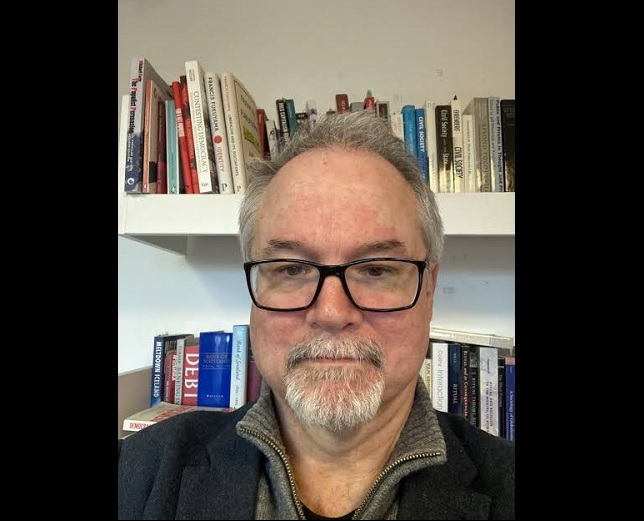
Professor Jonathan Hearn is Professor of Political and Historical Sociology at the University of Edinburgh and a leading scholar of nationalism, national identity, social power, and liberal society. His influential works include Rethinking Nationalism, Theorizing Power, and The Domestication of Competition. Combining historical sociology with ethnographic research, his scholarship offers important insights into the development of nationalism, civic identity, authority, and long-term social change.
Theme One: The Cultural Roots of Nationalism and Kurdish Nationalism
Gulan: Based on your research on nationalism, to what extent do cultural and historical roots play a decisive role in shaping national identity? Kurdish nationalism possesses deep cultural roots but has faced significant geographical and political barriers. How can the Kurdish model be understood from this perspective?
Professor Jonathan Hearn: All nation states and nationalist projects inherit a range of cultural and historical materials with which they work, from which they select some elements and reject others. At the same time nationalism by definition is generally oriented to some notion of sovereignty and self-governance of the group. What emerges in each case is some combination of this pre-existing cultural-historical identity, and an innovative reconstruction of that in the pursuit or maintenance modern statehood. Within each movement, for some the heritage matters more, and for others it is the present political project. And this ratio of emphasis can vary between different movements as well. I am not an expert on Kurdish nationalism, but I know the region of Kurdistan is ethnically, linguistically and religiously complex. As a stateless nation distributed across several existing states, the challenges to political unification are considerable. I would say the more the nationalist project can align itself with liberal, democratic and pluralist values the better, in terms of its external reputation, and ability to build internal social cohesion. But there are no guarantees of statehood for nationalist projects.
Gulan: In your book Rethinking Nationalism, you examine nationalism from several different perspectives. In your view, what is the fundamental difference between nationalism that emerges through organic cultural development, as in the Kurdish case, and nationalism that is constructed and imposed upon society through the institutions of a modern state?
Professor Jonathan Hearn: To some degree I have answered this question in my previous answer. The two types indicated, ‘organic’ and ‘constructed’, are not pure types. Nationalism always involves a mixture of both these principles. It is easy when one lacks a state, to fall back on the organic/cultural conception. But if one wants to build one’s own state, then that will require a degree of active construction, which normally involves reimagining that ‘organic’ entity, and frequently requires developing a more expansive conception of a national identity, in order to mobilize an effective constituency. This distinction has a lot to do with the difference between evolving cultural groups that have been in situ from well before the modern period, and those that arise more recently out of settler societies such as in North America or Australia. These are two different potential paths to nationhood, but we want to avoid the idea that one or the other is ‘true’ or more ‘valid’.
Theme Two: The Importance of a Standardized Language and National Consciousness
Gulan: Throughout the history of nationalism, a standardized language has often been regarded as an essential means of unifying national consciousness. In the Kurdish case, the language is divided into several dialects, and there is no single official language shared across all parts of Kurdistan. To what extent has this affected the development of a comprehensive Kurdish national consciousness?
Professor Jonathan Hearn: For a specific answer, I would defer to experts of Kurdish language. In general, a common language is important to national unity. But a lot depends on the mutual intelligibility of dialects, and the multilingualism of the population. Switzerland manages with four national languages: German/Swiss German (62%), French (27.7%), Italian (8.2%), and Romansh (0.5%), although as in much of Europe today, English often functions as a general lingua franca. China has Mandarin and Cantonese, and other languages and dialects, but an ideographic writing system manages to operate across these, facilitating communication. I think the idea associated with Herder, that national consciousness is determined by language, can be exaggerated. Language can provide a visceral sense of shared identity, but it is also just a practical organizational necessity for a reasonably integrated society. People who speak the same language can be intensely divided by other things—religion, ideology, class, and so on.
Gulan: How does modern sociology understand the importance of a common language in strengthening social cohesion? Is language merely a means of communication, or can it also serve as a shield for protecting the identity of a stateless nation?
Professor Jonathan Hearn: Again, it is both, and both are important. As many have stressed, it is not simply the common language that generates social solidarity, but that it operates within relatively dense fields of communication that people share, that focus their collective attention. The media matter. Literature, journalism, radio and television, and now digital and online modes of communication, from email to social media. These are somewhat less nationally bounded than previous forms of communication, but still tend to work within a national framework. A key question for any case is ‘what is being communicated?’ Topical news, practical information, cultural artforms, public education? To what degree are these channels of communication public or ‘underground’? The sociological form of delivery, of social relations generated, can be as important as the content or the language itself.
Theme Three: Modernity and Stateless Nationalism
Gulan: You have extensive experience researching Scottish nationalism as a form of stateless nationalism. What are the principal similarities and differences between stateless nationalism within a liberal and democratic environment, such as Scotland, and stateless nationalism within a less democratic and crisis affected environment, such as Kurdistan?
Professor Jonathan Hearn: At a conference on Scotland, Catalonia and Quebec, someone once quipped that these are ‘understated nations’, meaning that they have some of the regional features of governance to focus attention and build identity and interests on, even though they aren’t ‘independent’. These cases exemplify a principle. In the liberal democratic world it is easier to treat calls for national autonomy incrementally, and for the diversity of the preferred options within those nations to be articulated and institutionalized. When the central state is less despotic it is easier to bargain and pursue political change by degrees. When the state is more intransigent, secessionist politics is more likely to by-pass normal institutionalized politics and take on other methods to prosecute its case. Liberalism can reduce the wind in nationalism’s sails through compromise, while more despotic regimes block independence movements, either frustrating them, or forcing them to up the ante.
Gulan: In a modern international system founded upon sovereign nation states, how can stateless nationalism sustain itself socially and politically while also gaining international legitimacy? Does modernity provide stateless nations with greater opportunities, or does it impose further limitations upon them?
Professor Jonathan Hearn: I think this is a question that really depends on the specifics of each individual case. Obviously appealing to other states and international bodies such as the UN is key, although the UN is not exactly a neutral arena. There is an axis of difference in the world between more autocratic and more liberal-democratic regimes, and a movement will have to decide on which it appeals to, because they will construe ‘legitimacy’ and their own interests somewhat differently. Much depends on the strength or weakness of the central state, and when it is willing to bargain with nations in its periphery. Modernity brings both new opportunities and new limitations, and these play out in historically contingent ways, so it is very difficult to answer this question. Playing a long game to achieve greater sovereignty by degrees I suspect is the wisest strategy.
Gulan: In your work, particularly The Domestication of Competition, you examine the concepts of competition and power. Within the context of geopolitical competition and unequal power relations, how can a stateless nationalist movement protect its political existence and national identity while surrounded by sovereign states?
Professor Jonathan Hearn: That book was primarily concerned with how competition becomes increasingly routinized within modern liberal nation states, in politics, the economy, and culture, as a way of resolving conflicts over values and allocating goods and power. Formalized and ritualized competition helps legitimate uneven distributive outcomes. The international arena is much less ‘domesticated’, even ‘wild’, by comparison. There are international norms, but these are easily abandoned, especially in the context of war. There is no world government to enforce them. I think stateless nationalist movements have to try to appeal to a global public opinion, but this can be fickle, and manipulated. They can seek powerful patrons, but such patrons need to have a strong material interest, and can be notoriously inconsistent, as they people of Iran are currently learning to their cost. Such movements have to perform a careful balancing act among regional state interests (which is simply to state IR common sense).
Theme Four: The Absence of a Unified Military Philosophy and Its Implications for Nationalism
Gulan: According to theories of political authority, particularly Max Weber’s perspective, the state is defined by its monopoly over the legitimate use of physical force. In the Kurdish case, to what extent does the division of armed forces, including the Peshmerga, and the absence of a unified national military doctrine reflect the institutional weaknesses of Kurdish nationalism?
Professor Jonathan Hearn: Well, I would have to say it does. The entire emergence of modern nation states, with their internalized competitive arenas as discussed above, is premised on the prior domestication of military force under civil government. Autonomous ‘feudal’ military units are brought under one locus of control, and this makes it easier to maintain internal peace and order, and to act as a coherent military actor on the international stage. This is something that is very difficult to overcome in an independence movement distributed across several states. It is almost impossible to unify military forces in the absence of a central state aiming to do so.
Gulan: Are military philosophy and the discipline of a national army merely military instruments for protecting borders, or do they also constitute an important part of nation building and the consolidation of civilian authority from a sociological perspective?
Professor Jonathan Hearn: Military service and shared threat from external military forces can certainly contribute to consolidating national identity. Surveys pretty much always show a boost in patriotic national sentiments when countries are under attack. If citizens think their state is involved in military adventurism that is not in the national interest, this can erode national solidarity. But again, the positive effects of military action on national sentiment is hard to achieve without a centralized state, which takes responsibility for decisions about war and international military actions. In a modern state, militaries are specialized and institutionalized professions that obey the authority of the civil government. Militaries acting autonomously is a sign of a ‘failed state’. An alliance of separate paramilitary units under the same national movement umbrella, but without a clear state holding the reins, I would expect to be at risk of conflict among themselves. It is the state that allows one to connect allegiance to the military unit to a wider national population that is ultimately sovereign over it military actions.
Gulan: In your current writing project, you are examining the relationship between nationalism and authority. How does the absence of a unified political and military authority within the Kurdish national movement obstruct the development of a shared understanding of national authority?
Professor Jonathan Hearn: I have no doubt that it does. The differences between the nationalism of a nationalist movement in search of a state, and the nationalism of an ongoing nation state is of fundamental importance. In the former authority gets invested in movement leaders, judged by their political or military success, or cultural prestige, but it can be a challenge to institutionalize this authority (another Weberian theme). Authority is more fragile and shifting, and more dependent on the ‘charisma’ of leaders. In the latter case there is an opposite problem. Authority is more stable, effective and reliable, but for that reason can become alienating to the public and an object of ressentiment, because no state can realize all the aspirations of a nation, and such stability always reveals the divisions within the putative nation. Each situation poses its own challenges to authority. Especially in the modern liberal world that prizes individualism, there is a deep ambivalence about authority altogether. National sovereignty involves subordinating one’s own freedom to that of the larger collectivity, and as I’ve said, people frequently disagree on the terms of their own collective governance. They have to compromise. This ‘disappointment’ of sovereignty and its unsatisfactory authority only becomes fully visible once national statehood is achieved. Until then, this future state can be idealized as harmonious.
By Kobin Ferhad