Prof. Dr. Chanchal Kumar Sharma to Gulan: India’s Federal Balance Is Shaped by Institutions, Politics and Party Competition
One of the most important trials in the world for using a multi-level constitutional framework to govern a highly varied community is India's federal system. Since gaining independence, Indian federalism has struggled to balance political pluralism with the requirement for economic and budgetary cooperation, state autonomy with central authority, and national unity with regional variation. Debates concerning the shifting balance between the Union and the states have grown in significance in recent years, especially since 2014, as the practice of Indian federalism has been altered by political centralization, the rise of a dominant-party system, and shifting patterns of fiscal and intergovernmental bargaining.
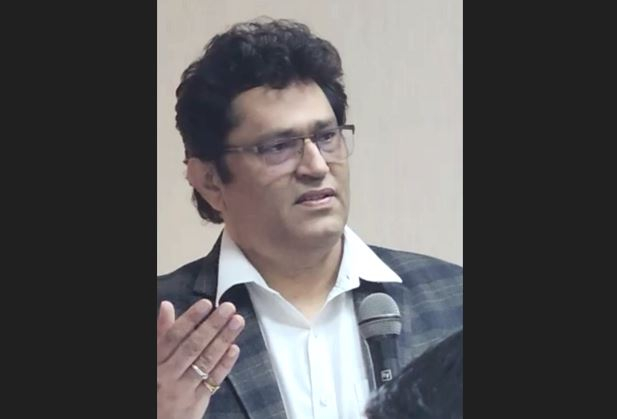
We spoke with Professor Dr. Chanchal Kumar Sharma, a renowned expert on Indian federalism and a professor at the Central University of Haryana, to discuss these developments. Since 2017, he has been an Associate at the GIGA Institute for Asian Studies. He has also held multiple Visiting Fellowships there. He has also been the dean of the India International Institute of Democracy and Election Management (IIIDEM) from January 2026.
Fiscal federalism, distributive fiscal politics, multi-level politics and party-system reform, international relations of subnational units, and federalism and disaster management are the main topics of Prof. Dr. Sharma's study, with a concentration on South Asia and India. His study offers a crucial viewpoint for analyzing Indian federalism's constitutional framework as well as the political and economic forces that are actually used to negotiate relations between the Union and the states.
We talk about the current state of Indian federalism in this interview, focusing especially on the conflict between growing centralization after 2014 and federal resilience. The discussion looks at India's successes in handling regional ambitions and diversity, the federation's structural problems, and the evolving nature of political and economic concessions. We also examine the relationship between party politics and economic decision-making, the influence of the dominant-party system on intergovernmental bargaining, and the expanding participation of Indian states in international relations thru subnational diplomacy. The conversation concludes by examining the degree to which India's federal system is either entering a new phase of federal practice or preserving its conventional constitutional stability.
Gulan: India’s federal system is frequently described as both robust and becoming more centralized, how would you evaluate the balance between these two forces in the current Indian federation, particularly after 2014?
Prof. Dr. Chanchal Kumar Sharma: The Indian model of federalism is a holding-together federation in which the Union possesses extensive legislative, administrative, fiscal and emergency powers. Yet the Indian federal system is robust because the states can protect their constitutionally assigned powers by using several federal safeguards built in the Indian polity. However, the balance between federalism and centralism depends on the party system, the ideological orientation of the national leadership, and the dominant discourse in the society. Since 2014, under the BJP government, a Hindu nationalist discourse has been dominant. This has tilted the federal balance towards greater centralisation, because the pursuit of majoritarian nationalism requires a centralised response.
Centralisation has been most pronounced in the political and administrative spheres, whereas fiscal federalism presents a mixed picture. The GST Council has created an important institutional mechanism for shared rule in indirect taxation, while the Fourteenth Finance Commission increased the States’ share in the divisible pool of Union taxes. These gains, however, have been offset by a reduction in the States’ fiscal self-rule due to the GST regime and also by the Union government’s policy to extensively use cesses and surcharges, which are excluded from the divisible pool; use discretionary transfers to influence State spending priorities; and impose conditions to the Union’s consent for State borrowing.
However, the basic framework of Indian federalism has remained intact because of constitutional, judicial and political safeguards which constrain the drift of Indian federalism towards unilateralism. Overall, India since 2014 has been a case of federal resilience amidst recentralization.
Gulan: In terms of managing diversity, regional aspirations, and economic coordination, what do you think are the most important accomplishments of India’s federal experiment since independence?
Prof. Dr. Chanchal Kumar Sharma: The major achievement of the Indian federal system is that it has successfully managed grievances based on cultural identity, regional aspirations, lack of development, and income inequalities. India has done this by making a credible commitment that cultural recognition, political power, and economic redressal can be achieved through democratic politics, legal remedies, and other institutional mechanisms. The perceived sincerity of successive governments across party lines towards this commitment has kept most ‘regionalists’ and ‘autonomists’ invested in the constitutional and democratic process.
To accommodate linguistic diversity, the Indian government reorganised state boundaries along linguistic lines; granted constitutional recognition to different languages; allowed the use of English in official work; and incorporated constitutional safeguards for culturally distinct communities and regions. Thus, Indian citizens can be proud Tamil, Mizo, Punjabi, or Assamese while being committed to the Indian nation.
To accommodate regional aspirations, India provides for free and fair elections, which allow all parties to contest elections and win political power through democratic means. However, demanding secession is illegal and unconstitutional in India. For instance, the DMK abandoned separatism and formed the government in Tamil Nadu in 1967; the separatist leader Laldenga signed the Mizo Accord in 1986 and became chief minister soon afterwards; and leaders of the Assam agitation assumed office after the Assam Accord in 1985.
Finally, to address economic disparities or income-based grievances, the Finance Commission recommends a relatively larger share to low-income states. Similarly, under the command economy model until 1991, public investment was channelled to relatively underdeveloped states where private capital had less incentive to invest.
Overall, India’s federal system has been successful in managing diversity and addressing grievances through negotiations, free and fair elections, impartial courts and independent commissions.
Gulan: What are the most significant structural weaknesses that presently jeopardize the long- term stability of Indian federalism, whether they be institutional, political, or fiscal?
Prof. Dr. Chanchal Kumar Sharma: The structural weakness of Indian federalism lies in the absence of adequate safeguards against over-centralisation. The Constitution of India has a “strong Centre” bias, and it does not institutionalise either self-rule or shared rule. The Union Parliament holds residuary legislative powers and may legislate on matters in the State List. It can also create new states or alter their boundaries. During emergencies, the federal structure is suspended, and the Union acquires wide legislative and administrative powers. Fiscal federalism reinforces centralisation because the Union has authority to raise revenue from most the productive tax bases, whereas the states have major spending responsibilities.
In contrast, the institutional mechanisms to protect states’ collective interests are weak. For instance, the Rajya Sabha’s effectiveness in protecting state interests is limited because its members are not required to belong to the states they represent. Likewise, the Inter-State Council has failed as an institution of shared rule. In addition, the misuse of the Governor’s office and central investigative agencies, such as the Central Bureau of Investigation and the Enforcement Directorate, to target opposition-ruled states further weakens the states’ autonomy. In fact, the degree of centralisation or decentralisation in Indian federal system during a particular period, depends on whether the Union government is led by a multiparty coalition or a dominant national party. It also depends on the governing ideology of the ruling party. For instance, since 2014, the BJP’s dominance has accelerated centralisation because employing a Hindu nationalist ideology to govern a diverse society requires a unitarist approach.
Overall, the extent of self-rule or shared rule at any given time is determined by the nature of political competition or (un)congruent party affiliations. The "double engine" rhetoric used by the BJP leaders illustrates that Cooperative federalism in the context of one-party dominance is partisan federalism by another name.
Gulan: How can regional views of autonomy change as a result of India's changing fiscal structure, particularly the growing vertical fiscal imbalance and conditional transfers? Can fiscal centralization inadvertently exacerbate rather than lessen tensions based on subnational identities?
Prof. Dr. Chanchal Kumar Sharma: There is no single regional view of autonomy in India. A state’s perspective on fiscal autonomy or fiscal federalism is primarily shaped by its income level and the strength of its regional or cultural identity. That is, whether a state is high-income or low-income relative to the national average and whether it belongs to a minority or majority nationality. Additionally, the intensity with which its government chooses to express that perspective or seeks redressal of the grievances is influenced by party congruence, that is, whether the party governing at the state level is affiliated or aligned with the national ruling party.
India's fiscal structure contains both equalising and centralising aspects. Finance Commission’s devolution is an equalising dimension as it recommends vertical and horizontal distribution of Union tax revenue based on an objective formula rather than on political discretion. In fact, most contentions on autonomy concern two issues. The first is the vertical fiscal gap (VFG), that is, how much of the Union’s shareable tax revenue should be transferred to the states. The second is horizontal imbalance, that is, how the revenue from Union taxes should be distributed among states to equalise states’ fiscal capacities.
The centralising dimensions appear in three ways. First, the Union controls all productive taxes, while the states have major spending responsibilities. I call this Vertical Fiscal Asymmetry (VFA) rather than Vertical Fiscal Imbalance (VFI) because some asymmetry is an inevitable and even desirable feature of federal design. GST reform deepened this vertical fiscal asymmetry, by replacing state levies, including VAT and sales tax, with State GST whose rates and base are determined by the GST Council. This increase in asymmetry does not create Vertical Fiscal Imbalance (VFI) because this arrangement is based on the political consensus on policy goals. But it does manifest as VFG in the accounts, which reflects in the disputes about the rate of revenue sharing, 41 versus 50 percent of the divisible pool.
More recently, however, disputes have arisen about the basis of sharing, that is, what counts as shareable. This brings me to the second centralising mechanism, which weakens the spirit of fiscal collaboration. It is the Union’s excessive reliance on non-shareable levies such as cesses and surcharges. By doing this, the Union shrinks the shareable tax base, which reduces the amount received by the states, even when the states’ percentage share in the divisible pool remains unchanged.
Finally, there are Centrally Sponsored Schemes which are designed by Union ministries but implemented and partly funded by state governments. Many states with low fiscal capacity are unable to meet matching requirements. These schemes represent a shift from untied (formula-based) transfers toward tied, discretionary transfers. In addition, the opposition-ruled states resent these schemes because they are publicized as gifts from the prime minister in order to create goodwill for the national ruling party.
States interpret these equalising or centralising dimensions differently. A high-income state with strong identity, such as Tamil Nadu, perceives income and population-based equalisation as confiscatory. The Sixteenth Finance Commission has attempted to address the high-income states' grievances by introducing 10 percent weight for the ‘contribution-to-GDP criterion’ leading to an increase in their share. On the other hand, a rich state identified with the national majority, such as Gujarat, does not oppose equalisation as it has a stake in national unity and benefits through its economic and political influence over allocations.
A low-income state with an identity dimension, such as Assam, accepts equalisation and revenue deficit grants but still demands self-rule and higher compensation for extraction of the region’s natural resources. They view conditional grants as weakening the federal compact because such grants constrain states’ spending priorities. A poorer state without a strong autonomy movement, such as Bihar, does not demand self-rule but prefers larger share in divisible pool and fewer conditional grants with matching requirements. The 16th Finance Commission’s (2026–31) recommendation to end revenue deficit grants can cause concern in the low-income regions.
Overall, fiscal centralisation aggravates tensions when institutional mechanisms and democratic processes fail to alleviate apprehensions, address concerns and resolve grievances generated by excess centralisation.
Gulan: How much of India's use of conditional political and fiscal concessions to control autonomy or separatist movements can be viewed as a viable governance model as opposed to a temporary conflict resolution tactic that puts future renegotiation crises at risk?
Prof. Dr. Chanchal Kumar Sharma: Concessionary federalism is an interactive sequence of reciprocal offers between centre and states in which any loss of utility suffered by any party in one dimension is at least partially offset by gains in another dimension. This approach can help resolve conflicts in a state–nation federation such as India. Many separatist movements, such as in Mizoram, Tripura, Assam and Tamil Nadu, have been tackled and transformed through this approach, where separatists accepted concessions and renounced secession.
However, I do not claim that the concessionary federal architecture exists in India. I have taken India as an empirical foundation and used the underlying logic of concessions to develop an ideal-type model of concessionary federalism. It draws lessons from India’s success in Tamil Nadu, Punjab and Assam, as well as from its failures in the Kashmir case.
The ‘ideal type’ institutional mechanism of concessionary federalism works well when there is a system of binding inputs and binding outputs. Binding inputs establish an ex-ante framework to ensure that all parties negotiate within the bounds of the constitution. Binding outputs ensure that mutually agreed concessions will not be revoked unilaterally by any party. Additionally, the institution of concessionary federalism must also be situated within a broader context of institutional, judicial, and political safeguards so that the stronger party does not retract on its promises. Finally, the institution of concessionary federalism must also have provisions for renegotiation in view of the changes in the operating environment.
Since secessionist conflict escalates only when an apprehensive minority perceives economic injustice, and political institutions fail to process or address that grievance, the concessions alone are not sufficient to achieve durable peace. The concessionary institutions and processes must be embedded in a robust democratic order that upholds the integrity of elections and protects the electoral processes from manipulation; an order that establishes credible and impartial institutions and insulates them from manipulation, capture, rent-seeking, predation, and extraction. Such a democratic order ensures that leaders of separatist movements can become political officials and enforce and defend the negotiated settlements.
This is the full recipe which ensures that the concessions result in durable peace rather than promoting another secessionist movement in future.
Gulan: Does negotiated intergovernmental cooperation in India reflect a stable institutional equilibrium, or is it progressively evolving toward asymmetrical bargaining influenced by executive centralization and party dominance?’
Prof. Dr. Chanchal Kumar Sharma: First of all, the shared-rule dimension is weakly institutionalised in the Indian federal system. In other words, there is no institution to facilitate negotiated intergovernmental cooperation, that is, a condition in which the Centre and the states accept each other's legitimate authority . The Inter-State Council exists under Article 263, but it has failed as a forum for shared rule; the GST Council is constitutionally entrenched, but it is a sector-specific body, and the Governing Council of NITI Aayog is a consultative and advisory body.
In other words, India lacks a ‘general-purpose federal institution’ where centre and states can co-decide. Therefore, states exercise their influence through party politics or coalition bargaining. Under a multiparty coalition, the lead party or the formateur needs parliamentary support of the coalition partners. These partners or regional parties, in turn, use their bargaining power to offer conditional cooperation in exchange for specific policy benefits. Although they can use this power to reform the federal system by demanding stronger self-rule and shared rule for all states, yet the experience has been that they tend to seek benefits for their own states, such as a financial package or a particular project, or a ministry or other distributive concessions etc.
Overall, the intergovernmental interactions in India have been characterized by asymmetrical bargaining, because it is shaped by political configurations or political balance of power rather than an institutionalised negotiated cooperation. From 2014 until June 2024, under the dominance of the BJP, the executive authority became centralised, and cooperation was imposed by the Union rather than negotiated with the states.
Nevertheless, the intergovernmental dialogue remained active through Zonal Councils which are regional advisory platforms whose agenda and direction is determined by the Union executive. However, BJP’s unilateralism was constrained—if not eliminated— in several important instances by procedural, political, and judicial safeguards. Since June 2024, the BJP is ruling with the support of coalition partners, namely the TDP from Tamil Nadu and JD(U) from Bihar. As predicted by the situational theory of pork-barrel politics, the two pivotal allies, have received special support and financial packages.
Gulan: In what ways does the emergence of a dominant-party system in India change the logic of concessionary federalism, and does it merely reorganise meaningful bargaining within party hierarchies or diminish it between tiers of government?
Prof. Dr. Chanchal Kumar Sharma: Concessionary federalism is an approach to reaching joint agreement between the centre and the states, especially where there is a standoff, through reciprocal offers of concessions, in such a way that any utility loss suffered by one party in one dimension is at least partially offset by a gain in some other dimension. In its ideal form, this process of reciprocal concessions takes place within intergovernmental institutions which set the binding inputs — the non-negotiable rules of the game and constitutional benchmarks that define the framework within which contestation and negotiation occur. These institutions also produce binding outputs that enforce contracts, so that no party deviates from agreed-upon concessions. Such institutional mechanisms treat the centre and the states as constitutional equals, irrespective of the partisan identity of their governments and therefore result in ‘negotiated cooperation’ or federal stability. Federal stability or negotiated cooperation is a condition in which both the federal and the subnational governments acquiesce to each other's legitimate authority.
However, India has no such empowered intergovernmental council of concessionary federalism. Therefore, negotiations are shaped by the nature of the party system and the structure of veto possibilities — that is, by the role of institutional and partisan veto players.
Under a fragmented or multi-party coalition system, the central government faces constraints from various actors with access to veto capabilities, such as opposition Members in the national legislature, states ruled by opposition parties, and regional parties sharing power at the national level. The balance of power in this system favours regional parties, which can resist the Union. In this situation, the only way to secure a policy consensus is to negotiate with the veto players. Since the balance of power tends to tilt towards regional interests, cooperation tends to take a contingent form.
By contrast, one-party dominance creates weak veto possibilities. Affiliated chief ministers do not act as veto players, as they uphold national priorities because their careers depend on the national leadership. In this scenario, the balance of power tends to tilt towards the national government, and cooperation shifts towards the tacit and imposed varieties. Yet, a dominant party equilibrium does not completely extinguish intergovernmental bargaining and the reciprocity of concessions. The only difference is that the Union government secures greater concessions while states cede more space and authority.
Overall, in the absence of institutional mechanisms for negotiated cooperation, the concessionary approach delivers regional-interest-based outputs under multiparty coalitions and national-interest-based outputs under one-party dominance, while the federal safeguards prevent excess on either side. In other words, federal safeguards such as the constitution, the courts and electoral politics prevent these suboptimal scenarios of either imposed or contingent cooperation from tipping into breakdown. Neither the Union nor the regions can ignore constitutional structure, judicial safeguards, and territorially rooted electoral pressures.
Gulan: What aspects of India's traditional constitutional bounds of foreign policy are being reshaped by subnational paradiplomacy, and does party alignment between the Center and the states help or hinder such external engagements?
Prof. Dr. Chanchal Kumar Sharma: Constitutionally, India's foreign policy and external relations lie in the domain of the Union government. The Constitution assigns foreign affairs, diplomacy, treaty-making, and the implementation of international agreements exclusively to the Centre. The expectation has been that the central government will consider states' interests while making foreign policy. However, India's integration with the global economy after 1991, the rise of regionalised coalition governments at the Centre after 1996, and the rise of India's IT sector collectively created conducive conditions for Indian states to engage directly with international actors.
Subnational paradiplomacy is reshaping India's traditional constitutional bounds of foreign policy in four ways. First, it is challenging the Union's monopoly of foreign policy without altering the constitutional allocation. States now compete to attract foreign investment while articulating state-specific development strategies. They forge direct links with foreign national and subnational governments and even challenge the central government's foreign policy stances. Second, paradiplomacy is acquiring a more institutional character, as is evident from the creation of a States Division in the Ministry of External Affairs in 2014. Third, the interaction of border states with neighbouring countries on issues of trade and cultural exchange is impacting India's relations with neighbouring countries. Fourth, it is increasing public interest in foreign policy issues.
Despite these changes, there is nothing like constituent diplomacy in India, where states co-formulate foreign policy on a par with the Centre. Rather, the central government tries to undermine the states' diplomatic autonomy and curtail their potential for independent international action.
The extent to which the central government curtails the engagement of a particular state is contingent upon its political relationship with the ruling party at the Centre. On controversial issues, states ruled by parties affiliated with the ruling party follow the Centre's foreign policy stance, whereas opposition states tend to take adversarial positions. So, political affiliation reduces a state's ability to assert itself. However, it facilitates other support structures which might increase investors' confidence and hence bring more foreign investment to affiliated states.
Gulan: How has the evolution of India's party system, particularly since 2014, altered intergovernmental negotiations and fiscal decision-making in ways that make it harder to distinguish between electoral strategy and economic governance?
Prof. Dr. Chanchal Kumar Sharma: In India, intergovernmental fiscal relations, especially the distribution of discretionary grants, have always been influenced by party politics. When one party dominates, the discretionary resources are directed towards states governed by the national ruling party. During multi-party coalitions, the Union government supports its coalition partners and outside supporters through financial packages, projects and special assistance. Between 2014 and 2024, the states affiliated with the dominant national ruling party, that is the BJP, received more financial and policy support in comparison to the opposition-ruled states. Since 2024, the BJP is ruling with the support of coalition partners such as the Telugu Desam Party (TDP) and the Janata Dal (United) [JD(U)]. This has resulted in special packages being offered to Andhra Pradesh ruled by the TDP and Bihar where the BJP is ruling in alliance with the JD(U), confirming the predictions of the situational theory of pork barrel politics.
Another electoral strategy, generally visible during one-party dominance, is the race to claim credit to maintain the goodwill of citizens and hence electoral dominance. Just as during the years of Congress dominance, Centrally Sponsored Schemes carried the Prime Minister’s name, such schemes under BJP dominance also bear the Prime Minister’s name, even though these programmes are implemented by the states, which provide the administrative machinery and contribute a substantial share of the schemes’ costs.
Furthermore, the tendency to tap revenue sources which remain outside the divisible pool is longstanding and is more pronounced during periods of one-party dominance than during coalition governments. The BJP government, like previous governments, has also focused on increasing cesses and surcharges to retain more revenue for central programmes which can generate greater support for the party.
Finally, the BJP-led Union government has been transferring money directly to citizens’ accounts bypassing the state governments and thereby centralising political credit. As a result, however, many non-affiliated states also use this model of direct cash transfers to establish their own relationships with voters. Interestingly, the BJP criticises such measures introduced by the non-BJP state governments as electorally motivated “freebies.”
Gulan: What aspects of India's federal system have remained consistent since independence, and where do we anticipate the biggest shifts in the current stage of constitutional practice?
Prof. Dr. Chanchal Kumar Sharma: The most consistent feature of Indian federalism since independence has been the constitutional distribution of authority between the centre and the states. The Constitution centralises revenue raising powers but decentralises spending responsibilities. Therefore, states depend on the centre for revenue, and the centre depends on the states for the implementation of its programmes and policies.
The second continuity is its flexible design. Indian federalism can be governed as a unitary system under certain circumstances. The architecture for this includes national emergency powers, President's Rule under Article 356, and the power to alter the name area, or boundaries of states by a simple majority in the Union Parliament.
The third continuity is the weak institutionalisation of shared rule. The powers of the Rajya Sabha are subordinate to the lower house called the Lok Sabha, and it does not operate as an effective ‘Council of States.’ The Inter-State Council established in 1990 remains moribund, and the GST Council established in 2016 is sector specific.
The fourth is the durability of the Finance Commission, which is an independent, expert-driven body, appointed every five years by the President in order to divide Union revenue among states.
A fifth continuity is the presence of two ideological strands in the Indian policy space. One which understands India as a multicultural or pluricultural polity, and another which seeks to unite the Indian state around Hindu nationalist identity. The balance between these two strands at the centre has shaped federal governance in India.
Since federalism as a basic structure of Indian constitution has remained intact, the operational experiences are determined by the politics of the period. The pluralisation of the party system between 1989 and 2014 transformed India’s federal governance from a centralised model to a more federalised one, characterised by the less frequent imposition of President’s Rule, the growing influence of state chief ministers in national politics, and the decline of the Congress-era punishment regime or distributive fiscal politics.
However, after 2014, as the BJP rose to power as a dominant party, the centralising features of the Constitution came to the fore again. State governors are once again used blatantly to influence state politics; important bills are passed in Parliament without debate; distributive politics has returned, and it is now called the 'double-engine' government, which favours the BJP-ruled states; and unilateralism is visible in big policy decisions such as the abrogation of Jammu and Kashmir's special status in 2019.
The anticipated shifts lie in four arenas of federal practice. The first is increasing fiscal centralisation through the use of levies that fall outside the divisible pool and through the use of discretionary grants to entrench the double-engine government approach.
The second is delimitation, that is, the reallocation of Lok Sabha seats among the states based on the 2027 census figures. It is likely to increase the representation of the populous northern states and reduce that of the southern states, which implemented family planning effectively.
The third is the push for simultaneous national and state elections aimed at renationalising electoral cycles and strengthening one-party dominance. This is inspired by the BJP’s core ideology of ‘one nation’ nationalism.
The fourth is the possibility of counter-mobilisation by the states against the shrinking divisible pool of taxes, against loss of representation, and against one nation-one election policy, in order to slow down the politics of ‘one nation’ nationalism under BJP dominance.