Prof. Dr. K. K. Kailash to Gulan: India’s experience shows that diversity is not a threat to national unity and may be a source of strength
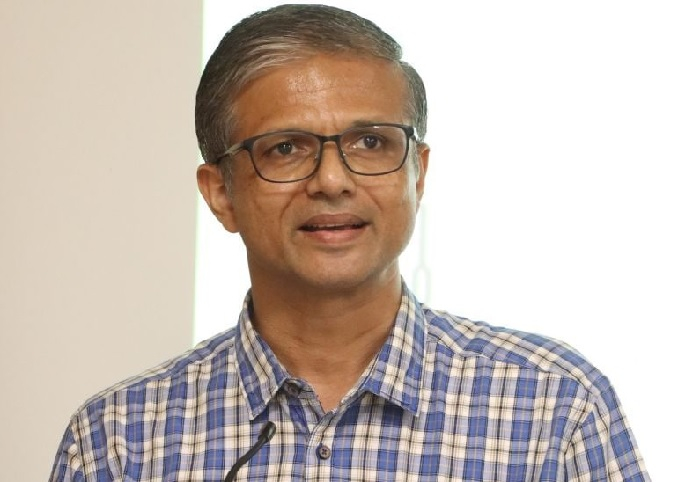
One of the most important and long-lasting federalist experiments in the world is India. The Indian federal system has been remarkably resilient and adaptable since independence, despite its remarkable linguistic, religious, cultural, and regional diversity. The nature of Indian federalism has been continuously altered by the development of center-state relations, the emergence of regional parties, coalition governments, economic liberalization, and the more recent restoration of powerful central political leadership. In this interview, we speak with Prof. Dr. K. K. Kailash, who currently works in the Department of Political Science at the University of Hyderabad. His research focuses on party politics, state politics and public policy, federalism, and comparative politics, providing an important perspective for understanding the institutional and political evolution of Indian federalism. This interview explores how the Indian federation has been shaped by institutional design, political practices, party competition, and evolving patterns of Center-State relations, drawing on his research, including his analysis of Indian federalism beyond the conventional description of a "quasi-federal" system. The apparent conflict between federalization and centralization in modern India is examined, as is the impact of coalition and one-party governments on the strength or weakness of federal practices and the ongoing significance of regional and territorial politics. The conversation also takes into account the more general lessons learned from India's federal experience. It specifically looks at how much Iraq, another extremely varied nation that chose a federal system under very different historical and political conditions, may learn from India's experience in managing diversity and preserving national cohesiveness. The discussion aims to emphasize the significance of institutional adaptability, democratic bargaining, political culture, and historical context in determining the long-term stability and efficacy of federal systems by contrasting the two experiences.
Gulan: Despite significant linguistic, religious, and regional diversity, India's federal structure has endured. What, in your opinion, is the most significant institutional innovation that has allowed Indian federalism to survive in a place where many other diverse federations have failed?
Prof. Dr. K. K. Kailash: In my opinion, the linguistic reorganization of states in 1956 was the foundational instrument for the survival of the Indian federation. Unlike other countries India did not attempt to erase diversities, it did not attempt to impose a single language but instead created states on linguistic basis. This was subsequently reinforced through the adoption of the three-language formula and the decision to defer the Official Language Provisions. What we see is recognition that people could have multiple identities derived from simultaneously being members of multiple groups.
We also see a similar position when it comes to religion. As political theorist Rajeev Bhargava argues, the state is guided by a policy of “principled distance” from religion. This model of Indian secularism moves away from the strict separation or wall of separation thesis with respect to the relationship between religion and the state. In the Indian context, the state is neither hostile towards religion nor does it completely keep away.
The state’s distance from religion is not fixed but contingent on circumstances and issues. It could intervene to achieve constitutional goals like equality. Consequently, the state has intervened to eliminate oppressive practices sanctified by religion like untouchability. This flexibility ensures equality of all religions, allows them to continue with their practices if they do not violate foundational principles of equality and freedom.
If we can call the recognition of multiple identities as legitimate markers of political life as an innovation, then I think it has immensely helped strengthened the nation building process.
At the same time, I would also argue that merely having a particular institutional design does not matter. What matters are the processes and political forces at play in the system. The linguistic reorganization worked not simply because it was announced and implemented, but because political actors respected its spirit. So, I would look beyond the structures and institutional architecture to see how political actors have functioned.
India thus stands apart from what may be called failed federations like Yugoslavia or Pakistan, which attempted to create an artificial homogeneity to maintain national unity. This forceful creation ultimately could lead to increased tension and eventual secession of unhappy units. I believe that India’s accommodationist position with respect to diversities played a key role in preventing a disastrous outcome.
Gulan: Economic liberalization and the emergence of strong regional parties seemed to strengthen federalism over the previous thirty years. However, discussions concerning centralization have resurfaced in recent years. What does this seeming conflict between centralization and federalization in modern India mean?
Prof. Dr. K. K. Kailash: Yes, it is true that there has been a concern about centralization over the last decade or so. I think this is ideational conflict about the national identity itself. The Indian constitution recognizes India as a diverse, plural country with people accepted as having multiple identities. and as I said earlier, recognized that people could have multiple identities. For instance, I could be a Tamil-speaking Muslim, born in Chennai, now living in Cochin and be Indian, all at the same time. These different identities do not conflict but co-exist. This recognition of multiple identities, instead of singular homogenous identity has been a critical element of the idea of India.
However, not everyone accepts this idea of national identity. There is a section of the population, who identify the nation with a particular culture, religion and language. They believe multiple identities cannot and should not exist in a nation state. They want a certain degree of homogeneity to build a national identity. The Hindu Right usually take this position on national identity. With the coming to the power of the Bharatiya Janata Party (BJP), this perspective has got more leverage.
If one examines policies of the BJP, its programme, speeches of its leaders, resolutions of its meetings and so on, we see that it always held that for the people of a country to become a nation they need to be united by one common culture. In line with this they call for assimilation of minorities and diversities into the dominant culture to create single identity. In this logic, the existence of multiple identities is seen as a shortcoming of nation building. It is therefore not surprising that they been preoccupied with national unity and territorial integrity.
The centralization thrust, especially in terms of weakening the pluralistic ethos that we see since 2014 is in many ways an attempt by the party to live up to its ideological commitment of a homogenized vision of India. The vision to extinguish pluralities is based on an outdated model of a nation state. Scholars, like Alfred Stepan, Juan Linz and Yogendra Yadav have made a distinction between nation state and state nation. A nation state assumes a single homogenous national identity, whereas a state-nation recognizes multiple identities and political togetherness is built around shared citizenship values. The recognition of multiple identities and foregrounding of values like equality and freedom as holding-together principles makes India a classic state-nation.
This conflict between centralization and federalization is a conflict of values, between a homogenizing vision of India and a pluralistic one. It is a conflict that questions the very idea of India itself.
Gulan: How much does the political culture and conduct of the ruling parties at the federal level and in the states affect the health of Indian federalism, and how much does it depend on the architecture of the constitution?
Prof. Dr. K. K. Kailash: I think it matters. The choices that parties make can make or break a system. As I said earlier, institutional design can only do so much and not more. We have seen that in Daniel Ziblatt and Steven Levitsky’s, now famous work, How Democracies Die, that when the spirit of democracy or norms underlying the institutional architecture are ignored while only maintaining a façade of institutional mechanisms, then democracies decline. So, you can have a hollowed-out framework that exists fulfilling the procedural aspects but working against the spirit of the framework.
Political parties could choose to live up to the spirit or only follow the letter of the law without much investment in the ideas and values of the institutions. Indian federalism will be healthy only when parties, their goals and values are in sync with the normative values that federalism as a theoretical idea stands for, which includes, mutual respect and accommodation and respect for diversity among others. If parties have values and goals that are against the federal idea, we are not achieving much, but only maintaining a façade and this may lead to a hollowing out of the federal idea itself.
At the same time, I am not saying that the institutional does not matter, they do provide us with a framework for political action. However, the framework alone does not or cannot determine outcomes. I believe that there needs to be a political will to accept and work within the spirit or values that federalism stands for if we need to have a healthy federation.
Gulan: Many experts think that times of coalition politics have been the most effective times for Indian federalism. Do you think coalition governments made federalism stronger, or can a powerful one-party government also promote a truly federal political system?
Prof. Dr. K. K. Kailash: I am one of those who strongly believed that coalition politics accelerated federalizing tendencies and helped maintain a healthy federation. Prof Balveer Arora, my PhD Supervisor, who has been a great inspiration and a scholar of federalism has maintained that federal coalitions were an innovative mechanism to recognise and accommodate the needs of diversity with the requirements of national unity and thereby enhance democracy. However, now we think we need to nuance the point after the last decade or so, when we have a coalition in power at the centre, and we have a sort of de-federalization taking place. The gains of three decades have nearly been wiped off.
Previously, we assumed that, merely having state-based parties in a coalition with a polity-wide party as the formateur party was healthy enough for federalization to take place. However, we now see that there are two elements which need to be accounted for. The strength of the formateur party and the strength and type of state-based parties or the coalitionable parties. When we have state-based parties with a regionalist orientation, we believe the federal idea is likely to receive healthy respect.
Regionalist parties essentially make three claims, first, they argue that the so-called national or the polity-wide parties are not addressing the interests of specific states, and that they can do that better. Second, regional or state pride, honour, culture, and so on must be protected. Finally, they make demands on the Centre to relinquish power on certain subjects and governance areas within a federal framework. Regionalist parties essentially vary on the degree and extent of their claims, especially when it comes to the third claim.
By strength, we mean their numerical size in terms of seats in the Lok Sabha. It is a conjunction of these two factors, strength of formateur vis-à-vis its allies and the orientation of coalitionable parties, that determines the outcome in terms of the impact on federal democracy. The democracy-enhancing and federalisation benefits of federal coalitions are likely only when the formateur is dependent on and constrained to varying extents by its allies.
A federal coalition is more likely to create space for federalization compared to single party governments. Coalitions call for consultation, bargaining, and compromise, all of which are essential to hold together a federation. Single party governments are often indifferent to the normative spirit of federalism and its links with democracy and see federalism only in functional terms as an administrative mechanism. It gets even more problematic, when we have a dominant party, whose idea of India is at variance with the ideals and goals of the national movement and the constitutional vision. To enrich and sustain a federal democracy, strong regionalist parties help.
Gulan: In "Beyond Quasi Federalism: Change and Continuity in Indian Federalism," you make the case that Indian federalism has developed beyond what is typically described as a quasi-federal system. Do you think that the revolutionary shifts in Center-State relations over the past thirty years are still underappreciated by academics and decision-makers?
Prof. Dr. K. K. Kailash: Absolutely, it is not uncommon for well-meaning researchers, academics, judicial pronouncements and not surprisingly the public too to still cling on the view that India is quasi-federal. In that piece in Studies in Indian Politics, Prof Arora and I argued that the characterization of quasi-federal does not hold good given that it assumed that it was based on the idea that structural features defined a federation and with the United States as the model of a federation. We first argued that there is not “a” model of federalism but there were “models” of federalism. Every federation institutionalized the federal idea according to its historical requirements. The federal idea being the coming together of people who are simultaneously members of territorially located communities and members of a polity-wide community. The balance between the centripetal and centrifugal pressures were unique to each federation.
Second, we said federations were dynamic and they moved between the demand for shared rule and self-rule based on their circumstances. On an imaginary line, if shared rule is at one end, (where the centre or federal government is powerful) and self-rule at the other end, (where states and units of the federation have greater autonomy), the United States has over the years moved from more self-rule to more shared rule, with the federal government acquiring more powers over time. India, we argued moved in the opposite direction, from a strong centre towards greater autonomy for the states.
I think we need to appreciate the fact that federations are dynamic and power sharing both in vertical and horizontal terms, depends on the immediate requirements of the country at different points in time. This idea of the dynamic nature of federations has probably not penetrated popular thinking, where the quasi-federal label with reference to Indian federalism continues to persist.
More importantly, I think policy and decision makers work with the static idea of federalism, view the federal ordering as an administrative device and completely ignore the normative idea that inspires a federation. The under appreciation of the normative idea and the dynamic nature of federalism often leads to one-size-fits-all policy and reform measures which hurt federal democracy in the long run.
Gulan: You highlight the territorial character of party competition in India in your research on coalition systems and political parties. Do you think India's party structure will move toward greater national integration at a time when national parties are becoming more centralized electoral machines, or will regional and territorial divisions keep resurfacing?
Prof. Dr. K. K. Kailash: I think we need to make a distinction here. All parties are organized territorially, depending on their stakes and interests. Polity-wide parties which attempt to compete and win across the union have state-based units. State-based parties which are interested in only particular states or regions of the country are also organized territorially.
Their centralization as electoral machines is another element and has more to do with internal functioning of a party. Parties have become leader centric and are dependent on professional consultation bodies and have reduced the role of the party on the ground.
Having said that, I believe the territorial organization of parties will continue to persist. Given the scale of India's diversity, it is unlikely that centralized parties, in the sense of parties that ignore territorial and regional identities, will survive in the long run. Moreover, given that there are stakes in legislative assemblies, it may pay to have an ear on the ground. Centralized organizations may weaken local connections, unless the link between the local and party central office is maintained through alternative processes. However, this in any case reduces the party to a mechanism or conduit without any real organizational meaning. In the long run, this may beg the question: why have parties at all, if they are entities with no genuine local roots?
To conclude, the territorial character of party competition is likely to persist as long as India remains a federation, because federalism, by its very nature, creates political space for territorially rooted interests and identities.
Gulan: Although both Iraq and India are extremely varied countries that have embraced federal structures, their federal experiences have changed significantly. What can Iraq learn from India's experience in balancing diversity and national cohesion?
Prof. Dr. K. K. Kailash: I think there are two key lessons that Iraq could draw from India’s federal experience. First, India’s experience shows that diversity is not a threat to national unity and may be a source of strength. India has not tried to tame its diversities but allowed them to flourish. Its linguistic and regional diversities are thriving and are treated as a legitimate basis for political competition and representation. At the same time, it has attempted to keep religion off politics and vote mobilization based on religion is frowned upon. From the linguistic reorganization of states in 1956 to the inclusion of state-based parties in federal coalitions, India has taken the long road to recognize and accommodate differences.
Rather than attempting to suppress differences that may at times be sectarian, the attempt should be to accommodate them institutionally. Dialogue and discussion are important, and all effort should be taken to learn about demands. Sometimes, minor tweaks may be enough to hold people together. Iraq could try asymmetric provisions and constitutional recognition of different identities. Allowing small groups to maintain their distinctiveness need not harm the national identity but may enrich democracy in the process.
Second, India’s experience demonstrates that institutionalizing federalism is not a one-time process, but work in progress. Like cycling, you got to keep pedaling to maintain balance and move forward. The moment you stop negotiating, listening and compromising, the federation risks going off balance. India has sustained its federation through constant dialogue and politics has been the key to accommodation. Iraq probably needs to institutionalize mechanisms for dialogue and discussion, which may encourage different communities to be engaged in the political process.
Gulan: Iraqi federalism developed in a post-conflict setting, in contrast to India, where it progressively developed via democratic bargaining and institutional adaptation. How does a federation's long-term stability and efficacy depend on the historical setting in which it was established?
Prof. Dr. K. K. Kailash: I did mention the starting points and reasons for adoption of federalism are different and each federation will have to institutionalize the federal idea according to its requirements. India adopted a strong center model of federalism, giving the immediate fear of further fragmentation after partition. This required a strong centre, but also constant negotiation, compromise, and institutional adaptation over time. The Indian model of federalism, as Stepan and Linz note is a holding-together model, unlike the coming-together model in the United States. This holding-together, as I mentioned earlier, was not a one-time settlement but a work in progress, what I earlier described as requiring constant pedaling to maintain balance.
Iraq’s federal model was probably influenced by external actors and consequently the challenges are entirely different and probably more difficult to solve compared to the Indian case. Furthermore, in my understanding the groups representing the Kurdish interests believed that a federal model would protect sub-national identities. However, the larger majority was vary of federalism and believed it would only widen existing cleavages and may not serve the interests of an already divided and fragmented country. The institutional architecture itself may not be considered legitimate by actors.
Furthermore, institutions for negotiation and bargaining are not necessarily in place and there is always a trust problem. Communities may wonder whether legitimate bargains will be maintained and promises of autonomy and protection will be adhered to. This only means that in my analogy, the pedaling requires more effort. However, if there is sustained political will then it is more likely that the bargain will be maintained. There needs to be a commitment to living together with differences among all communities.
I believe the absence of a negotiated origin does not preclude democratic bargaining subsequently. I am an optimist and therefore believe the ongoing political processes matter a great deal for the survival and success of federations. While historical origins matter, it does not necessarily determine the fate of a federation for all time to come, subsequent political processes, pedaling matters more.