Dr. Joep Leerssen to Gulan: It is impossible to conceive of nationalism without factoring in a notion of culture
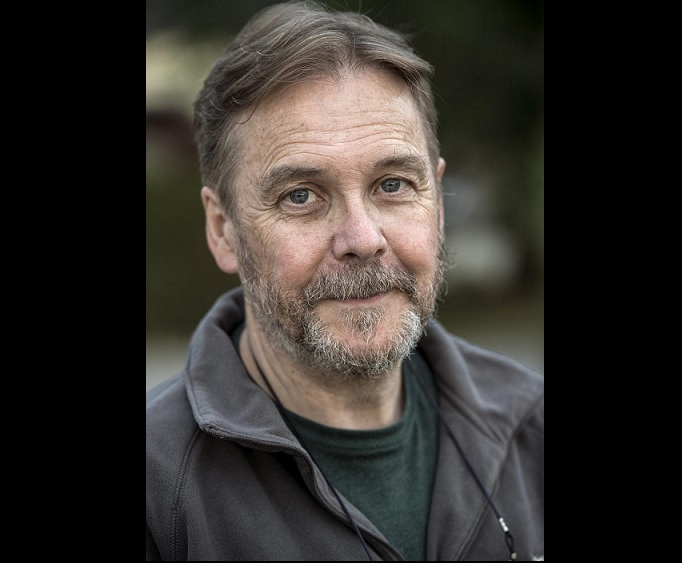
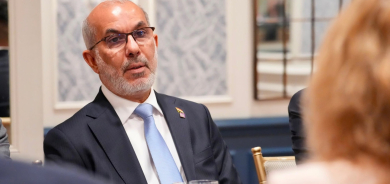
At both Maastricht University and the University of Amsterdam, Dr. Joep Leerssen is an Emeritus Professor of Modern European Literature. His groundbreaking research has revolutionized our understanding of nationalism by proving that it is a deeply ingrained cultural process as well as a political agenda. He is widely acknowledged as one of the leading experts on cultural nationalism. In addition to examining how national consciousness has been molded by literature, language, historical memory, philology, and intellectual traditions, his work explores how cultural nationalism has evolved into modern forms like ethnopopulism and banal nationalism. In order to provide a comparative viewpoint on the historical evolution of nations and identities, his research also includes the study of national stereotypes, cultural minorities, border regions, and the transnational flow of ideas.
In this interview, Dr. Leerssen talks about how cultural and political nationalism are related, how nations and national identities are created historically, and how much the European nation-building experience can help us understand places like the Middle East. Along with sharing his thoughts on the tenacity of national identity and the prospects of nationalism in the twenty-first century, he also considers how digital communication, artificial intelligence, and transnational media are changing the cultural underpinnings of nationalism.
Gulan: By highlighting the crucial importance of cultural nationalism, your work has seriously challenged the notion that nationalism is essentially a political phenomenon. How should we interpret the connection between political and cultural nationalism? Can cultural nationalism continue to exist as a separate cultural force, or does it necessarily turn into political mobilization?
Professor Dr. Joep Leerssen: That's a good question and a relevant one. I think it is impossible to conceive of nationalism without factoring in a notion of culture. The aspirations of the nation to be under a government of its own choosing, not to be under foreign domination, to have self-determination and autonomy- these are all political goals. In this respect, nationalism is a political agenda. But underneath all that, the nation defines itself through its culture, through its language, through its memories, through its literature, through its traditions, through its habits. people inside the nation have a mutual familiarity that they do not have with people outside the nation. And that familiarity is what we call culture. Therefore, it would be impossible to think of a national movement that wants autonomy for all the people whose names begin with P. We want a P; we want an independent country for all the people who are named Peter, Paul, Pavel, or whatever. That wouldn't work because the people whose names begin with P are not a cultural community. You need to have the cultural community before that cultural community can formulate political aspirations. And to take your case, there is a long-standing and strong drive for a self-governing political entity for all the Kurds, but this aspiration is now diffracted across different political and territorial contexts. The fact that you are all Kurds has to do with your language and your culture, and that will not go away. It also means that nationalism works at two levels.
It works at the political level as a form of mobilization and people wanting to work toward their political goals. The same as socialism, liberalism, or Christian democracy, you form parties. But at the same time, you also strengthen your cultural self-awareness. People get very worried when, for instance, a government discriminates against your language or discriminates against your cultural identity. Usually, people through communicative cultural efforts try to keep their cultural identity strong. This is interesting because these two political and cultural approaches work side by side simultaneously. But one of them is adversarial. It is against the situation. It wants to change the situation. The other is of a conserving nature. It wants to maintain the situation. It aims to preserve the identity that you have. Thus, one is combative, and the other tries to provide sanctuary to the culture. It also implies that the dynamics are essentially different in non-adversarial contexts where political objectives have been fully accomplished, like Ireland, where I currently reside. The Irish fought a long time against the British Empire. Now, they have their own nation. They have their own state. There is still a problem in the North, but on the whole, Dublin and the rest of the people are happy. But cultural nationalism still continues. One is context-dependent. Is there a situation of antagonism? There is a very fluid force field in political relations. There might be wars. There might be destabilizations. There might be new types of government coming in at the state. And the other is ongoing. Cultural nationalism will be a constant ground modality on the basis of which political nationalism can be developed.
Gulan: According to your findings, national identities are historical and cultural constructs rather than ancient inheritances. What are the main cultural processes that writers, artists, historians, and intellectuals use to turn cultural diversity into a cohesive national consciousness?
Professor Dr. Joep Leerssen: Again, we have to maybe give a double answer. Let's talk for one moment about my personal identity. my identity has two dimensions. One dimension is in the here and now. That means that I am different from everybody else. I have my own passport. Nobody can impersonate me. I am the only one who is married to my wife. I am the only one who is the father of my children. I am unique. That is in the here and now. And this means that the Kurds are not Turks. They are not Iranians. they are separate. They have their own thing. The fact that I am me means that if I parked my car in the wrong spot two weeks ago, I will now have to pay the traffic ticket. I cannot say that it was someone different, and I am not that guy. I am responsible for the things I did in the past, maintaining my identity over time. There is a continuity at work here. Identity means that I am identical to the me in the past. It is like saying that the morning star is identical to the evening star. The star we see early in the morning is the same planet Venus as the star that we see in the evening. We see them at different moments in time, but between those moments, there is a continuity. This is the persistence of identity. therefore, there is the separateness of identity and the persistence of identity. Taking the Kurdish case as an example, what does it mean to preserve, maintain, and assert a Kurdish identity across different states and political systems? It means two things.
It means that you assert the fact that you are different from other people. And that is-and this is very cynical, I am afraid-the easiest in periods of tension and friction. Kurds have been militating against hostile governments that were imposed upon them. And that creates a very strong discourse saying, we are not Turks, we are not Iraqis, we are something different. Don't confuse us with other ethnicities. That is a very, very strong mobilizer for identity assertion. Unfortunately, that means that in order to get an identity, you need enemies. This, for instance, is the problem with the European Union. The European Union has a weak identity because they don't really have enemies. Now, with Donald Trump, they are beginning to have a bit of an enemy. And the European identity is getting stronger because, slowly but surely, in the new world system, there are others with whom we do not want to be confused and from whom we consciously seek to differentiate ourselves. But this is a paradox. For a strong identity, you need enemies. And congratulations, you have lots of enemies. Accordingly, you have a strong identity.
Another, perhaps even more fundamental yet less obvious dimension of identity is continuity. Identity depends on the preservation of memory; it requires a shared cultural memory that connects the past with the present. You need to know your historical figures. You need to know what happened to you 50, 100, and 200 years ago. A sense of historical continuity that connects current generations to the experiences, recollections, and cultural legacy of their forebears is affirmed when it is said that Kurds today are the same people as Kurds in the past. Culture plays a crucial part in this sense of historical continuity, which is essential to group identity. Poetry, novels, literature, and other forms of cultural expression help future generations maintain a common sense of identity by preserving the memory of past events. Nowadays, it's often done through movies and films. But there are other ways as well. You need traditions. You need recurring festivities. Thus, maintaining group identity requires a shared tradition.
Although it is a complicated topic and outside my main area of knowledge, religion may possibly play a significant part in this. Religion is a very strong identity, but it is not national. The Ummah of believers in Islam is very strong, but it doesn't distinguish Muslims in one country from another. Since religion is not intrinsically linked to a certain country, it might offer a feeling of cultural continuity but not necessarily national continuity. In fact, many national identities incorporate several religious traditions. For example, we have Protestant and Catholic in Ireland. We have Catholic and Orthodox in Serbia. It could be that in your part of the world, you have Alawites and Christians. Many religious communities, each with a unique religious identity, may be found within a country. Therefore, the task is to develop a common national identity so that individuals may declare, irrespective of their religious convictions, "we are all Kurds." These are some of the most important factors to take into account in any identity-building process.
Gulan: Romanticism, philology, and the development of the modern state all influenced the distinct historical setting in which European nationalism arose. How much of the European experience of cultural nationalism can be applied to places like the Middle East, where conflicting historical narratives, ethnic plurality, and colonial legacies have resulted in distinct nation-building paths?
Professor Dr. Joep Leerssen: You are very right there. And, you know, I'm a historian mainly of the 19th and early 20th centuries. But now we're well into the 21st century, and this is a changing landscape. Additionally, we are expanding beyond Europe, which is my main area of expertise. I can, however, make some observations, and it will be up to you to determine whether or not they apply to your situation. There is a very important aspect of nationalism that relies on diasporas. The classic diasporas are the Jewish, the Greek, and the Armenian ones. But a very important diaspora, for instance, is for the Sikhs, for the Punjabis. They're all over the world, and a lot of their identity and their activism are fed from Australia and from Canada and from the places where there are Punjabis and Sikhs living outside the Punjab. Typical of diaspora communities, and for Europe, we've seen it also for the Poles, the Italians, and the Irish, who were able to support their independence movements from America and from Australia, is the fact that the diaspora is usually in a more comfortable situation than the home population.
The experience of emigration is frequently profound and extremely distressing. Moving abroad can cause long-lasting emotional and cultural damage that may extend for two or even three generations beyond the migrants. It's only after three generations that the grandchildren of émigrés will feel happy in their country, yet they will still hold a pain in their heart. This is a fact of life. It's also a political fact of life. However, from a material standpoint, people frequently leave their home nation in search of better living and economic prospects. There are more economic and educational opportunities for them in the other country than there are at home. Typically, diaspora communities will utilize those extra resources to support the national movement back home. Zionism is an obvious case, but the Poles did the same, the Irish did the same, and the Sikhs are doing the same.
Historically, diaspora communities have been essential. While advocacy, lobbying, and fundraising are still crucial activities, they now function within a worldwide network of public influence and opinion-making. I believe your weekly is part of that in a way; your outreach extends across the world, and you strive to keep Kurds connected wherever they have access to the Internet, which can be in any country. The media creates what I would refer to as a public realm. It serves as a legitimate forum for public discussion while being a virtual public sphere. Such a public space is necessary for any civilization to promote unity and sustain a common sense of belonging. People converse with each other in a public setting. They may argue, disagree, or even fight, but these interactions are manifestations of communication in and of themselves. People resolve their conflicts, stay in touch, and realize they are part of a common community that participates in group decision-making and public opinion development through these kinds of interactions. Because it shapes public opinion in this way, the public sphere is essential to any cohesive society. If you don't have that, you become like the Sami or the Roma, who are persecuted minorities in their home countries and have a comparatively weak political presence because they do not have a firmly established public sphere. It is better for them now than it used to be, but improvements came somewhat late. New media have grown to be extremely significant, making it much simpler than ever to establish a transnational public sphere that unites members of the same community beyond national boundaries.
I should also sound a note of warning. The type of public opinion generated through social media and through internet and digital means for the virtual public sphere might be part of what is now called hyper-politics. But it means that we have extreme movements like the storming of the Capitol on the 6th of January or the Arab Spring, which are present and communicate through the internet; they create a huge movement and then it dissipates again without consolidating their gains. It is very hard to effectively mobilize, stabilize, and transform the diffuse presence of a public sphere on the internet into political power. The endeavor, in my opinion, needs to move forward on two fronts. First, there needs to be a robust grassroots presence with efficient in-person coordination. Second, it is critical to show that the community contributes significantly to the society in which it resides. For instance, it is crucial to demonstrate how the Kurdish population in the U.S. contributes to the nation's economic and civic life. Factors like Islamophobia and conflicting political narratives make this effort more difficult. Therefore, persistent involvement and lobbying at the local level are necessary to win hearts and minds. You have to talk to people who are not part of your community but who might be part of the city where you live, whether it is somewhere in Illinois or in Los Angeles or elsewhere. Thus, there is a new component through the internet, which is great for internal cohesion, but in order to have a powerful diaspora, you still need political institutions and organizations on the ground.
Gulan: Your research highlights the significance of language, literature, memory, and historical imagination in the building of a nation. Are these long-standing pillars of cultural nationalism changing, or are they just taking on new forms, in a time when digital communication, artificial intelligence, and transnational media are shaping society more and more?
Professor Dr. Joep Leerssen: Actually, much has gone wrong in the European experience. Europe has seen the breakup of multi-ethnic empires in the two world wars. Europe has tried the idea of the nation-state, and it has always been obvious that the sovereignty of the nation-state is problematic because every nation-state has within its borders minorities. The most important measure of the democratic level of a state is how you treat your own minorities. Because yesterday's minority might be tomorrow's majority, and then what do you do with your minorities? That went wrong in Europe all the time. It went wrong in the 1920s and 30s, and it's going wrong again now. Personally, I'm thinking maybe the classic nationalistic European model of the nation-state is not the most workable thing, and maybe people outside Europe could come up with better models than the "I am a nation; therefore, I need to be a state. "
I think one of the best examples of how things could work, and a country that I admire very much, is Canada. Canada has a very strong civic sense of identity. They all support their maple leaf flag. They all realize that they live close to the polar circle, that they are a country where you have to be able to deal with the cold, and they have that combination of big cities and wild nature. They have a great sense of civic investment. They are proud to be Canadians, and it doesn't matter what ethnicity you are. Canada, unlike the United States, is very tolerant of cultural differences and ethnic differences under their civic umbrella of being Canadian. Canada works on the idea that civic and ethnic are two different things. It's like religion. A person can be Canadian regardless of whether they immigrated from Somalia, just as they can be Muslim regardless of whether they are from Indonesia or Somalia.
The same idea should also apply to the Kurdish identity if we use the Kurdish situation as an example. Kurds have been fighting a very long and hard battle to get out from under foreign governance. Imagine the scenario where Kurds will gain self-governance. It could take two forms. It could be for all the Kurds at the same time, or it could be for a core area in northern Iraq, and one might get some expansion from there. There are models that have worked in history. How the Kurds handle the internal diversity within their own regions will always be the true test. One potential paradigm, in my opinion, is a federal government with a high level of subsidiarity. Cities are ultimately a state's greatest asset, and many of today's most successful political figures are city mayors. Compared to their national equivalents, leaders like the mayors of New York and London frequently exhibit more pragmatic and adaptable leadership. It's at the basis of the city that societies work because they all support the same football team, and cities are always multi-ethnic. Another significant advantage is having a strong sense of city identity. Strengthening broader forms of belonging may be facilitated by building on local identities. In the end, the Kurds will need to be innovative rather than merely copying the nineteenth-century nation-building patterns of Germany or Italy if they are to achieve their goals. Instead of imitating nineteenth-century Europe, the challenges of the twenty-first century call for answers appropriate for a global society. I discovered that throughout the post-independence era, the newly independent African states-especially Tanzania under Julius Nyerere and, to a lesser extent, Zambia-provided excellent examples of solidarity and cooperation. They said, " We are stuck with borders that were imposed on us by the colonial powers; these straight lines have no cultural or territorial meaning, but this is what we're going to make work. We have different tribal communities within our states, and that is how we're going to run things. " Pan-Africanism was not successful, but I think as an experiment, it was a very useful one from which one could learn a lot. You Kurds still have to deal with the fallout from the Ottoman Empire's breakup and the post-World War I settlement. You continue to bear the historical weight of those events, just like the Palestinians. The Kurds are still dealing with the historical fallout from the post-Ottoman settlement, much like many African governments had to address the legacy of colonialism. Pan-African leaders of the 1970s, and to some extent the 1980s, in my opinion, responded to these issues in a very inventive way. In the Kurdish scenario, a similar spirit of invention might be necessary. Europe isn't always the best example to follow in this regard.
Gulan: What do you think academics and policymakers most commonly misunderstand about nationalism based on your decades of research, and what conceptual changes are required to better comprehend its persistent resilience in the twenty-first century?
Professor Dr. Joep Leerssen: Nationalism is almost always misunderstood because it is like a cloud in the sky. It's changing position and shape all the time. You can see this is a cloud, but there are so many different clouds; some clouds bring rain, others protect us against the sun, and some are thin. Nationalism is like a cloud, and everybody uses it in such a way that they can make mileage out of it. We get very different leaders who invoke the nation. Winston Churchill invoked nationalism, and Gandhi did so as well. De Gaulle invoked nationalism, and Bourguiba invoked nationalism as well. Anti-colonialism says it's for the nation, and imperialism says it's for the nation.
Consequently, it is a bit of an "abracadabra" word that people use. At the moment, what I am concerned about is the decline of civil freedoms worldwide, which are being eroded by authoritarian politicians and also by the interests of multinational corporations; very often, the two work together. We see oligarchs like Elon Musk, while civic institutions of the state are being dismantled. Essential public amenities—such as water, energy, communications, justice, and resource distribution—are expected to be provided by the state. However, a growing number of these roles are being privatized. Political leaders frequently use nationalist rhetoric, such as raising the flag and saying, "Long live the nation," as a symbolic replacement for good administration to cover up these flaws. This is a pernicious use where the nation serves as a cloak for dismantling the civil liberties of the state. At present, I see the main struggle in the world as one between democracy and authoritarianism or oligarchism. Oligarchism and authoritarianism are given a friendly mask by what they call patriotism, but I call nationalism.
So, what is my conclusion? First and foremost, I believe that the liberal middle must be strengthened. After Nazi Germany was defeated in 1945, the strongest liberal center Europe has ever seen emerged. The European Union was founded by Christian Democrats and liberals because people at the time did not want to become either fascists or communists. For the next 20 to 30 years, the political center and civil society remained robust. They promoted European integration and achieved the remarkable feat of uniting France and Germany. One of Europe's greatest flaws is that much of this progress has since been lost; it must be reinforced once more. We must create robust institutions and cultivate a strong sense of identification between the populace and state institutions. That is, in my opinion, the most crucial task. We must also condemn the misuse of the term "nation" by those solely focused on power and wealth.
Gulan: Any final recommendations for Kurds?
Professor Dr. Joep Leerssen: I believe that history has placed the Kurds in a very challenging situation. Nevertheless, Kurdish leaders have been adept at leveraging global crises to progressively bolster their position despite these unfavorable conditions. With each subsequent turning point, they have steadily gained ground. Although I lack expertise in Kurdish history, I feel that the Kurdish presence in the region is stronger and more widely recognized now than it was twenty or thirty years ago. The Kurds have skillfully utilized shifting regional and global conditions to strengthen their position from the time of Saddam Hussein's wars until the present. However, the international political system still finds it extremely difficult to recognize a Kurdish state.
In general, current states are hesitant to acknowledge new states. For instance, Spain has discouraged Scottish independence within the EU because of concerns that doing so would incite similar aspirations in Catalonia. Similarly, due to the potential consequences for Scotland, the UK has been hesitant to back Catalan independence. In other words, current states tend to avoid setting precedents that would support their own minority communities' claims to self-government.
During its fight against the Ottoman Empire in the 1820s, Greece also encountered significant challenges in obtaining international recognition. The Kurds, in my opinion, are currently in a similar situation. I think you are doing the best you can, pragmatically. There is no secret formula. It is not as if a solution that would result in an independent Kurdish state within a few years could be found overnight. The way this process has developed is something I greatly admire. It is and will be an incremental process. The Kurds will need to build gradually on what they have already accomplished. It is a long-term process that also relies on fostering goodwill. Philhellenism, or the general sympathy in Europe for the Greek struggle against the Ottoman Empire, contributed to Greece's success in achieving recognition.
Western liberal intellectuals often possess a natural empathy for oppressed peoples. This kindness is a valuable resource, and a cultural goodwill campaign is essential in the long run, not merely desirable. Even if rewards are not immediately visible and consistent investment is required before noticeable outcomes emerge, such efforts remain crucial. It is particularly vital to leverage culture to advance the Kurdish cause. For instance, the film *Yol* had a profound influence. As a student, I recall watching it and learning about the Kurdish question for the first time. While a film like that may not generate immediate revenue, political influence, or a seat at the UN today, the cultural front remains a critical third avenue for shaping global public opinion. In my view, investing in this arena is well worth the effort.