
2,600-Year-Old Assyrian Stele of King Ashurbanipal Unearthed in Nineveh
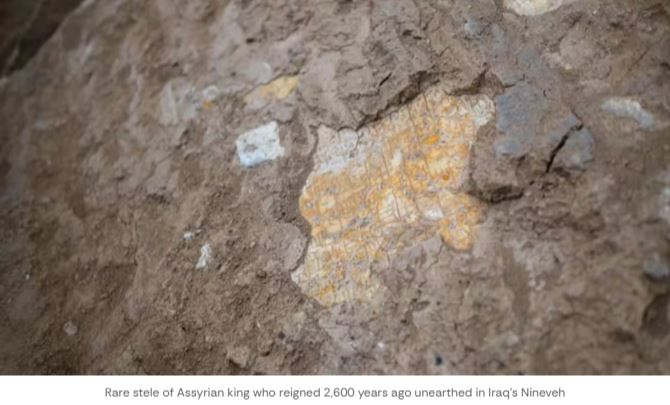
Archaeologists working in northern Iraq have uncovered a rare 2,600-year-old Assyrian stele depicting King Ashurbanipal at the historic Shamash Gate in the ancient city of Nineveh. The remarkable discovery is being hailed as one of the most significant archaeological finds in recent years and represents another milestone in the restoration of Iraq's cultural heritage following the destruction caused by ISIS.
The stone monument, dating to the 7th century BC, was discovered during excavations and restoration work at the ancient Assyrian capital. Standing approximately two meters high, the stele features a large relief of King Ashurbanipal on its front, while the reverse contains reliefs of two unnamed Assyrian kings alongside cuneiform inscriptions believed to document the king's construction projects and achievements throughout the Assyrian Empire.
Ashurbanipal, who ruled from 669 to 631 BC, is regarded as one of the last great kings of the Neo-Assyrian Empire. He is renowned for establishing the famous Library of Ashurbanipal in Nineveh, which preserved thousands of cuneiform tablets and remains one of the world's most important collections of ancient Mesopotamian literature.
The discovery comes nearly a decade after ISIS militants inflicted extensive damage on Nineveh and several of Iraq's most important archaeological sites. Archaeologists say the find not only deepens understanding of Assyrian history but also symbolizes the ongoing recovery and preservation of Iraq's ancient civilization.
Officials involved in the excavation described the stele as an invaluable addition to Iraq's archaeological heritage, highlighting the importance of continued international cooperation in protecting and restoring the country's historic monuments. Restoration and excavation efforts at Nineveh continue to reveal new insights into one of the greatest cities of the ancient world.