Hamit Ekinci to Gulan: The KRG Played a Decisive Role Through Its Soft Diplomacy to Protect Kurdish Gains
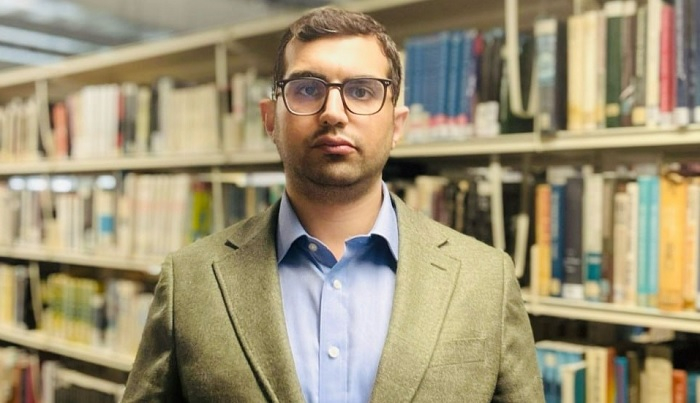
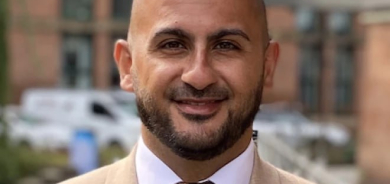
Hamit Ekinci is a PhD researcher in International Political Economy at the University of East London and a researcher at the STAMP Centre. His work focuses on the political economy of Northern and Eastern Syria, with particular emphasis oil, the East Mediterranean, IMEC and Kurdish and Middle Eastern affairs.
Gulan: Your article points to the striking convergence between the formation of a unified Kurdish political front and the sudden degradation of Iranian state infrastructure in Rojhelat. Should this moment be understood as a rare strategic opening shaped by external shocks, or does it reflect deeper structural shifts that could fundamentally alter the balance between the Iranian state and Kurdish political actors?
Hamit Ekinci: Kurdistan is a partitioned, divided and shared country as a result of power relations after WW1. Imperial powers, together with their regional partners, have kept Kurdistan under control and exploited it in the ways they prefer. The room for manoeuvre for Kurdish actors has been very limited due to this interstate colonial dynamic, which means that without regional turmoil, it is unlikely to achieve major political gains. The regional turmoil after the October 7 attacks can now serve as leverage for Kurdish actors to find a new balance with sovereign states.
The situation in Iran brings both risks and opportunities for Kurdish actors. Cautious optimism is the best way to deal with the current situation in Iran. Reports indicate that the Iranian state apparatus is far from a total hollowing out, despite the significant blows it has received. A unified Kurdish coalition should use multifront diplomacy to avoid risks and maximise benefits. These developments are likely to shift the balance of power in the region.
Gulan: The Coalition of Political Forces of Iranian Kurdistan brings together movements with historically divergent ideologies, strategies, and external affiliations. In your view, what are the underlying foundations of this unity, and how sustainable is it once immediate strategic pressures give way to longer-term political competition?
Hamit Ekinci: Ideology is secondary for most of this highly populated stateless nation, as all notable actors have to focus on survival. Even declassified CIA reports indicate that Kurds have never been radicals in ideological terms. The risks are significant for the Kurdish people, as each failed uprising has brought bitter consequences. It is still in my family’s memory how the failed Sheikh Said rebellion resulted in forced migration, loss of wealth, and so on. I believe most Kurds hold similar unfortunate memories.
In contrast to this, Kurdish people have never laid down and never given up their struggle for self-determination. Taken together, Kurdish people need to multiply their well-known courage with a solid strategy. Internal divisions among Kurdish people are deeper than in many other nations, partly due to the lack of a common state authority. Still, as a stateless nation, they should learn a way to collaborate and form unity.
Gulan: Given your work in international political economy, how central are material factors such as border economies, resource flows, and informal trade networks in shaping both the capabilities and limitations of Kurdish actors in Rojhelat, particularly in a context where state authority may be uneven or contested?
Hamit Ekinci: Greater Kurdistan has been a landlocked country, but central to resources. This dilemma forces Kurdish actors to find a modus operandi with hostile actors. The Kurdish population, although significant, is smaller in number compared to sovereign states. These are the main limitations. However, Kurds have proven themselves to be reliable stabilising actors rather than status quo disrupters in the Middle East. Both the Kurdistan Regional Government and AANES have served significantly to the security of the greater Middle East, as well as Europe.
The war between the USA-Israel and Iran is a regional war affecting the Achilles’ tendon of the world economy. The Kurdish position so far is open to talk and negotiate with anyone. Kurds should preserve this position and avoid premature steps. They also need a technically well-studied exit plan to convince international actors. De facto methods to maintain leverage can serve well during wartime, but they should be transformed into a clear project to use as leverage during the conflict-resolution phase.
Gulan: External military interventions have often produced unintended political outcomes in Kurdish regions. Do the recent US and Israeli strikes risk drawing Kurdish actors into a broader geopolitical contest in ways that constrain their autonomy, or do they meaningfully expand the strategic space for Kurdish self-determination?
Hamit Ekinci: First of all, Kurds are residing in their own historical land and should not be treated as tactical assets, but as regional stakeholders. Attempts to instrumentalise the Kurdish dynamic without clear political recognition will not end well for any actor. Kurds are willing to solve their problems with sovereign states and neighbouring countries, but hostile strategies that securitise the Kurdish people are not going to work in the way these states expect.
The Israeli-American strategy to clear the way for IMEC and the Abraham Accords will not generate sustainable results if Kurdish political agency is disregarded. Kurdish diplomacy, especially KRG diplomacy, has played a very constructive role in this regional crisis so far and has proved itself to be wise. I believe this will change the approach of both Western and alternative blocs toward the Kurds. Kurds should be ready for this phase, avoid partisanism, and pursue national gains.
Gulan: Comparisons are already being made between the current situation in Rojhelat and earlier Kurdish experiences in Iraq and Syria, where moments of state weakness enabled new forms of governance. What key structural differences in Iran’s political and security architecture might prevent a similar trajectory from unfolding?
Hamit Ekinci: To start with, Iraq and Syria suffered significantly from internal divisions and instability because these states are the remainder of WW1 arrangements rather than historical realities. However, Turkey and Iran were born from fallen empires and are in a better position in terms of statecraft and state capabilities. On top of that, Iran inherited a Shia grief culture that helps it stand firm against far stronger enemies. Iranian proxies are far from total collapse, despite almost three years of high-intensity conflict.
Reports indicate that the Iranian state apparatus is still standing, and Iran owes this to its preparations based on asymmetrical warfare tactics. It has lost many top commanders, but the autonomous structure of the IRGC allows it to operate through middle-level command. Iran is able to operate this network from Yemen to the Levant, and from the Levant to mid-Iran. Also, Iranian war tactics aim to make defeat more costly for its opponents.
The US wants regime change in Iran to maintain its economic dominance in the world against a rising China, so it will likely avoid large-scale troop movement. It should be kept in mind that the Iranian technology enabling Iran to operate an asymmetrical high-tech war is not totally independent from China. Additionally, the Iranian regime, despite its radical rhetoric, still has the approval of several Western actors. We have seen this in NATO’s approach to Iran, despite the American hawkish approach.
This international scene forces Kurds to keep cautious optimism. Iran has suffered severe blows, and this will have consequences in the mid and long term, but until that time comes, Kurds should find a way to survive. Unprovoked Iranian attacks on KRG soil indicate that, unlike Gulf states, Kurds lack international protection in hard security terms. Kurdish diplomacy should work hard to transform the current situation into a more stable Kurdish political agency.
Gulan: If the current momentum among Iranian Kurdish actors is sustained, what forms of political or administrative arrangement do you consider most plausible in the medium term, and how might these evolve within or against the framework of Iran’s existing state structure?
Hamit Ekinci: In my opinion, an asymmetrical federalism that serves all components of Iran would serve the solution best. Iran is huge in terms of territory and is a bridge between strategic lands. Globalisation did not work in the way Western powers had projected. The expectation was that the West would be a high-tech and finance hub, while the Global South would become a cheap labour resource. However, as we all witnessed, Chinese state capitalism has reached a significant level since the end of the Cold War, and now it is challenging Western-led financial dominance. Some Western capital groups are happy with it, but it has become a national security issue for the USA.
Both blocs, sometimes in collaboration and sometimes in conflict, want to shape the new economic order of the world. Introducing new countries to the global market is one of the main goals. We should interpret logistics projects based on interconnectivity in this manner. The Belt and Road Initiative, the Central Asia Middle Corridor, IMEC, the Abraham Accords and many others serve this purpose. Iran is gravely important for this, as we witnessed during the Hormuz crisis. In the end, these powers will find an equilibrium, but likely it will not be easy. Business actors are now decisive actors in conflict and should not be disregarded.
Iranian people, including minorities, want a new Iran, but notable actors should make sure their strategy is aligned with great powers as well as local realities. The recent uprising of brave Iranian people was brutally suppressed in the silence of international powers, and Kurds are being hanged on an almost daily basis in Iran. In the end, this regime is not going to survive, but actors should be more prepared and ready to play their role in post-Islamic Iran.
Gulan: In this shifting landscape, how do you assess the strategic posture of the Kurdistan Regional Government? Is Erbil more likely to act as a cautious stabilizing actor prioritizing its relationship with Tehran, or could it assume a more subtle role in facilitating cross-border Kurdish coordination under certain conditions?
Hamit Ekinci: The Kurdistan Regional Government, despite its weaknesses, has served as a beacon of hope for Greater Kurdistan and the people of Kurdistan. The dark days of the Anfal genocide are still alive in Kurdish memory. The Kurdish national anthem, Ay Raqib, was written in prison, calling to the prison guard that Kurds are alive, and that the cannons of time will not break Kurdish continuity on their ancestral land, beloved Kurdistan.
Despite this resilience, Kurds were alienated in post-war settlements. Once international powers were done with their opponents, Kurdish tragedy stopped being a concern for many actors. Kurdish history is full of the bravery of Kurdish women and men, but Kurdish actors were often unable to transform this chivalry into legitimate political gains. The exception is the Kurdistan Regional Government, which was able to align Kurdish national desires with the grand strategies of decisive powers. The KRG is likely to step up this role, as demilitarisation in other parts of Kurdistan may bring an end to the securitisation of Kurdish movements.
We have seen this during the recent Rojava conflict. The KRG played a decisive role through its soft diplomacy to protect Kurdish gains. For many people, Kurdish losses in Syria are significant, but I believe that, despite uneven international circumstances, securing a de jure autonomous region is a huge achievement, and the role of the KRG cannot be disregarded. Also, in terms of popular mobilisation worldwide, pan-Kurdism is stronger than ever. The KRG should keep positioning this wave into a peaceful and sustainable Kurdish agency for all the countries where Kurds live. Turkey was quite hesitant about Kurdish autonomy, but thanks to the smart play of the KRG, these concerns have been alleviated. In the coming days, I am hopeful for a peaceful transformation in Turkey’s Kurdish regions.
By Kobin Ferhad