Dust Storm Sweeps Iraq, Sends Over 1,100 to Hospitals with Breathing Difficulties
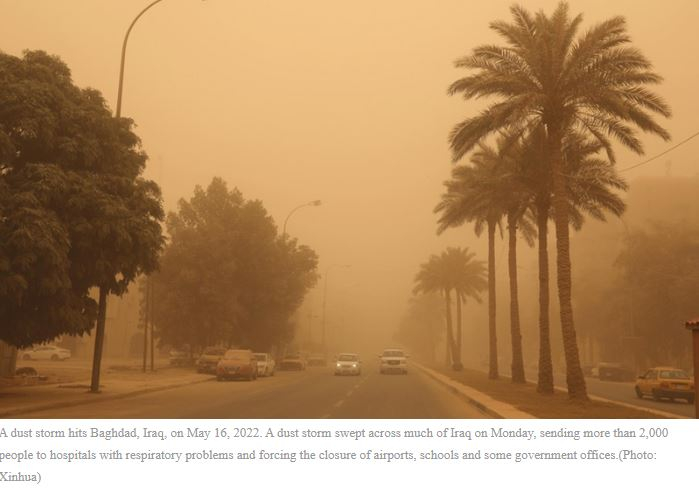
Iraq’s Ministry of Health announced on Monday that more than 1,100 people suffered respiratory distress after a powerful dust storm swept across large parts of the country, affecting southern and central provinces.
Ministry spokesperson Saif al-Badr confirmed that 1,133 cases had been recorded nationwide, with symptoms ranging from mild to moderate. Most patients were treated and discharged after receiving oxygen and basic medical care, and no fatalities were reported.
According to official figures, Muthanna province recorded the highest number of cases with 576, followed by Najaf with 300, and Baghdad with 200 cases. Health authorities placed medical teams on high alert, ensuring hospitals were fully prepared to handle additional admissions if necessary.
Despite the surge in hospital visits, the Ministry of Health stated that the situation remains under control. All affected individuals received full medical services, as authorities coordinated closely with local administrations to maintain readiness during the storm.
The dust storm was triggered by a low-pressure weather system that entered Iraq on Sunday evening, generating dense dust clouds that significantly reduced visibility and blanketed cities across the south and center. In response, authorities in several areas slowed traffic and advised residents—particularly those with chronic respiratory conditions—to stay indoors.
Dust storms are a recurring environmental challenge in Iraq, often driven by desertification, prolonged drought, and declining water levels in the Tigris River and Euphrates River. Environmental experts warn that such storms are becoming more frequent and severe due to climate change and land degradation, posing increasing risks to public health and infrastructure.
In recent years, similar weather events have led to thousands of hospitalizations, prompting calls for long-term solutions such as expanding green belts, improving early warning systems, and addressing water scarcity to reduce soil erosion and mitigate future impacts.