Saudi East–West Oil Pipeline Resumes Operations After Iranian Strikes Disrupt Gulf Energy Infrastructure
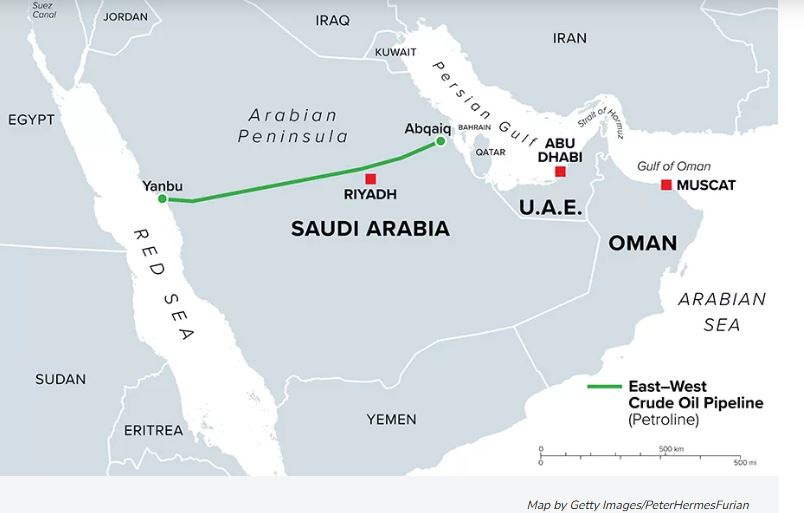
Saudi Arabia announced on Sunday that its major East–West oil pipeline and several damaged energy facilities have resumed operations following Iranian attacks that targeted key infrastructure across the Gulf. The restoration marks an important step toward stabilizing global energy supplies amid rising regional tensions.
According to a statement from the Saudi energy ministry carried by the Saudi Press Agency, the pipeline and other affected facilities have “recovered and regained their operational capacity.” Officials stressed that the recovery improves the reliability and continuity of Saudi oil flows to both domestic and international markets.
The recent attacks had temporarily reduced pumping capacity through the East–West Pipeline (Petroline) by around 700,000 barrels per day, while overall Saudi oil production capacity dropped by approximately 600,000 barrels per day.
The ministry said rapid repair efforts helped offset some of the losses. Increased output from the Manifa Oil Field compensated for nearly 300,000 barrels per day that had previously gone offline.
However, restoration work continues at the strategically important Khurais Oil Field, where strikes cut production capacity by an additional 300,000 barrels per day. Officials confirmed that full production at the site has not yet been restored.
The East–West Pipeline, also known as Petroline, has become Saudi Arabia’s primary crude export route after the effective closure of the Strait of Hormuz amid the ongoing conflict involving the United States, Israel, and Iran.
The pipeline allows Saudi Arabia to transport oil from its eastern oil fields to ports on the Red Sea, bypassing the vulnerable Gulf shipping chokepoint.
Reports indicate that Iranian strikes targeted the pipeline only hours after a temporary ceasefire was announced on Wednesday, highlighting the fragility of diplomatic efforts and the continued risks facing critical energy infrastructure.
The disruption underscored the strategic importance of alternative export routes as Tehran has leveraged its geographic position near the Strait of Hormuz to exert pressure on global energy markets. Roughly one-fifth of the world’s oil supply typically passes through the narrow waterway, making any instability there immediately significant for global prices and supply chains.
The attacks on Saudi facilities are part of a broader wave of strikes targeting Gulf energy infrastructure since the outbreak of hostilities between U.S.- and Israeli-backed forces and Iran in late February.
Reports also suggest that Qatar has suffered damage to some of its oil and gas installations, raising concerns about potential long-term disruptions to regional energy production.
The conflict began following large-scale U.S. and Israeli strikes on Iranian military and nuclear-linked sites, prompting retaliatory missile and drone attacks by Tehran against energy assets and shipping routes across the region.
As the world’s largest oil exporter, Saudi Arabia plays a central role in maintaining global energy market stability. Any sustained disruption to its production or export capacity can quickly influence oil prices, inflation, and economic growth worldwide.
Despite the damage, Saudi officials emphasized that the swift restoration of pipeline operations should reassure global markets and reinforce confidence in the kingdom’s ability to maintain supply commitments.