Martin van Bruinessen to Gulan: Kurdish Culture and Language Are Surviving—But Political Unity Remains Fragile
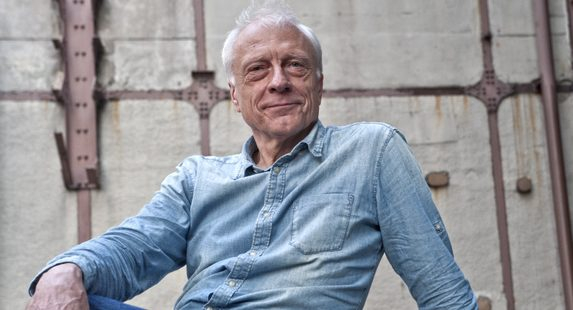
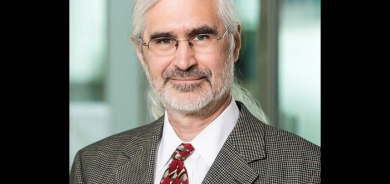
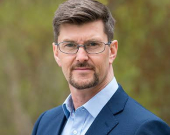
Martin van Bruinessen (born 1946) is a Dutch anthropologist known for his influential research on Kurdish society, Islam, and Muslim communities. Educated at Utrecht University, he conducted extensive fieldwork in Kurdish regions of Iran, Iraq, Turkey, and Syria in the 1970s. His landmark book Agha, Shaikh and State: On the Social and Political Organization of Kurdistan remains one of the most important studies of Kurdish social and political structures. He later expanded his research to Indonesia and taught and lectured on Kurdish, Turkish, and Islamic studies at Utrecht University and the State Institute of Islamic Studies of Yogyakarta.
Gulan: In the 1970s, in your book Agha, Sheikh and State, you analyzed tribal and religious structures as the foundations of Kurdish society. Half a century later, do you believe these factors still shape Kurdish politics, or have modern institutions replaced them?
Martin van Bruinessen: That book was based on field research I carried out in the mid-1970s and it reflects my observation in those years that tribes differed enormously from place to place, and that in some parts of Kurdistan they played more important roles than in other regions. Many of the people I got to know then already thought that tribes were something of the past; many Kurds lived in cities and even if their families had belonged to a tribe, that did not mean much to them anymore. But in times of crisis, the tribe could become important again. I was in Iraqi Kurdistan during Mulla Mustafa’s last uprising, 1974-75, and tribal solidarity played a part on both sides: there were tribes that followed their aghas and were jash, fighting on the side of the government, and there were tribes that allied themselves with Barzani. In Iranian Kurdistan, at the time of the revolution, some of the aghas who had lost their land in the shah’s land reform returned to their villages and attempted to collect the traditional feudal dues again, using the armed force of their tribesmen to put pressure on the peasants. In Turkish Kurdistan, after the PKK had launched its guerrilla struggle in 1984, the state organized “village guard” militias to fight the PKK, and the earliest village guard units were recruited from tribes, fighting under the leadership of their own tribal chieftains. So to some extent old tribal structures were revived and strengthened in the course of the guerrilla war. But this only concerned some of the tribes; overall, the tribes gradually lost their relevance for people, especially when most moved to the cities or even abroad.
The economic base for the tribe, pastoral nomadism and to some extent agriculture, has been severely reduced. Here and there you may still find regions where land and animals are controlled by a tribe, and if there is a conflict over access to land, tribal solidarity may be strengthened again. Even in the big cities, certain jobs or other economic resources may be controlled by people of tribal background, who prefer to employ people of their own tribe because they can be trusted, or because it is easier to keep them in check because of the family relationship. In elite politics, especially in Iraqi and Turkish Kurdistan, tribal connections may still play a part – this is just an impression, for I have not been able to do recent research on this, and I am not really sure. Overall, however, it does not matter much to which tribe one’s family belonged originally.
Religious associations, on the other hand, Sufi orders (tariqat) such as the Naqshbandiyya and Qadiriyya or jama’at such as the Nur movement and the Süleymancı in Turkey and the Maktab Qur’an in Iran, may have become even more important and influential than they were in the 1970s. What has changed, however, is that membership of such an association is not the major determining element of a person’s identity. Besides belonging to a tribe and a tariqat, a person is likely to have a network based on their school education, professional association or trade union, political party, urban neighborhood, etcetera.
Gulan: One of the historical problems of the Kurds that you have often discussed is internal fragmentation. Do you see this purely as a political issue, or does it have deeper cultural and sociological roots that prevent the Kurds from forming a unified national narrative?
Martin van Bruinessen: When you say “internal fragmentation” you seem to suggest that there was a time when there was some form of Kurdish unity that for some reason broke down. I am not so sure if there was ever sufficient unity to make common action possible. There was always enormous variety – religious, linguistic, and in claimed descent – among the people called Kurds. Many Kurds believe that all the petty states and emirates mentioned in the Sharafnama shared some idea of a common Kurdish identity, considered this Kurdish identity as an important factor, and were in agreement about who was a Kurds and who wasn’t. I do not think this ever was the case. Neighboring states, from the Mongols and Saljuqs to the Ottomans, spoke of Kurdistan and the Kurds meaning more or less the Zagros and eastern Toros mountains and the people living there, especially the nomadic tribes. Like all tribal societies, the history of Kurdistan was marked by conflicts and rivalries between Kurdish tribal chieftains or emirs, who were inclined to ally themselves with neighbouring powers and peoples rather than seeking a Kurdish “national” alliance; the idea of nationalism came late to Kurdistan.
The “fragmentation” we see these days is, I believe, largely a product of nationalism. Zazas, Alevis, Yezidis, Kaka’is, Feylis and other minority groups in Kurdistan were long roughly classified as Kurdish, and some members of each of these groups played in fact leading roles in the Kurdish nationalist movements. But as Kurdish nationalists attempted to define some essential Kurdish identity and write a Kurdish national history, these minorities were marginalized and as a result some members of those communities started thinking of themselves as different and perhaps a nation in their own right. This separatism is quite recent; in the case of the Zazas, it began in the late 1970s and became a significant movement in the following decades; and the Yezidis of Soviet Armenia appealed for the status as a distinct nationality, separate from the Kurds, as late as the final years of the Soviet Union, the late 1980s.
Another aspect of “fragmentation”, and perhaps a more pervasive dividing line, is due to the nation-building efforts of the four states incorporating parts of Kurdistan. Radio and printing press, and later television, school education, and various forms of political participation in state-wide movements and parties, the experience of living under different regimes have all had a tremendous impact on the worldviews of Kurds in these four states. The Kurdish movements in each state differed considerably from one another, even though both the Iraqi KDP and the PKK established sister parties in neighboring countries. Sorani speaking Kurds who grew up in Iran and Sorani speakers who grew up in Iran or in the diaspora understand each other’s language perfectly but have been shaped by such different experiences that one does not often see them cooperating in the same movement or organization.
Gulan: Do you think the Kurds today are closer than ever to achieving a state, or have the regional transformations in Iraq, Syria, Turkey, and Iran made the concept of the nation-state increasingly difficult for them?
Martin van Bruinessen: Ten – twelve years ago I might have given you a different answer than now. The Kurdistan Region of Iraq was then the most stable region of the country and it was doing well economically, a safe haven for minorities as well as for families fleeing the violence elsewhere. Rojava similarly was the most enviable part of Syria, liberated from the sectarian violence of the Islamist militias and the regime’s terrible thugs. But even then, some form of autonomy, perhaps combined with representation in the central government, seemed the most that was attainable.
The situation now is much less favorable to the Kurds, economically as well as politically. Much of the self-governing structures of Northeast Syria has been dismantled, and the degree of autonomy and economic autarchy the KRG enjoys in Iraq looks precarious. Öcalan’s latest declarations have sown much confusion among the Kurds of Turkey. Dreaming of a Kurdish nation-state appears quite unrealistic. The Kurds came late to the race when the Middle East was carved up into nation states, and they ended up as peripheral groups in three of the new states (and in Iran, which has a much longer history as a nation state). Being land-locked like Afghanistan, Kurdistan’s geography did not really lend itself to the formation of a really independent and economically viable nation-state anyway.
I understand the strong desire of many Kurds for an independent state, but I seriously doubt there is a real possibility such a thing will ever come about (and even if there could ever be a semi-independent entity, it will likely encompass only a part of Kurdistan, like the short-lived Mahabad republic or the KRG). The nation-state was the political form that emerged after the breakup of large multi-ethnic empires. It was the dominant state form for most of the twentieth century, but it may be on its return and give way to various forms of federation. I have myself never been a believer in nationalism. Certainly in my part of the world, Europe, nationalism has been the cause of enormous human suffering, and in our societies our greatest political threat is the nationalism and xenophobia of the extreme right. I am not the person to tell the Kurds what is best for them and what rights they should demand, but it seems to be that the most feasible, and perhaps most desirable, objectives involve some form of federation and freedom to organize.
Gulan: As a specialist in Muslim societies, how do you view the relationship between Islamic movements and Kurdish nationalism? Can religion become a mobilizing force for the Kurdish cause, or has it more often functioned as an obstacle to Kurdish statehood?
Martin van Bruinessen: Even before I began my field research in Kurdistan, I had been struck by the fact that the earliest modern Kurdish uprisings were led by Sufi shaykhs who were political as well as religious leaders: Shaykh Ubaydullah, Shaykh Mahmud Hafid, Shaykh Sa’id. This was what started my interest in Sufism and Sufi orders that has continued until today. The explanation of why it was religious authorities who could lead mass uprisings before there were modern political movements seemed to be that these Sufi shaykhs were not part of the tribal system and had devoted followers in many different tribes (as well as enemies in some other tribes). Their religious authority spread across the divisions between rival tribes; and they could call upon people to forget narrow tribal interest and co-operate in the name of a common Islamic and Kurdish identity.
It is interesting that when the first modern Kurdish associations and political parties were established, all of them were secular in nature, even if some of their members were from well-known families of shaykhs, and most of the members were probably quite religious. Kurdish nationalism, in all parts of Kurdistan, has long been secular. This made it possible for Sunnis and Shi’is, Alevis and Yezidis and Kaka’is as well as unbelievers and even Christians to be part of the same movements and parties. Only from the 1970s onwards did explicitly Islamic movements begin to compete with Kurdish nationalist movements for support the Kurdish urban middle class and village population. The Muslim Brotherhood and similar movements (such as Milli Görüş in Turkey) found some support among the Kurds, and the Iranian revolution convinced many people of the revolutionary potential of Islam. In the 1980s and 1990s we see the emergence of Islamist movements that also insisted on their Kurdish identity, such as Hizbullah in Turkey, Maktab Qur’an in Iran, the Islamic Movement of Kurdistan. Unlike the earlier Islamic movements, these are not internationalist or inter-ethnic but consider Kurdish society as their natural habitat and speak of specifically Kurdish rights and demands. I therefore call these movements Islamic nationalists. Islamic nationalism is, of course, quite different from secular nationalism, and most of these movements do not even like the word nationalism, but they do have a conception of the Kurds as a distinct nation that is subjected to national oppression and they are proud of Kurdish cultural traditions.
Of these movements, Hizbullah has been most actively fighting the secular Kurdish movement but there are several other Kurdish jama’at that have played a more positive role. There is in Turkey especially the Zehra Vakfı, which has for the past 35 years been publishing the Kurdish cultural journal Nûbihar and more recently also a scholarly journal, Nûbihar Akademî. They have good relations with most other Kurdish groups and movements and are generally well-respected. I gather that in Iranian Kurdistan the Maktab Qur’an is in a somewhat similar position (but I haven’t been able to visit them).
As long as politics in Iran and Turkey (and to some extent in Iraq and Syria too) remains dominated by Islamists, it is likely that Kurdish Islamist movements remain the favourite representatives of important sections of the Kurdish urban bourgeoisie, land-holding elites, and tribes.
Gulan: Given your extensive research on Indonesia and other Muslim-majority countries, what lessons can the Kurds draw from these experiences in managing pluralism and achieving political stability?
Martin van Bruinessen: Well, in one important respect the experience of Kurdish secular nationalism offers a lesson to others: most Kurdish parties have been inclusive of all varieties of religion in the region, and members of religious or linguistic minorities have been able to achieve leading positions. The KDP and the PKK represent the two main varieties of secular nationalism (or in the case of the PKK, for the past 20 years, what I call “post-nationalism”); all other parties conform more or less to the style of one of these two. The KDP defined all minorities as Kurds and denied their separateness: Yezidi Kurds, Feyli Kurds, Kaka’i Kurds, Christian Kurds. The PKK recognized them all, and especially Yezidis and Alevis, as distinct sub-groups with the right to self-organize, even before the adoption of “democratic confederalism” as the ideology. The practice of Rojava may not always have been as beautiful as the theory, but all religious and ethnic groups had their own councils that were co-operating within the Autonomous Administration of North and East Syria.
I do not see immediate lessons for the Kurds from the experience of Indonesia, the Muslim-majority country that I probably know best. Indonesia has many ethnic and religious groups, but almost 90 per cent are Muslims so that Islam has a prominent presence. Since the fall of the authoritarian Suharto regime in 1998 Islamist groups have had a disproportionate impact on politics and public life, and other religious groups – Christians, Hindus and Buddhists – have been increasingly marginalized.
I carried out my first research in Indonesia among the second-largest ethnic group, the Sundanese. They are somewhat comparable to the Kurds in Turkey or Iraq in that they represent almost 20 percent of the entire population and are concentrated in a single area with a distinct mountainous geography, in the Western part of the island of Java. In the last years of Dutch colonial rule, the Dutch actively stimulated Sundanese culture and cultivated relations with the traditional Sundanese aristocracy. When Indonesians were fighting for independence, 1945 to 1948, there was even a Dutch attempt to establish an autonomous Sundanese state, led by those aristocrats. The attempt failed, and the Sundanese chose overwhelmingly to become part of the unified state of Indonesia. Among the nationalists, there was a more important division between those who wanted an Islamic state and the secular nationalists. The Islamists also found one of their strongest bases in the Sundanese heartlands, where they managed to keep the Islamic State of Indonesia (Darul Islam) alive until they were finally defeated in 1962. There is still some nostalgia for the Sundanese state that never was and for the traditional Sundanese arts, but much of the latter has been swept away by Islamic forms of entertainment. There are still many traces of the Darul Islam movement, and in elections Islamic parties tend to win many votes in West Java. But the region is well integrated in Indonesia and although the Sundanese are proud of their identity, there is no desire for independence or greater autonomy.
This is probably due to a wise policy of the Indonesian independence movement. Of all the languages spoken in the country, they chose Malay as the national language. Native speakers of Malay are a relatively small minority, but the language had long been used as a means of communication between different islands and different ethnic groups. Javanese was the language with the largest number of native speakers, but by choosing Malay Indonesia’s founding fathers made sure that no group considered learning the national language as a form of national oppression. Moreover, publishing in other ethnic languages and cultivating each ethnic group’s culture was not just allowed but even encouraged. In state schools, Sundanese children learned to read and write Sundanese besides Indonesian. And perhaps because there was no linguistic or cultural oppression, the majority of the Sundanese were not all that interested in maintaining Sundanese cultural traditions. Especially when the country opened up for student exchanges with Australia, North America, Europe, Japan, Korea or China, young people preferred to learn one or two foreign languages rather than focus on Sundanese (or Javanese, or any of the other indigenous languages).
Gulan: As an anthropologist, how do you assess the risks facing Kurdish culture and language in Northern and Eastern Kurdistan? Without a unified and protected language, can the Kurds sustain their existence as a nation?
Martin van Bruinessen: What I just said about Sundanese youth in Indonesia preferring to learn English or Chinese may also apply to the Kurds. I remember a discussion with one of the pioneers of the literary revival of Kurmancî (which began in exile, in Sweden in the late 1970s and 1980s). The man was sad because his own children weren’t interested in learning proper Kurdish and thought that Turkish and English and Swedish were the most useful languages for them. Sorani has long had a stronger institutional support and was used in school education, but by the end of the last century it seemed that the mass migration from villages to the large cities of Turkey definitely marginalized Kurmancî, which remained the language of the village.
But the language surprisingly survived the political upheavals, and nowadays more and more Kurds in Turkey are using Kurdish rather than Turkish in their everyday interactions. There are many journals and books being published in Kurmancî and there is a lively Kurdish book market in Turkey – much livelier than in the Kurdistan Region in Iraq. Both Kurmancî and Zazakî are being taught at universities, and I have the strong impression that both varieties of Kurdish are experiencing a genuine revival. Even if the majority of Turkey’s Kurds gives up on using Kurdish, there is a sufficient critical mass of Kurdish readers and writers. The memory of almost a century of linguistic oppression gives a strong motivation to cultivate the language as the clearest marker of identity.
In Iran, the position of Kurdish is perhaps more precarious. The language is not banned but teaching it is discouraged, and because it is closely related to Persian there is pressure to assimilate it, to “Persianize” it. There are some cultural journals and a modest book production in Kurdish, but the language is not flourishing, as far as I can see. Satellite and Internet television may be changing this; there is a very active Internet communication in Sorani, in which people from Rojhelat and Bashur as well as the diaspora take part, and I have the impression that in Internet postings by Kurds, Kurdish has gradually replaced Persian.
So, I am in fact surprised by the vitality of Kurdish in cyberspace. Kurmancî, Zazakî and Soranî each have their own online communities and, although they are not yet properly standardized and we find many varieties of each being used, the general trend is probably towards standardization of these three forms of Kurdish. (Gurani / Hawrami speakers are probably too few in number to play a major role.) But I don’t see a development towards a single standard. All attempts to create a unified Kurdish have failed, probably because for native speakers of Sorani, Kurmancî or Zazakî that unified language felt too artificial; it had not emerged from actual communication between real people.
Having three standard versions of Kurdish instead of a single one does not necessarily “fragment” the Kurds, and “unifying” the language will not unify the Kurds. It is perfectly possible to be a cohesive nation without a unifying language, as the case of Switzerland shows.
Gulan: You have conducted deep research on Sufi orders. In the age of globalization and religious extremism, do you believe Sufism can still serve as a form of “moderate Islam” that helps preserve social peace in Kurdistan?
Martin van Bruinessen: I am afraid that is a misconception about Sufism. It is true that there is much wisdom and tolerance to be found in the works of Sufi poets such as Rumi and Melayê Cezîrî, and it has become fashionable in the West to speak of Sufis as the “good Muslims”. But the strength of Sufi orders consists in their solid organization and members’ strict obedience to the charismatic authority of Sufi shaykhs. Sufi orders everywhere have been in the front lines of anti-colonial movements. Sufi movements can be as militant as Salafi movements, and as intolerant of other Muslim groups as well as non-Muslims. In Kurdish history of the nineteenth and twentieth centuries we can find examples of Sufi shaykhs who protected minorities and made peace between warring tribes, but probably just as many of shaykhs who oppressed and exploited entire regions and who provoked conflicts between tribes or village communities in order to bring them under their control. And many played both of these roles at different stages of their careers. I do not know where the idea of “moderate Islam” came from; probably from the West but recently it has become quite popular in many Muslim societies and it seems to refer mostly to Muslims who keep quiet and do not threaten the status quo. Preserving the social peace sounds nice, but in situations of great economic inequality and corruption, society needs a struggle for social justice and clean government. Most Sufi orders seem to be allied with vested interests (and are therefore considered as “moderate”), but a Sufi movement speaking for the poor and criticizing the establishment is quite thinkable.
Gulan: After half a century of studying the Kurdish question, what do you see as the greatest threat to the Kurdish future today? And what advice would you offer to the new generation of Kurdish intellectuals and students?
Martin van Bruinessen: I am responding to your questions in the week that the Israeli-American war on Iran began and when there were news reports claiming that the CIA was arming Iranian Kurdish groups and urging them to become the “boots on the ground” in this campaign. Becoming once again pawns in a big power game is no doubt one of the most serious threats to the possibility of a Kurdish future in a prosperous Kurdistan. People of my generation remember the disastrous effects of an earlier involvement in big power rivalry during the Cold War, when Iran and the US used the Kurds to weaken the Iraqi regime.
I was in the “liberated areas” of Iraqi Kurdistan in the winter of 1974-1975 and saw how confident the peshmergas were in the support of their American ally, how much they trusted the Americans, and how they paid for this blind trust in the superpower. After the Algiers agreement of 8 March 1975, when Iran sold out the Kurds and America betrayed them, I witnessed the mass flight of tens of thousands of peshmergas and Kurdish families to Iran, where they had to live in refugee camps. Very few of them later made it to exile in Europe, and even fewer to North America; their homeland suffered massive destruction.
It was after the 1974-1975 uprising that Saddam Hussein’s regime began systematically destroying Kurdish villages and forcing the people into concentration camps, mujamma’at, first in a zone along the border and later all over Kurdistan. In the 1990s, Turkey did the same: in the fight against the PKK forests were burned down, villages were evacuated and destroyed, nomadic tribes and villages were prevented from taking their flocks to the mountain pastures so that they had to sell their animals. Traditional rural Kurdish life was largely destroyed; and along with it the foundations of social solidarity. People were uprooted and individualized. Mass migration took many away from the places where their ancestors had lived; they ended up in the large cities, in neighboring countries, in the European and American diaspora. A large proportion of the Kurds now live outside Kurdistan, and many of those who have remained in Kurdistan, or have returned, now live in cities where it is difficult to find proper employment.
It is nothing less than a miracle that after all the destruction there is a functioning Kurdistan Region of Iraq where, in spite of many shortcomings, Kurdish culture is flourishing and a degree of freedom exists. But rural life, village society, was never really revived.
In Bakur (Kurdistan in Turkey), there is now a vibrant Kurdish public sphere in cities like Diyarbakır, Mardin and Van, with writers, publishers, theatres, universities and conferences – but all this appears precarious because the talks between the regime and the much weakened Kurdish movement do not seem to be going well. The PKK was formally dissolved and the pro-Kurdish political party DEM seems to be aligning itself with Erdoğan and his right-wing partner Bahçeli, without much hope for political gains. Disappointed by the political movement, many Kurds in Turkey may be looking elsewhere for improving their lives. Further individualization and indifference are perhaps the most serious threats to a common future as a people.
The history of the past half century shows us that conditions in the Middle East can change rapidly and suddenly. There may again be times when well-organized political parties may carve out a space for economic and political autonomy, but there are also other means to consolidate the Kurds as a people and protect and stimulate Kurdish culture. Political parties are vehicles of the struggle for economic and political rights, but in practice they rarely represent the interests of an entire people but tend to protect the interest of a much smaller elite. The Kurds need more than just political parties; Kurdish society needs at least internal solidarity to keep it alive. It is various sorts of associations that lend resilience to a society: neighborhood associations, co-operatives, sports clubs, trade unions and professional associations, theatre and poetry reading clubs, music schools, alumni associations, and all varieties of mutual aid associations.
This brings me to another threat to the Kurdish future in Kurdistan: the rapid environmental degradation and the effects of climate change. Water shortages and rising temperatures will make at least parts of Kurdistan uninhabitable. Untrammeled construction activity, often at the ecologically most sensitive sites, makes future environmental catastrophes highly likely. Young people who hope for a future in Kurdistan should take responsibility for the natural environment, do their utmost to limit further damage, and make efforts to make the environment more sustainable, for instance by reforestation and better water management. Every war is also an environmental disaster, but even without a war the environment may soon become unable to sustain the present population.