Understanding the International Reluctance Toward Kurdish Statehood
 Gulan Media
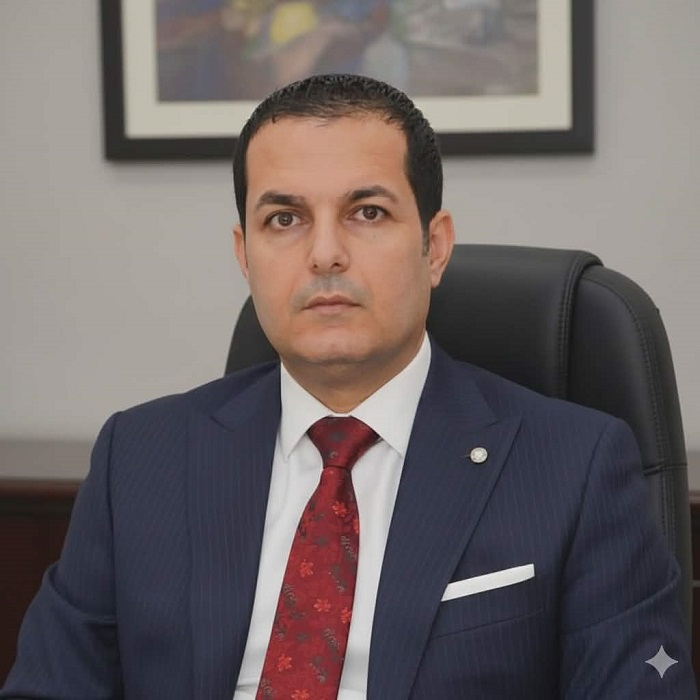
By: Dr. Bahzad Taher Salim
Associate Professor of Strategy and Innovation
Erbil Polytechnic University
Introduction
The Kurdish question is not merely an ethnic or nationalist issue; it is one of the most complex geopolitical dilemmas in modern international politics. The Kurds, numbering over 60–70 million people, represent the largest stateless nation in the world. Despite their historical presence in the Middle East and their repeated contributions to regional security, especially in the fight against extremist groups, international recognition of an independent Kurdish state has remained absent.
This essay argues that the opposition of the United States, European powers, Russia, and key regional states to Kurdish independence is primarily driven by geopolitical self-interest, power preservation, and economic–strategic calculations, rather than by concerns over regional stability or international law. In fact, the emergence of an independent Kurdistan could significantly reduce conflict in the Middle East, precisely the outcome that threatens entrenched political and economic interests.
1. The Geopolitical Impact and Location of a Greater Kurdistan
A central reason for opposition to Kurdish statehood lies in the geographic scale and strategic location of Kurdistan. A potential Kurdish state would encompass large territories from southeastern Turkey, northwestern Iran, northern Iraq, and northern Syria. This region is:
Rich in natural resources, especially oil, gas, and water.
Located at a strategic crossroads between the Middle East, Anatolia, and Central Asia.
Militarily significant due to its mountainous terrain, which historically favors defence.
Such a state would not be a small or weak country. On the contrary, it would immediately emerge as a major regional power, both territorially and demographically. This reality directly threatens existing states whose power, identity, and legitimacy depend on their current borders.
For Turkey, Iran, Iraq, and Syria, Kurdish independence would mean:
Loss of territory and resources
Reduced population size
Weakened regional influence
Weaken their military, economic, and geopolitical power.
Internal legitimacy crises
From the perspective of global powers, this shift would destabilize long-standing alliances and strategic arrangements built around these states. From a power-politics perspective, this redistribution of territory and influence is unacceptable to both regional governments and global powers that rely on the current balance of power.
2. Power Reduction of Regional States and the End of Regional Threats
The current political order of the Middle East allows a small number of states, especially Turkey and Iran, to project power far beyond their borders. These states:
Engage in proxy wars
Threaten neighboring countries
Influence regional conflicts in Iraq, Syria, Yemen, and Lebanon
If Kurdistan were established, these states would be geographically and politically fragmented. Their ability to:
Project military power
Control trade routes
Dominate neighboring states
would be drastically reduced.
For example:
Iran’s direct access to Iraq and Syria would be limited
Turkey’s reach into Syria and Arab conflicts would shrink
Syria would lose its northern strategic depth
Iraq would no longer be a central arena for regional power struggles
As a result, the Middle East would shift from a few dominant regional powers to a more balanced system of smaller states, reducing the likelihood of large-scale wars. Ironically, greater stability would lessen the need for external “security management,” which is not always profitable for global powers.
3. Why Reduced Conflict Is Not Profitable for Global Powers
A common assumption is that global powers seek peace and stability. In reality, managed instability often serves their interests better. Ongoing tensions allow external powers to:
Maintain military bases
Justify interventions
Influence the domestic politics of regional states
Secure long-term economic and security agreements
The Middle East has been one of the world’s largest markets for:
Weapons
Military training
Security technology
A stable and powerful Kurdistan would disrupt this system by reducing the need for constant external “security guarantees.” If the region were more balanced and less polarized, such large-scale arms purchases would decline. A strong and stable Kurdistan could act as a buffer and stabilizing force, reducing the perceived threats that currently drive militarization.
4. Arms Trade, Fear Politics, and the Saudi–Iran Rivalry
The rivalry between Saudi Arabia and Iran illustrates how fear is transformed into economic and political gain for Western powers. Saudi Arabia, fearing Iranian expansion and influence, has become one of the largest arms buyers in the world, purchasing weapons primarily from the United States and Europe.
This arms buildup:
Does not resolve the root causes of conflict
Locks regional actors into dependency on foreign suppliers
Sustains a permanent state of tension
If Kurdistan were established, Iran’s regional reach would be significantly limited. Reduced Iranian influence would:
Decrease Saudi Arabia’s sense of existential threat
Lower demand for massive arms purchases
Reduce Western leverage over Gulf states
From this perspective, peace is not only politically inconvenient but also economically costly.
5. Sectarian Conflict and the Kurdish Alternative
Much of the Middle East’s instability is explained through Shia–Sunni divisions, but these sectarian narratives often mask deeper geopolitical struggles. Iran, Turkey, Iraq, and Syria have repeatedly instrumentalized sectarian identity to mobilize populations and justify intervention.
Kurds, however, historically do not organize their political identity primarily along sectarian lines. Kurdish society includes:
Sunni Muslims
Shia Kurds
Yazidis
Christians and Jews
Other religious minorities
This pluralism weakens the effectiveness of sectarian mobilization. A Kurdish state would therefore undermine one of the most powerful tools used by regional and global actors to control and divide the Middle East. An independent Kurdistan would disrupt the current sectarian chessboard by introducing a non-sectarian, pluralistic actor into the region, something that neither regional authoritarian regimes nor global powers are accustomed to managing, and sectarian conflict is not necessarily welcome.
6. Kurdistan as a Stabilizing and Peace-Oriented Power
Another central concern is that Kurdistan could become the most stable and powerful state in the region, not through aggression, but through internal cohesion, strategic geography, and natural resources. A future Kurdistan would likely prioritize:
Internal stability
Economic development
Diplomatic neutrality
Regional cooperation
Unlike many states in the region, Kurdish political movements have generally sought recognition rather than domination. A peaceful, democratic, stable, and inclusive Kurdistan would refuse to act as:
A proxy battlefield
A tool for foreign intelligence agencies
A base for regional destabilization
Promote cooperation over confrontation
This independent posture threatens the geopolitical strategies of powers accustomed to manipulating weaker states. Such a state would not allow its territory to be used as a battlefield for global power struggles. This independence from external influence is precisely what makes it threatening to dominant global and regional actors.
7. Kurdish Governance, Social Tolerance, and Regional Contrast
Despite decades of repression and marginalization, Kurdish regions have shown a remarkable capacity for:
Social coexistence
Minority protection
Gender participation
Relative political openness
Coexistence among Kurds, Arabs, Turkmen, Christians, Yazidis, and others
Respect for religious diversity
A strong cultural emphasis on dignity, bravery, and resistance to oppression
In contrast to many Middle Eastern regimes built on authoritarianism and exclusion, Kurdistan could present a competing political model, one based on inclusion rather than repression. This example would challenge the legitimacy of neighbouring regimes and inspire marginalized groups elsewhere. A state founded on these principles would challenge dominant narratives that the Middle East is inherently unstable or incapable of peaceful governance.
8. The Ultimate Fear: A Peaceful Region Without External Control
The most profound fear surrounding Kurdish independence is not war, it is peace. A peaceful Middle East would:
Reduce foreign military presence
End the justification for endless interventions
Weaken the arms industry’s influence
Empower regional populations to shape their own futures
A strong Kurdistan could serve as a barrier against regional manipulation, making it harder for global powers to engineer conflicts or maintain dominance.
Conclusion
The continued denial of Kurdish statehood is not a coincidence nor a legal necessity. It is the result of deliberate geopolitical calculations by both regional and global powers. An independent Kurdistan would reshape borders, reduce conflict, weaken dominant regional states, and undermine systems that profit from instability. For those who benefit from chaos, a peaceful and powerful Kurdistan is not a solution; it is a threat.