Iran’s Calculated Response: What Comes After the Al Udeid Strike?
 Gulan Media
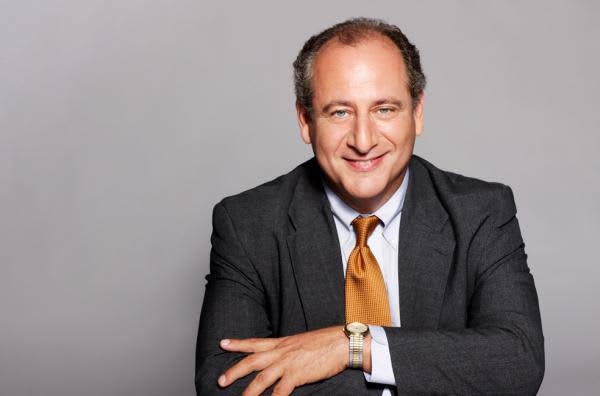
By David L. Phillips – Exclusively for Gulan Media
David L. Phillips is an Academic Visitor at Oxford University beginning October 2025. He previously served as a Senior Adviser to the U.S. State Department in the Bureau of Near Eastern Affairs.
Gulan Media is proud to present this exclusive piece by David L. Phillips, a veteran U.S. foreign policy adviser and academic. In this timely piece, Phillips analyzes the strategic logic behind Iran’s measured retaliation following U.S. strikes on its nuclear facilities — and outlines potential flashpoints, particularly in Iraq, Kurdistan, and Syria.
“Persian pride” necessitates a response from Iran to recent attacks by the US against its nuclear program. Predictably, Iran launched missiles against the Al Udeid base in Qatar on Monday afternoon. It notified the Trump administration in advance so as not to escalate a major confrontation.
Tehran must strike a delicate balance. It does not want to escalate conflict with the United States that could close the door on diplomacy. At the same time, it must placate Iranians who feel the US lied to them and attacked without cause. All sides should take pains to make sure the conflict does not spiral out of control.
In January 2020, when the US assassinated Major General Qasem Soleimani, Iran responded with missile strikes on a US base in Iraq. However, Iran showed restraint to avoid a full-scale regional escalation. Tehran knows it is no match for US firepower. In the spirit of proportionality, the attack on Al Udeid used the same number of missiles as the US used to strike Iran's nuclear facilities.
What are Iran's options today?
Iran could close the Strait of Hormuz, through which most of its oil is exported. Doing so would collapse Iran’s economy, antagonize neighboring Gulf States, and galvanize the world against it. Alternatively, Iran could work through the Houthis, Iran’s proxies in Yemen, to attack shipping. This could put yet another temporary halt to Red Sea oil exports, restarting the Red Sea Crisis.
In addition, Iran could attack the energy infrastructure of the Gulf States, as it did in 2019. It could focus on cyber warfare or launch terrorist attacks against American interests in the region and abroad. Iran could also withdraw from the Nuclear Nonproliferation Treaty, although this would be viewed as a sign that Iran would use its remaining enriched uranium to make a bomb. Weaponizing its nuclear energy program would provide deterrence but also risks a US response with disastrous consequences.
It's not likely that Iran is through after striking Al Udeid. The announced ceasefire is a welcome development. But, in the words of Ronald Reagan, “Trust but verify.”
It's my view that Iran might still work with Shiite militants to target U.S. personnel and interests in Iraq and Syria. “Operational plans have been established for that purpose,” says Abu Ali al-Askari of the Iranian-backed, Kataib Hezbollah militia. Armed groups aligned with Iran, including Kataib Hezbollah, Asaib Ahl al-Haq, and Harakat al-Nujaba, have vowed to respond if Washington expands its strikes against Tehran.
It’s been reported that Iran-backed militias in Iraq have established a joint headquarters and divided the country into three military zones—north, central, and west—as part of a contingency plan for retaliatory attacks on US forces. These Shiite militias notified Iraq’s Prime Minister Mohammed Shia al-Sudani last week of their readiness to act.
Facilities in Iraqi Kurdistan are the most vulnerable. There are about 2,500 US troops stationed in Iraq, including forces in Iraqi Kurdistan at the Al-Hariri Air Base in Erbil. Peshmerga units are monitoring activity around the airbase. The escalation of conflict with Iran comes when the US-led coalition is scheduled to end its mission in federal Iraq by the end of 2025, and in the Kurdistan Region by September 2026.
Northeast Syria is another locus of the US-led International Coalition in the region. The coalition provides logistical and military support to the Syrian Democratic Forces (SDF) using land convoys and aerial deliveries to supply its bases and reinforce its operational capacity.
Earlier this year, the UK-based Syrian Observatory for Human Rights reported that 260 trucks carrying military and logistical supplies from the U.S.-led coalition entered Syria from Iraq’s Kurdistan Region, arriving at coalition bases in Deir ez-Zor and Hasakah. Last week, more than 200 trucks loaded with military and logistical supplies crossed into Rojava through the al-Waleed border crossing on their way to bases in Qasrak and Estirahat al-Wazir in Hasaka province. Including military helicopters, the reinforcements were transferred via the al-Waleed border crossing between Iraqi Kurdistan and Rojava.
The Observatory also indicated that 32 cargo aircraft loaded with weapons, military equipment, and troops recently landed at coalition bases, mainly in Hasakah province, including the strategic Kharab al-Jir base.
Since the overthrow of Bashar al-Assad, Iran has found a new adversary in Syria’s President Ahmed al-Sharra. US troops in Rojava are vulnerable. Two weeks ago, observers indicate that Iranian drones attacked SDF bases in Deir Ezzor and Raqqa.
If Iran launches reprisals against US interests in the region, Iraq and Syria are ripe targets. The US has close ties with Kurds in the region. The SDF is allied with Kurds in Iran who are distrusted for their pro-Western proclivities, embrace of women’s rights, and support for federalism. Openly supporting the US makes the Kurds be low-hanging fruit for Iran’s reprisals.