
Siniša Malešević to Gulan: The Kurdish Question: “It Does Not Disappear; It Evolves” Amid Imperial and Colonial Legacies
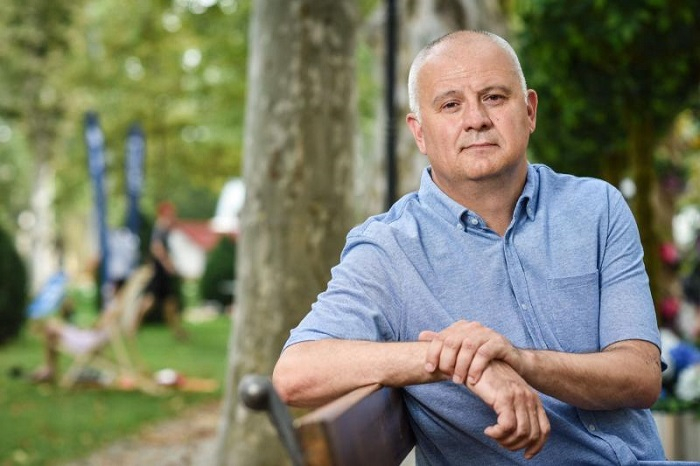
Professor Siniša Malešević is Professor of Sociology at University College Dublin and one of the most influential contemporary scholars of nationalism, violence, and historical sociology. He is the author of numerous major works, including Nationalism as a Way of Life, Grounded Nationalisms, The Sociology of War and Violence, and Nation-States and Nationalisms. His research focuses on how nationalism becomes embedded in everyday life, institutions, and modern human subjectivity across different historical and regional contexts.
GULAN Media: Professor, in Nationalism as a Way of Life, you argue that nationalism has become a deeply embedded part of everyday life and modern human subjectivity, rather than an exceptional or purely political ideology. From a sociological perspective, how does this transformation change the way we should understand nationalism today?
Professor Siniša Malešević: This book is a continuation of my previous work, but with a broader and more global perspective. What I am doing is setting out the theoretical framework of grounded nationalism and then applying it to different case studies from around the world, including Japan, Hungary, Ghana, and the former Yugoslav states. I am interested in understanding how modern subjectivity has become nationalized and why modern people are, almost by default, national subjects.
Much of the scholarship on nationalism has focused on the question of whether nations are modern. What I am trying to understand instead is why modernity itself is nationalist and why nationalism has become such a powerful ideology. Today we live in a deeply nation-centric world in which every society is expected to have a national flag, a national anthem, and national symbols. This was not the case two or three centuries ago, when the world was largely organized around empires with different legitimizing principles and forms of identification. In that earlier period, people identified primarily in religious, local, or kinship terms rather than national ones.
What I am examining is how this shift occurred and how nationalism became embedded in everyday life to the point that it now structures modern human subjectivity.
GULAN Media: If nationalism now shapes everyday experience, how should we understand the distinction between different forms of nationalism? You have been critical of the classical division between civic nationalism in the West and ethnic nationalism in the East. Is this distinction still analytically useful today?
Professor Siniša Malešević: I have always been critical of this very traditional understanding that presents Western nationalism as civic and Eastern nationalism as ethnic. This distinction does not hold up well empirically. Western nationalisms have always contained strong ethnic elements, even if they have presented themselves as civic.
If we look at France, which is often cited as the classic example of civic nationalism, the French Revolution did indeed begin as a civic project aimed at equality and inclusion. However, the reality was much more complex. The revolutionary ideals quickly gave way to imperial wars and assimilationist practices. French nationalism demanded cultural and linguistic conformity and imposed a very specific model of citizenship that was coercive in practice, despite being nominally civic.
Rather than thinking in terms of rigid categories, it is more accurate to understand civic and ethnic nationalism as existing on a continuum. All nationalisms contain both civic and ethnic elements, but in varying proportions. Some are more inclusive, while others are more exclusive, and these characteristics can change over time. Even civic nationalism can be exclusionary, just as ethnic nationalism can incorporate inclusive elements. What matters most is not the label but the degree of inclusiveness.
GULAN Media: How does this more flexible understanding apply beyond Europe, particularly in the Middle East?
Professor Siniša Malešević: Every nationalism, whether Iraqi, Kurdish, or otherwise, contains both civic and ethnic components. Iraqi nationalism, for example, can be framed in an exclusionary way by privileging one religious or sectarian group, but it can also be articulated in a civic way that emphasizes shared citizenship and equal rights despite cultural or religious differences.
The same applies to Kurdish nationalism. Although it is often described as ethnic, it is internally diverse, with different linguistic, political, and cultural expressions. Even ethnic nationalism can include civic elements. The key issue is whether a nationalism is able to incorporate diversity and remain inclusive.
GULAN Media: You introduced the concept of grounded nationalism to explain why some nationalist movements succeed while others fail. How does this framework help us understand nationalism in the Middle East?
Professor Siniša Malešević: Grounded nationalism focuses on three central processes. The first is organizational power. Nationalism begins with small groups but must develop strong organizations, such as political parties, movements, institutions, and eventually control over state structures. Without organizational capacity, nationalist movements struggle to endure.
The second process is ideological penetration, which refers to how nationalist ideas spread from elites to wider society. This requires literacy, education systems, mass media, and a shared public sphere. In pre-modern contexts, this was extremely difficult because people identified primarily with local or kin-based communities rather than abstract national categories.
The third process is micro-solidarity, which involves embedding national identity into everyday life. This includes family networks, friendships, social rituals, sports, and cultural practices. When people experience the nation as part of their daily interactions, nationalism becomes deeply rooted.
In the Kurdish case, organizational capacity has often been strong, with numerous political parties and movements across different regions. Micro-solidarity also functions effectively. However, ideological fragmentation, including political and linguistic differences, has posed significant challenges for Kurdish nationalism.
GULAN Media: The Kurds are often described as the largest stateless nation in the world. From a historical sociological perspective, is this statelessness mainly the result of internal fragmentation or of organized brutality by dominant states?
Professor Siniša Malešević: The Kurdish question cannot be understood without taking imperial and colonial legacies into account. Great power geopolitics played a decisive role in dividing Kurdish regions across multiple states. This division was imposed from above, beginning with Ottoman and Safavid imperial arrangements and later reinforced by British and French colonial policies.
The aggressive assimilationist policies of dominant states, particularly in Turkey during the early republican period, further intensified Kurdish nationalism. The insistence that citizens could only be Turkish left no space for Kurdish identity and contributed to the radicalization of Kurdish political movements.
The emergence of Kurdish autonomy in Iraq after the fall of Saddam Hussein marked a significant turning point. For the first time, Kurds possessed institutions resembling statehood, which has had a profound impact on Kurdish nationalism and its future possibilities.
GULAN Media: Many classical theories argue that nationalism is produced by the state. How does Kurdish nationalism challenge these theories?
Professor Siniša Malešević: Western European nationalism often followed a state-first trajectory, but this is not a universal pattern. In Eastern Europe and the Middle East, nationalism frequently emerged from below, before the creation of independent states.
Statist theories cannot adequately explain Kurdish nationalism, nor can ethnosymbolist approaches that place excessive emphasis on cultural continuity. Kurdish nationalism exists despite linguistic diversity and the absence of a sovereign state. What matters most is organizational capacity and ideological resonance within society.
GULAN Media: Why did Arab nationalism fail to produce an inclusive civic identity and instead evolve into authoritarian and militarized systems?
Professor Siniša Malešević: Arab nationalism was shaped by competing imperial legacies, religion, socialism, and Pan-Arabism. It never developed into a coherent and unified project. When socialist ideologies collapsed, religion increasingly filled the ideological vacuum, often in a nationalist form.
Groups such as ISIS openly rejected nationalism but operated according to nationalist logic, privileging certain groups and enforcing rigid hierarchies. This demonstrates how deeply nationalist structures remain embedded even when expressed through religious language.
GULAN Media: Can nationalism serve as a framework for stability in the Middle East, or is it inherently tied to violence?
Professor Siniša Malešević: Nationalism has two faces. It can integrate diverse populations, but it can also generate exclusion and violence. Much depends on whether it incorporates civic principles such as equal rights, constitutional guarantees, and recognition of diversity. Violence in the region is not the product of ancient hatreds but of political projects shaped by imperial legacies and state policies.
GULAN Media: Has religion replaced nationalism in the Middle East, or are we witnessing religious nationalism?
Professor Siniša Malešević: What we are witnessing is religious nationalism. Religion has not replaced nationalism but has been absorbed into it. Religious symbols are used as markers of national belonging rather than purely theological commitments. This phenomenon is visible globally, not only in the Middle East.
GULAN Media: Finally, how do you see the future of Kurdish nationalism in the twenty-first century?
Professor Siniša Malešević: Experiments such as Rojava demonstrated the potential for inclusive and democratic forms of Kurdish self-organization. Iraqi Kurdistan has shown that Kurdish institutions can function effectively under extremely difficult conditions. The future of Kurdish nationalism will depend heavily on geopolitical developments, particularly in Turkey and in the global balance of power. Kurdish independence is not impossible. National movements do not disappear; they evolve.