Iraq Faces Political Deadlock as US Warns Against Maliki’s Return
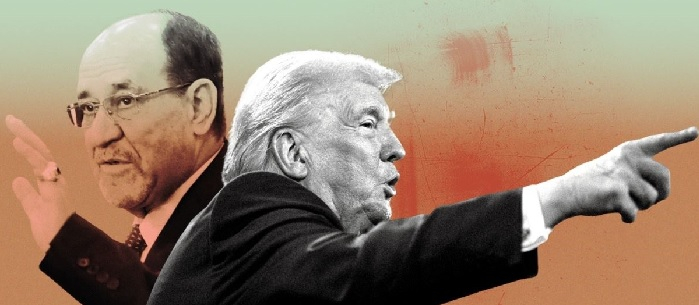
Iraq’s post-election political process has entered a critical phase after the Coordination Framework, the largest parliamentary bloc made up of Shiite parties close to Iran, nominated former prime minister Nouri al-Maliki to lead the next government, despite strong opposition from the United States.
The move comes months after legislative elections held last November and follows prolonged negotiations among political factions. Former US President Donald Trump publicly warned against Maliki’s nomination, threatening to suspend US assistance to Iraq if he returns to office, a stance that has intensified pressure on the Coordination Framework.
Despite reaffirming its support for Maliki on Wednesday, sources close to the alliance said internal discussions are ongoing to reassess the next steps, particularly in light of Trump’s warning. The sources expressed deep concern that Washington could impose sanctions on Iraq should Maliki assume the premiership.
Political observers report growing divisions within the Coordination Framework. Some leaders are urging Maliki to withdraw to shield the country from potential US retaliation, while others insist on standing firm and rejecting what they describe as foreign interference. The disagreements underscore a broader struggle over Iraq’s political direction and foreign alignments.
An Iraqi official close to Maliki said the former prime minister does not seek confrontation with Washington, adding that his team is working to reach “understandings” with the US administration. “The situation is difficult, but not impossible,” the official said, noting that progress would require time.
Iraq, already grappling with sluggish economic growth, remains vulnerable to external pressure. The United States has previously sanctioned Iraqi entities accused of helping Iran evade international restrictions, making the prospect of further punitive measures a serious concern for Baghdad.
Political analyst Ihsan al-Shammari warned that Washington views Iraq and Iran as a single strategic file. He cautioned that forming a government perceived as aligned with Tehran could push Iraq toward international isolation through sanctions and intensified political pressure, with far-reaching consequences for the country’s economy and financial system.
Maliki, 75, served as prime minister from 2006 to 2014, a period marked by the withdrawal of US troops, heightened sectarian violence, and the rise of the Islamic State group, which seized large areas of Iraqi territory. Relations between Baghdad and Washington deteriorated during his second term as his ties with Tehran strengthened.
In a post on his Truth Social platform earlier this week, Trump described Maliki as “an extremely bad choice,” warning that the United States would not provide future assistance to Iraq if he were appointed prime minister.
The warning carries particular weight given Washington’s significant influence in Iraq. Oil export revenues are deposited at the US Federal Reserve in New York under arrangements established after the 2003 US-led invasion. US companies have also made substantial investments in Iraq in recent years.
Prime Minister Mohammed Shia’ al-Sudani, who maintains relatively strong relations with Washington, has repeatedly called for increased foreign investment, particularly in the oil sector, which accounts for roughly 90% of Iraq’s state revenues. As political uncertainty deepens, analysts say the stakes for Iraq’s economic and diplomatic future continue to rise.