Ocalan Warns of Coup Risk if Peace Fails, Proposes "Local Democracy" for Kurds in Turkey
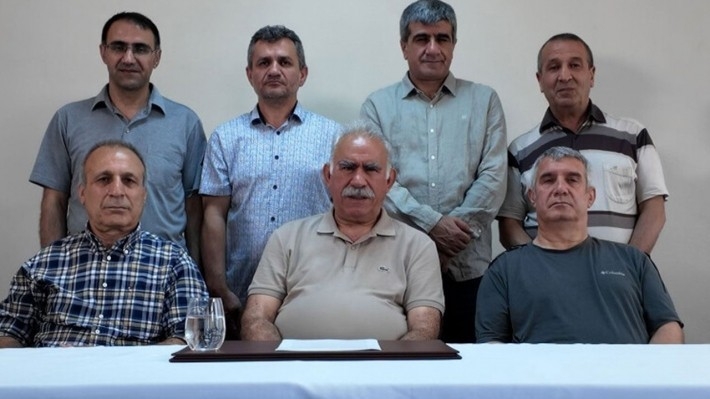
Imprisoned PKK leader Abdullah Öcalan has warned Turkish lawmakers that the collapse of the ongoing peace process could trigger a military coup, according to official parliamentary minutes released on Thursday. The documents also reveal a significant strategic shift, with Öcalan explicitly abandoning demands for an independent Kurdish state or federalism in favor of a "local democracy" model within Turkey’s existing borders.
The transcripts, made public by the Turkish Parliament on January 23, 2026, detail a meeting held two months ago at İmralı Prison. A multi-party delegation from the parliamentary “Peace Process Committee”—including members of the ruling Justice and Development Party (AKP), the nationalist Nationalist Movement Party (MHP), and the pro-Kurdish Peoples’ Equality and Democracy Party (DEM Party)—visited Öcalan as part of efforts to revive a stalled peace process.
According to the records, Öcalan distanced himself from longstanding Kurdish nationalist goals. “What I want for Turkey, we also desire for Syria; and that is local democracy, not federalism,” he stated. The concept appears designed to address Ankara’s paramount concern for territorial integrity by advocating for decentralized governance within Turkey’s unitary state structure, rather than political separation or formal autonomy.
A central and striking element of the discussion was Öcalan’s warning about the domestic political risks of failure. He told the delegation that if the peace process collapses, a “coup mechanism” within the state could be activated.
Citing Turkey’s history of military interventions during periods of political crisis, he argued that past attempts to address the Kurdish issue had coincided with coups. His implication was that anti-reform forces could again seek to intervene should the current negotiations break down.
On the critical issue of disarmament, Öcalan stated that the PKK laying down its arms would require prior “mental and legal groundwork” by the Turkish state. This suggests that demilitarization is inextricably linked to political and legal reforms. Nonetheless, he expressed confidence in his ability to influence PKK commanders based in Iraq’s Qandil Mountains.
“We can remove weapons from Turkey’s agenda forever,” he reportedly told the lawmakers.
The discussions extended beyond Turkey’s borders. Öcalan addressed the situation in northern Syria, stating he could help influence Kurdish actors there, including the Syrian Democratic Forces (SDF). He emphasized that any settlement in Syria must guarantee the rights of all ethnic groups.
In a notable moment, Öcalan praised MHP leader Devlet Bahçeli for his engagement in the process, calling it an act of “rare courage.” This is significant given the MHP’s traditionally hardline nationalist stance against negotiations with the PKK.
Regionally, Öcalan also called on Iran to expand democratic rights for its Kurdish and Azeri populations and to end executions. He offered a nuanced comment on Israel, criticizing its current policies but stating that regional dynamics “could not be shaped without Kurdish participation.”
The release of the detailed minutes marks an unusual step toward transparency for a process typically shrouded in secrecy. The documents underscore both the potential for a negotiated end to a conflict that has claimed tens of thousands of lives since the 1980s and the profound political stakes involved.
Öcalan’s twin messages—a stark coup warning and a recalibrated political demand centered on “local democracy”—point to a strategic pivot as Turkish political actors weigh the prospects and perils of a renewed peace effort. The revelations are likely to reignite public debate and political maneuvering around one of Turkey’s most intractable and defining conflicts.