Kurdish Leader Barzani Says International Pledges of Support Secured Amid Rising Tensions in Syria
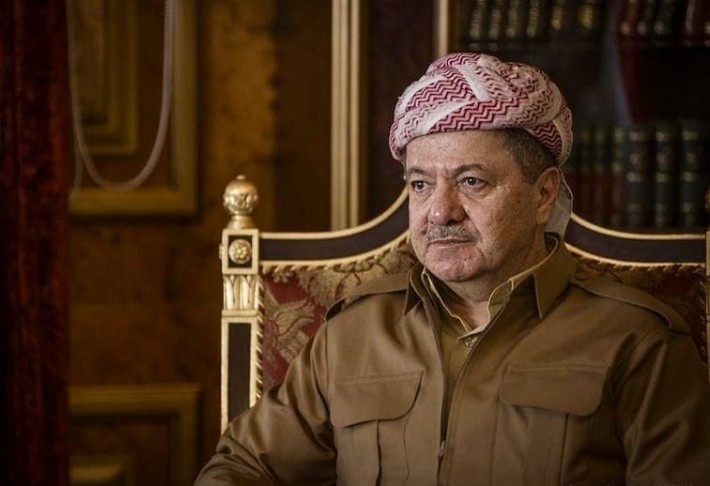
Masoud Barzani, the President of the Kurdistan Democratic Party (KDP), stated on Friday that international officials pledged support for the protection of the Kurdish people, especially in northeast Syria (Rojava), during his recent visit to Italy. His comments come as hostilities intensify across several regions in Syria.
Speaking at a press conference, Barzani addressed the escalating situation, linking the unrest partly to unresolved issues in Arab-majority areas formerly within the Kurdish-led Syrian Democratic Forces (SDF). "I had previously warned Mazloum Abdi to address the situation in areas with an Arab majority, which could cause them problems in the future," Barzani said, referencing the SDF's commander-in-chief.
He expressed particular concern for the city of Kobane, a symbolic Kurdish center facing sustained pressure. "I will do what I can. We have made every effort, and if I had the opportunity as before, I would have sent forces to protect it," Barzani stated, alluding to the 2014 Kurdish intervention against ISIS. He firmly declared Kobane a Kurdish city "that must not be touched."
While vowing that "all necessary measures" would be taken if Kurds are subjected to aggression, Barzani simultaneously urged restraint to prevent ethnic warfare. "My message is the necessity of defending Western Kurdistan, but without allowing matters to slide into violence... that would be a major catastrophe," he said, highlighting the role of media and political actors in de-escalation.
Barzani revealed diplomatic outreach to Syrian President Ahmad al-Sharaa, conveying that attacks on Kurds are unacceptable and would have "very serious consequences." He also disclosed involvement in U.S.-brokered ceasefire efforts, noting that a meeting in Erbil between Mazloum Abdi, U.S. envoy Tom Barrack, and the commander of U.S. Central Command led to an agreement and "some positive steps." "We hope this agreement will continue," he added.
Fighting has escalated since mid-January, with the Syrian Arab Army advancing into areas previously under SDF control in eastern Aleppo, Deir ez-Zor, Raqqa, and Hasakah provinces. The ceasefire in Kobane remains fragile, with both sides accusing each other of violations.
Barzani pointed to shifting allegiances of certain Arab tribes—from the Syrian government to ISIS, to the SDF, and back to Damascus—as a core source of instability. "This is where the problem lies," he said.
He reiterated that current Kurdish efforts are concentrated on preserving control and safety in remaining Kurdish-held areas and protecting rights "by all means."
The Autonomous Administration of North and East Syria issued a stark assessment on Thursday, describing the developments in Kobane and Jazira as a "systematic war of extermination" aimed at undoing Kurdish achievements. It reported that Kobane is enduring severe deprivation, with attacks cutting off water, electricity, and internet services.
Despite the rising tensions, Barzani emphasized a preference for peaceful resolution. "I do not believe in war and have never sought it," he said. "But if it comes to an attack on the existence of the Kurds, then we will all stand united... We hope matters will be resolved through dialogue, but the final decision remains in the hands of the United States in shaping the next phase."