Kurdistan Region Plays Key Mediating Role in Syria De-escalation Efforts, SDF Commander Says
In a significant development amid ongoing attempts to stabilize Syria, the commander of the U.S.-backed Syrian Democratic Forces (SDF) has publicly highlighted the critical role of Iraq's Kurdistan Region in facilitating dialogue between his group and the Syrian government.
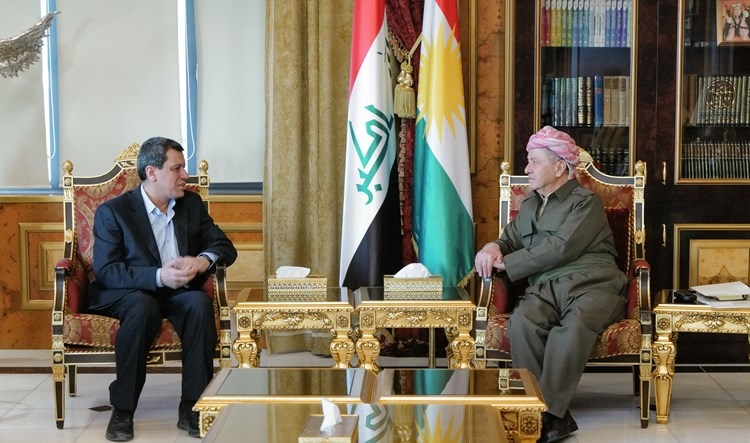
General Mazloum Abdi, in a statement on his official X account, expressed strong appreciation for the efforts of Kurdistan Region President Nechirvan Barzani and Kurdish leader Masoud Barzani. He stated that their "support for political initiatives remains ongoing and is being coordinated with the US mediator."
Abdi's remarks followed a meeting with President Nechirvan Barzani, which he described as part of "political efforts aimed at bringing viewpoints closer between us and the Syrian government." The SDF commander said the joint focus is on achieving a ceasefire, returning to dialogue, and implementing agreements to ensure a successful "integration process" between the SDF and Damascus.
"The position of the Kurdistan Region, its leadership and its people, is held in great appreciation and respect by our people," Abdi added.
This diplomatic push from Erbil coincides with intensified international advocacy by Kurdish leaders. President Masoud Barzani, speaking from Italy, reiterated calls for stronger global support to safeguard Kurdish rights in Northern Syria, referred to as Western Kurdistan.
At a press conference in Rome, Barzani detailed that senior Italian officials, including the Pope, had expressed sympathy for the Kurdish people and concern over instability in Syria and the region. "The Italian leadership has reaffirmed its continued support... and stressed the importance of advocating with their allies in Europe and the United States to support Kurdish rights," he said.
Barzani also provided details on behind-the-scenes diplomacy, confirming a high-level meeting in Erbil involving Abdi, U.S. Special Envoy for Syria Tom Barrack, and U.S. Central Command Commander Admiral Brad Cooper. That meeting, he said, resulted in an agreement on a ceasefire and "positive steps" toward stability.
Warning of broader dangers, Barzani stated that the current instability has created a "golden opportunity" for a resurgence of ISIS, with several militants having escaped recently. He confirmed an agreement between the U.S. and Iraq to transfer remaining ISIS detainees to Iraqi prisons.
Expressing deep concern for the besieged city of Kobani, Barzani pledged continued support and highlighted the humanitarian work of the Barzani Charity Foundation in Northern Syria. "Our hearts and minds are with our brothers and sisters in Western Kurdistan," he said.