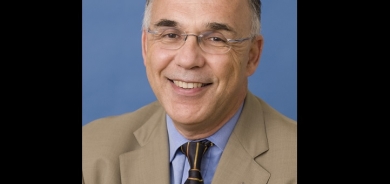
Professor Dr. Eckart Woertz to Gulan: A Transactional US Values the Kurdish Contribution Against ISIS Less Than Earlier Administrations
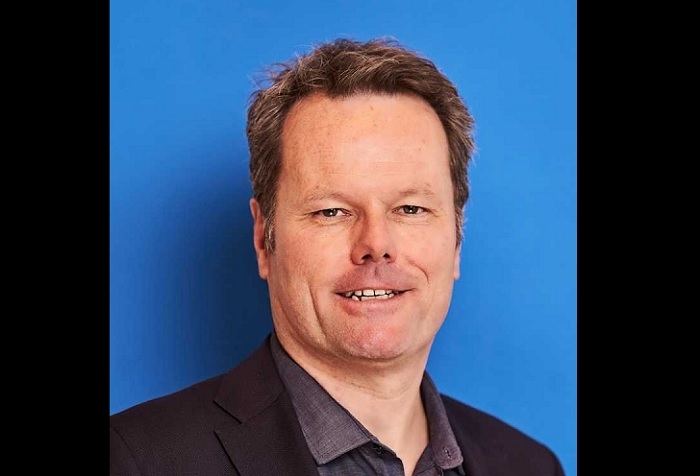
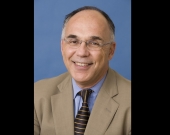
Professor Dr. Eckart Woertz is Director of the GIGA Institute of Middle East Studies in Hamburg and Professor of Contemporary History and Politics of the Middle East at the University of Hamburg. He previously served as Senior Research Fellow at the Barcelona Centre for International Affairs (CIDOB) and has held academic and research positions at leading institutions including Sciences Po (Paris), Princeton University, and the Barcelona Institute of International Studies (IBEI). An economist by training, Professor Woertz holds a PhD from Friedrich-Alexander University Erlangen–Nuremberg. His research focuses on the modern history of Iraq, the political economy of the Middle East, and issues of energy and food security, with particular expertise on the Gulf region, Iraq, Egypt, and Syria. He serves on the editorial boards of several prominent international journals and is a recognized authority frequently consulted by media and policymakers on Middle Eastern affairs.
Gulan: You are a leading expert on the modern history of Iraq (1979–2003). To what extent do you believe the political and economic legacy of the Ba‘ath era still shapes Iraq’s current political deadlock, particularly regarding the central state and the distribution of resources?
Professor Dr. Eckart Woertz: The current muhasasa system has its origin in the US occupation period and the reordering of the country after 2003. However, the Ba’ath era still shapes important grievances in the country, for example about past human rights violations and resource distribution. Iraqi historians are sometimes reluctant or face resistance to research issues that occurred after 1968 or even after 1958. This is indicative of how sensitive the past Ba’ath era still is.
Gulan: From a political economy perspective, Iraq is often described as a rentier state. Do you believe Iraq can achieve long-term stability under this system, or do rivalries over oil revenues prevent any genuine reform?
Professor Dr. Eckart Woertz: Iraq is seen as a “poor rentier state”. Compared to rich rentier states like Qatar and Kuwait or middling ones like Saudi Arabia, its oil rent endowment per capita is relatively small. However, the share of oil in government revenues and exports is very high, as Iraq does not produce much else that could be exported. Hence, economic diversification is very important. Oil rents per capita might decline further, as the population is growing, oil production is difficult to increase from current levels, and oil prices might prove volatile because of growing output by competing providers (e.g. Venezuela) or energy transitions towards renewables.
Gulan: Relations between Erbil and Baghdad have always fluctuated between tension and dialogue. In your view, is the core problem still rooted in constitutional ambiguity, or has it evolved into a broader geopolitical struggle among regional powers operating inside Iraq?
Professor Dr. Eckart Woertz: Relations between Erbil and Baghdad are shaped by regional interests, but also by purely domestic ones. My sense is that the purely domestic ones are more decisive in the end.
Gulan: After years of conflict, there is now increasing discussion about the normalization of relations between Arab states and the Syrian government. Does this signal the success of authoritarian governance models in the region, and what does this new equation mean for the future of the Kurdish regions in northern Syria (Rojava)?
Professor Dr. Eckart Woertz: Kurdish autonomy in northern Syria is under pressure by the Turkish government that seeks to prevent Kurdish statehood in its neighborhood, the new regime in Damascus that hopes to regain centralized control, and a transactional US under Trump that values the Kurdish contribution in the fight against the Islamic State less than earlier administrations.
Gulan: You are one of the prominent scholars working on food security in the Middle East. In the context of climate change and water scarcity, how can Iraq and Syria prevent a humanitarian catastrophe and large-scale population displacement in the near future?
Professor Dr. Eckart Woertz: The Middle East does not have enough water to produce all its food requirements. It will remain dependent on food imports. Hence, it is crucial that exportable surpluses are achieved elsewhere, that global food markets stay open without export restrictions, and that the region’s countries earn enough foreign exchange to pay for such food imports, ideally not only from oil income.
Gulan: Energy has always been key to understanding the Middle East. Will the global transition toward green energy weaken the geopolitical position of Gulf states and Iraq, or will oil and gas remain their primary leverage for the foreseeable future?
Professor Dr. Eckart Woertz: If such energy transition should occur it could have long-term consequences for the region. Oil and natural gas prices would be affected negatively and lastingly. But we are not there yet. Currently, oil demand is still growing and there are sectors such as petrochemicals that cannot be substituted by electrification from renewables. Hence, it remains to be seen whether it will be an energy transition or rather an energy addition; in which fossil energies will remain important alongside renewables.
Gulan: As the director of a major research institute in Germany (GIGA), how do you assess German and European Union foreign policy toward the Kurdish issue in Iraq and Syria? Does Europe primarily view the region through the lens of migration and terrorism, or is there a broader strategic vision?
Professor Dr. Eckart Woertz: There is sympathy for the Kurdish contribution to the fight against the Islamic State and the more liberal and secular outlook in many parts of Kurdish territories. However, neither for Europe nor for Germany Kurdish issues are a foreign policy priority. The focus is more on migration and terrorism as you point out, as well as regional stability and the Israeli-Palestinian conflict.
Gulan: Is the nation-state system imposed after Sykes–Picot still viable in the region, or are we moving toward a form of fragmented sovereignty in which non-state actors play a central role?
Professor Dr. Eckart Woertz: The importance of non-state actors has increased, not only in the Middle East. However, often they are deployed by or in coordination with state actors, hence they do not seem to supersede the state system but rather adding nuance to it.
Gulan: You are known for your strong emphasis on data-driven research. If we analyze Iraq and the Gulf states through data, how do their prospects look in terms of future food security and climate-related challenges?
Professor Dr. Eckart Woertz: The region will be one of the worst affected by climate change. Hence, climate change mitigation and adaptation should rank higher on the priority scale of politicians in the region, including issues of water and food security.