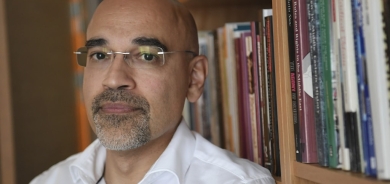
Professor Henri J. Barkey to Gulan: The Kurds Are Important, But Largely as a Legacy of Previous Policies
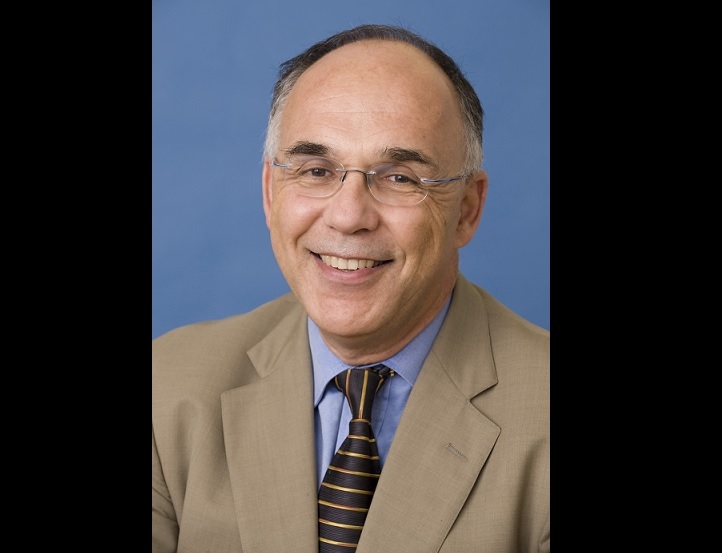
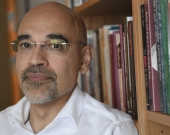
Professor Henri J. Barkey is one of the most influential and widely respected scholars on Middle Eastern politics, U.S. foreign policy, and Kurdish affairs. He is the Bernard L. and Bertha F. Cohen Professor of International Relations Emeritus at Lehigh University and a Senior Fellow at the Council on Foreign Relations (CFR), where his work focuses on Turkey, Iraq, Syria, Iran, and U.S. strategy in the region. Over several decades, Professor Barkey has advised governments, engaged with policymakers, and shaped academic and policy debates on some of the most complex geopolitical challenges facing the Middle East. His analysis is frequently sought by major international media outlets, think tanks, and decision-makers for its clarity, depth, and independence. Professor Barkey is widely regarded as one of the leading non-Kurdish experts on Kurdish politics and has closely followed Kurdish movements across Iraq, Turkey, and Syria for many years. His scholarship combines rigorous academic research with rare on-the-ground insight, making him a trusted voice on issues ranging from state collapse and regional security to minority rights and political reform. He has authored and edited numerous influential books and articles and has played a key role in shaping scholarly and policy conversations on Turkey’s domestic transformation, the Kurdish question, and the future of U.S. engagement in the Middle East.
Gulan Media: Is there any U.S. strategy within the Trump administration regarding the Kurdish future?
Professor Henri J. Barkey: I am not aware of any clear U.S. strategy within the Trump administration. The Kurds in Iraq remain important, but largely as a legacy of policies shaped by previous administrations. They are strategically located near Iran and provide a degree of balance and stability within Iraq. Syrian Kurds, meanwhile, have primarily been viewed as a means to contain and fight ISIS. Beyond that, I do not think President Trump has devoted much attention to the Kurdish question. ISIS has not yet been defeated, and without the Kurds, defeating it would be extremely difficult.
Gulan Media: Are the Kurds viewed as a strategic partner or a temporary ally?
Professor Henri J. Barkey: The United States, as we are increasingly seeing, no longer appears to have true strategic partners, at least under President Trump. By default, therefore, the relationship with the Kurds is better described as temporary rather than strategic.
Gulan Media: How might Baghdad respond to U.S. pressure regarding the Popular Mobilization Forces (PMF)?
Professor Henri J. Barkey: In some ways, the PMF’s most important external backer, Iran, has lost significant power and influence. This is not only due to the recent twelve-day war, but more importantly because of ongoing internal developments. Even if the Iranian regime manages to survive, at least temporarily, in the face of domestic opposition, few observers outside Iran, particularly in neighboring Iraq, see this as a model worth emulating. The regime’s claim that the unrest is foreign-induced has little credibility. The key question, therefore, is whether the PMF would want Iraq to experience a similar situation.
Gulan Media: Should the U.S. institutionalize support for the Peshmerga as a national force?
Professor Henri J. Barkey: I do not believe the United States is currently focused on this issue. As recent events show, Washington increasingly prefers unilateral action. The U.S. is distracted, overstretched, and likely to find it easier to allow the status quo to persist. It has not even fully stood up for the Syrian Democratic Forces (SDF).
Gulan Media: How will Washington balance Kurdish constitutional rights with Iraqi sovereignty after ISIS?
Professor Henri J. Barkey: Much depends on when a true “post-ISIS phase” begins. At present, ISIS appears likely to survive for some time. Moreover, the U.S. would argue that it is not its responsibility to guarantee the constitutional status of the Kurdistan Region. Ultimately, the region’s ability to protect its rights will depend on its own economic, political, and social performance. While the Kurdistan Regional Government has achieved some successes, it has failed to establish a conflict-free and corruption-free environment. The Kurdistan Region had a unique opportunity to demonstrate to Iraq and the wider region that it could govern effectively and responsibly. Unfortunately, this opportunity was squandered, as leaders chose personal enrichment and narrow power struggles instead.
Gulan Media: How willing is the U.S. to protect Kurdish gains in northern and northeastern Syria (Rojava)?
Professor Henri J. Barkey: At the time of writing, the Kurds in Rojava are under severe pressure and have been forced to retreat. The United States has done nothing in response. This is largely the result of decisions made by the Trump administration rather than President Biden. With President Trump likely to remain in power for another three years, Syrian Kurds must find a way to align their cause with this administration’s interests. At present, I do not have a clear answer as to how this can be achieved.
Gulan Media: Are there real prospects for reviving the peace process in Turkey?
Professor Henri J. Barkey: The so-called “peace process” has, in fact, been revived in the form of extensive negotiations and discussions that have included the DEM Party. However, I am not optimistic about their success. The underlying premise of the process is that Turkey must become more democratic in order to integrate its Kurdish population without resorting to forced assimilation. President Erdoğan has shown no interest in democratizing Turkey. On the contrary, his policies continue to restrict freedoms on a daily basis.
Gulan Media: Is the Kurdish issue regional, or must each part be addressed separately?
Professor Henri J. Barkey: There has always been a connection between the Kurdish issue in Turkey and developments in Iraq and Syria, historically more so with Iraq. Recently, however, Syria has become increasingly important. I believe that a regional solution will eventually emerge, but not in the near future. The world is undergoing profound economic and technological changes that will make cross-border connections easier as national boundaries and rigid identities lose significance. Still, we are likely decades away from such a transformation.
Gulan Media: What has been the greatest strategic mistake made by the Kurds in recent years?
Professor Henri J. Barkey: For Iraqi Kurds, the independence referendum stands out as a major strategic mistake. For the PKK, the failure was not seeking an earlier end to the armed struggle at a time when it may have held a stronger bargaining position.
Gulan Media:
Where do you see the Kurdish question heading over the next decade?
Professor Henri J. Barkey: This is an extremely difficult question. Much will depend on broader geopolitical developments, particularly the potential collapse or transformation of Syria and Iran.