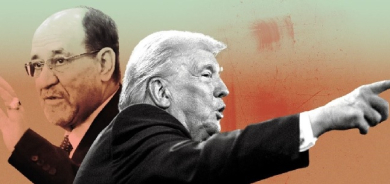
Professor Dr. John A. Hall to Gulan: Nation and state building go hand in hand

John A. Hall is (PhD, London School of Economics, 1976; MA, Pennsylvania State, 1972; BA, Oxford University, 1970). Professor, at McGill University since 1991.
Prof. Hall has held previous posts at Southampton University, the London School of Economics and Harvard University. His publications include The Sociology of Literature, Longmans, 1979; Diagnoses of Our Time, Heinemann, 1981; Powers and Liberties, Blackwell, 1985; Liberalism, Paladin, 1988; The State, (co-authored with G. J. Ikenberry), Minnesota, 1989; Coercion and Consent, Polity, 1994; International Orders, Polity, 1996; Is America Breaking Apart? Princeton (co-authored with Charles Lindholm), 1999; he has edited collections dealing with the state, the rise of capitalism, the social philosophy of Ernest Gellner, the theory of nationalism and the nature of civil society. At present he is writing on the interaction between nations, states and empires. He was an Invited Fellow at the Swedish Collegium for Advanced Studies in the Social Sciences (SCASSS) in Uppsala, Sweden, during the 1999-2000 academic year, Visiting Research Professor (1999-2002) at Queen's University in Belfast, and the Fowler Hamilton Fellow at Christ Church College, Oxford in 2003. He has been an Honorary Professor of Sociology and Politics at the University of Copenhagen since 2001. He served as Dean of the Faculty of Arts 2003-2005. His book titled "Ernest Gellner: An Intellectual Biography" was published in 2010 and longlisted for the Orwell Prize.
A Festschrift was published about his work and career in "States and Nations, Power and Civility: Hallsian Perspectives" published in 2019 (F. Duina, ed.). Contributors include former doctoral students (L. Riga. B. Turam, Y. Bayar) and colleagues M. Lange, and M. Mann.
His doctoral students have worked on diverse topics such as nationalism and state education systems, the social background of the Bolsheviks, Islamic sects in modern Turkey, and nationalism in Quebec and Scotland. In 2001, he became the James McGill Professor of comparative Historical Sociology. In 2004, he was awarded the Prix Marcel Vincent. In an exclusive interview He answered our questions like the following:
Gulan: Rather than emphasizing nationalism's inevitable nature, you have long highlighted its historical contingency. Do you think nationalism now is a remnant of modernity or has it reached a qualitatively new phase defined by globalization and imperial decline in an era characterized by resurgent ethno-nationalism and geopolitical fragmentation?
Professor Dr. John A. Hall: Nationalism is not one thing, a stable entity for all time. For one thing, it can have different carriers, from intellectuals to military elites. For another, we see today a fundamental change in nationalism. It is now less an elite project designed to take a country into the world than a populist move seeking to cage people within it—that is, a revolt of the left out, disenchanted with globalization.
Gulan: Ernest Gellner's modernization theory of nationalism has been critically and warmly addressed in your work. In retrospect, where do you think Gellner's theory has the most lasting insight, and where do current advancements most obviously highlight its limitations?
Professor Dr. John A. Hall: Gellner is correct to say that an industrial country benefits from a shared, cohesive culture—whether based on ethnic similarity (Denmark, Norway) or on civic consciousness (Switzerland). The central weakness in his theory is the presumption that this need of an industrial society causes nationalism. That is false functionalist logic. Of course, there is some truth here: industrialization can bring into cities large numbers of the ethnically excluded who then demand a place in the polity. All the same, Gellner lacks understanding that political exclusion and imperial collapse are more important in triggering nationalist demands. And one wants to remember that he often writes about secessionist nationalism. Just as important are state-supporting nationalisms often led from above.
Gulan: You have claimed that empires frequently handled variety more practically than nation-states in your comparative studies of states and empires. Should we reconsider the nation-state's conventional normative superiority in light of the current multicultural governance challenges in many liberal democracies?
Professor Dr. John A. Hall: Empires have as much variety as does nationalism, both in type and over time. Premodern empires were often tolerant, both by necessity (the lacked the means to homogenize their populations) and occasionally by design (notably so in the actions of Akbar when he became emperor). The cutthroat competition of modern industrializing empires diminished tolerance as nationalizing populations became more possible and more attractive for military reasons. A great contrast can be drawn here between the Habsburgs and the Romanovs, the former unable to nationalize the empire, the latter seeking to do so. Certainly, one would not like to be Ukrainian should Putin succeed in reconstituting the Russian empire today! But nation-states can certainly be harsh and domineering, insisting on total assimilation rather than allowing for measures of diversity. This applies to Denmark, otherwise so liberal: its background of homogeneity probably makes assimilation the best option for immigrants—whereas an immigrant nation such as Canada is far more likely to allow for diversity.
Gulan: Rather of focusing only on national sentiment, you have written a great deal about the connection between nationalism and state authority. Can nationalism continue to be a coherent political project in the absence of a robust state apparatus, given the declining state capacity in some regions of the world and the emergence of transnational actors?
Professor Dr. John A. Hall: Nation and state building go hand in hand, and both are necessary for social and political progress especially in the South. There is no alternative here. But one needs to move from any general statement to awareness of sociological factors that are at work. It may be useful to consider this question by looking at the findings of Matthew Lange’s important book on the legacies of British rule. It shows that melding is far more difficult when one had been ruled by Britain than by France—the former privileged diversity whilst the latter sought to install a single Jacobin-style model.
Gulan: Your study emphasizes the conflict between political and cultural nationalism. Do you consider modern identity politics to be an extension of cultural nationalism or a divergence that could undermine the integrating function of nationalism?
Professor Dr. John A. Hall: Identity politics is a vague term, one that once seemed limited to intellectual and cultural elites. It now must be taken more seriously as the greatest power in the history of the world--the United States--is being torn apart by a reaction to identity politics—with that reaction however being exacerbated by elites as much as coming from below.
Gulan: In your study, empires are persistent political structures with recurrent logics rather than just artifacts. How much do you think the current great-power rivalry and unofficial spheres of influence represent a return to imperial dynamics under a different name?
Professor Dr. John A. Hall: I have no hesitation in saying that the current great power rivalry, in all its dimensions, reminds us of the imperial dynamics of the past, perhaps especially of the period from 1890-1945. But one nuance is needed: the rivalry between the United States and Soviet Russia shows that imperial rivalries never died.
Gulan: Your research has always placed a strong emphasis on historical and comparative depth. What do you believe is most lost when presentist interpretations of nationalism take precedence over long-term historical comparisons?
Professor Dr. John A. Hall: The past is a different country a famous British author once correctly claimed. It is always crucial to understand mind-sets totally different from our own--as did Margaret Yourcenar in her splendid novel Memoirs of Hadrian. Gellner was totally correct in the case of nationalism to insist against nationalist writers that this sentiment was an historical novelty. We must remember in this regard that even when nationalist sentiment did arise it did not necessarily call for secession. Famous Czech intellectuals in the late nineteenth century were wary of independence, not least as a new small state would be caught between Germany and Russia, hoping instead for a more liberal empire that would allow for their culture to have its own measure of autonomy.
Gulan: How would you describe Trump's political performance based on your work on coercion and consent and your extensive study of Gellner's theory of nationalism? Is it a post-liberal form of performative nationalism that mobilizes identity while undermining institutional consent, or is it a modern nationalist project grounded in state-building logics?
Professor Dr. John A. Hall: Trump is an extraordinary figure. He is undermining the state capacity of the United States and doing much to destroy institutional consent in the United States. He is creating a hyper imperial presidency with astonishing amounts of corruption at its core. He does draw on populist nationalism which he exacerbates to a dangerous degree. One will watch the mid-term elections in 2026 with apprehension.
Gulan: Can Trump's "America First" nationalism be interpreted as an imperial recalibration rather than a purely national revival in light of your ongoing research on the relationship between nations, states, and empires? This would indicate a reassertion of imperial identity through nationalist rhetoric rather than the disintegration of the American polity you previously questioned.
Professor Dr. John A. Hall: Trump’ second term is precisely a recalibration of the imperial power of the United States. Biden had sought to cement American power, and in many ways—the desire to constrain China, not least through policy to secure a lead in high tech industries and products—Trump is following him. But there are crucial differences. Crucially, the United States will be much less powerful should it lose the support of its allies in Europe and in S.E. Asia. Further Trump is looking backwards—preserving gas-guzzling automobiles whilst China is moving forward with electric cars. This moment of imperial hubris signals for the first time the coming loss of American predominance.