After the Old Order, What Comes Next? A Conversation with Volker Perthes on Power, Fragmentation, and the Future of the Middle East
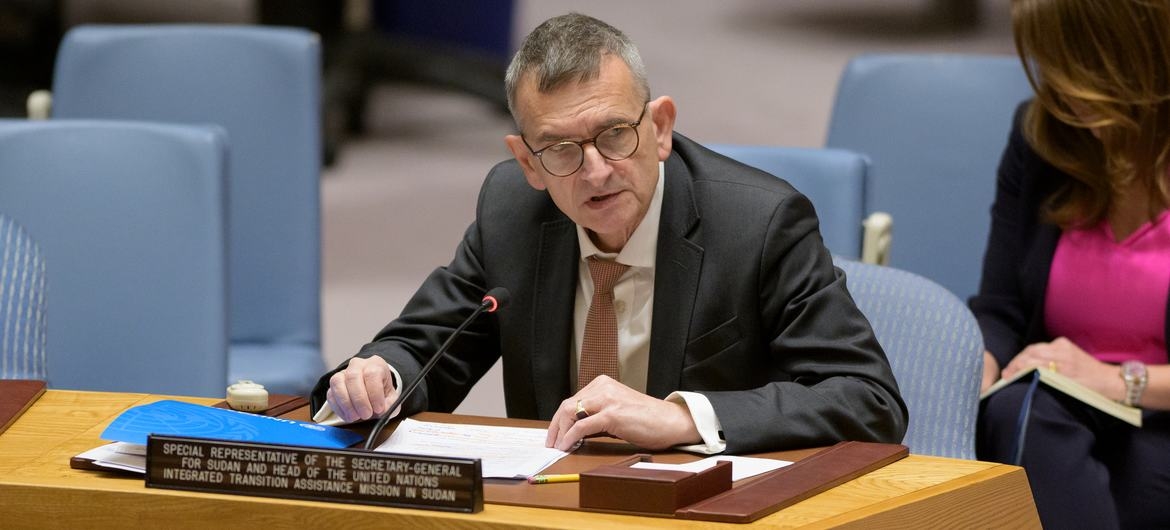
Volker Perthes is one of Europe’s most respected scholars of the Middle East and international politics. He is a Senior Fellow at the German Institute for International and Security Affairs and has served as a senior United Nations official, including as Special Envoy of the UN Secretary General for Syria. His work focuses on regional order, conflict systems, state transformation, and governance in the Middle East. Professor Perthes has advised governments, international organizations, and policy makers for decades and is widely recognized for his ability to bridge academic analysis and real-world diplomacy. His writings on the Middle East, including The End of the Middle East as We Know it, have shaped how scholars and practitioners understand regional change, conflict, and political transition.
By Kobin Farhad
Gulan Media: In your book The End of the Middle East as We Know It, you argue that the old regional order has effectively broken down. When you look at the region today, what defines this new Middle East for you?
Volker Perthes: The book you mentioned was published about a decade ago, but many of the dynamics it addressed remain relevant when looking at the Middle East today, which can be summarized in two main ways.
Structurally, the Middle East has become a regional multipolar system. There is no institutionalized regional order, no functioning security regime, and no regional organization that includes all states. Alliances are fluid, balances of power are fluid, and there is no rules-based framework governing relations between states.
The second dimension concerns geopolitical dynamics, especially since 7 October 2023, following Hamas’s terrorist attack on Israel, the worst terrorist attack Israel has ever experienced, and the subsequent war on Gaza, which has been the most devastating war Israel has ever waged against any of its neighbors.
This war has produced major political changes. The Palestinian question has returned to the international agenda in a way it had not before. Israel, while still the strongest military actor in the region, has become more isolated than at any time since the Oslo Accords of 1993.
Perhaps even more important for the region you are speaking from, we are witnessing the collapse of what Iran once called its axis of resistance, stretching from the Gulf through Iraq and Syria to Lebanon and the Mediterranean. This strategic project no longer exists.
We also see regime change in Syria after more than fifty years of Assad family rule, and major changes in Lebanon, where for the first time in a quarter of a century Hezbollah is no longer determining foreign and security policy. In Iraq, Prime Minister Mohammed Shia’ al Sudani has made sustained efforts to balance relations between Iran and the United States while preserving Iraqi sovereignty and independence in a very difficult regional environment.
Gulan Media: I would like to focus more closely on the Kurdistan Region of Iraq. How do you assess its role today? Has it become a key regional actor, particularly in security and energy, or is its influence still constrained by its political status?
Volker Perthes: The Kurdistan Region has become a fixture of the Middle East. It is stable, it is accepted as a political player, and it could serve as a model for other countries in the region. It demonstrates that Kurdish autonomy is possible without dismantling existing states or borders.
However, and this is very important, the Kurdistan Region can only become a truly key regional actor if it achieves stronger internal unity. At present, Kurdistan remains divided into two de facto political entities dominated by different elites. While these elites understand that they must cooperate and govern together, in practice this cooperation often remains limited.
Internal divisions have weakened the Kurdistan Region and continue to do so. With greater internal unity, the Kurdistan Region could become a much stronger regional actor, particularly in economic terms, and could also play a more constructive role within Iraq as a whole.
Gulan Media: When you speak about internal unity, are you referring mainly to unity among Kurds themselves, or to broader integration within the Iraqi state?
Volker Perthes: I am referring primarily to unity and governance within the Kurdistan Region itself, particularly between the dominant parties, families, and political networks. While cooperation has improved in recent years, competition between these centers of power still weakens the region’s political effectiveness.
Improving governance, strengthening oversight, and increasing civil society participation would certainly make the Kurdistan Region stronger and more resilient.
Gulan Media: Turning to Iraq more broadly, do you believe the Iraqi state can function in its current centralized form, or does its long-term stability depend on deeper decentralization or even something close to a confederal system?
Volker Perthes: I believe the Iraqi constitution is fundamentally sound, but it must be implemented properly. There has always been a tendency toward centralization in Baghdad, yet Iraq’s federal constitution offers a model that could work, not only for Iraq but potentially for other countries in the region as well.
In states such as Syria or Iran, which are highly diverse socially and ethnically, political elites often fear that decentralization will weaken the state. I believe the opposite is true. A properly implemented federal system can actually strengthen state unity.
Prime Minister Sudani’s outgoing government made serious efforts to strengthen Iraqi sovereignty and bring different components of society together. However, there remains a lack of political will, both in Baghdad and in the Kurdistan Region, to fully respect electoral outcomes and constitutional arrangements.
Gulan Media: International diplomacy still operates primarily through sovereign states. Given the realities on the ground, do you think the United Nations and the international community need new ways to formally engage with actors such as the Kurdistan Region?
Volker Perthes: The United Nations is an organization of states, and ultimately states make the decisions. That said, UN missions routinely engage with sub state actors. I would not describe the Kurdistan Region as a non-state actor. It is a substate entity within a recognized federal system, not an NGO or an armed group.
I come from Germany, which has a long federal tradition. Our federal states conduct their own economic diplomacy within the federal and European constitutional frameworks. This works because democratic and constitutional rules are respected across the board.
Iraq’s constitution allows for such a federal structure. If implemented seriously, it could function well. I remain cautiously optimistic that Iraq’s population is willing to make this federal experiment work.
Gulan Media: Has Iraq, in your view, fully implemented its federal system?
Volker Perthes: No, it has not. So far, only the Kurdistan Region functions as a federal entity. However, recent local and regional elections suggest that there is growing interest across Iraq in democratic participation and decentralized governance.
Gulan Media: With Donald Trump back in the White House, many expect United States foreign policy to become more transactional. How might this affect the Middle East, particularly smaller partners such as the Kurds?
Volker Perthes: Transactional politics are not foreign to the Middle East. Many regional leaders actually find it easier to deal with highly personalized political systems like the Trump administration than with rules based and institutionalized European diplomacy.
That said, President Trump respects strength and tends to pay less attention to weaker actors. This creates challenges for smaller players such as the Kurdistan Region. If you do not demonstrate strength or strategic value, you risk receiving limited attention from Washington.
Gulan Media: You have written extensively on Syria. With the country still fragmented, what do you see as the most realistic future for the Kurdish led administration in northeast Syria?
Volker Perthes: Ideally, there would be an agreement between Damascus and the Kurdish authorities that resembles decentralization rather than full autonomy. I strongly believe that constitutional decentralization can strengthen states rather than weaken them.
Middle Eastern leaders often fear decentralization, believing it threatens national unity. These fears are sometimes reinforced or exploited by neighboring states, as we have seen with Turkey, Israel, and others in Syria.
My advice would be for all Syrians, Arab, Kurdish, and others, to pursue decentralization within a constitutional framework.
Gulan Media: Do you believe long term autonomy within Syria is a realistic outcome?
Volker Perthes: I do not think that even the Kurdish administration itself is currently advocating autonomy in the same sense as in Iraq. The conversation is much more focused on decentralization, and that is where the most realistic outcomes lie.
Gulan Media: You once described the Middle East as a conflict system. In today’s multipolar world, with stronger roles for China and Russia, has this system become more manageable or more unpredictable?
Volker Perthes: It has become more unpredictable, not only for smaller actors but for everyone. Multipolarity is inherently unstable. There is no single dominant power setting rules. Instead, multiple actors compete outside established institutions and international law. This makes the regional and international environment especially challenging.