Heinz Gärtner to Gulan: “The International System Is Moving Toward a New Bipolarity”
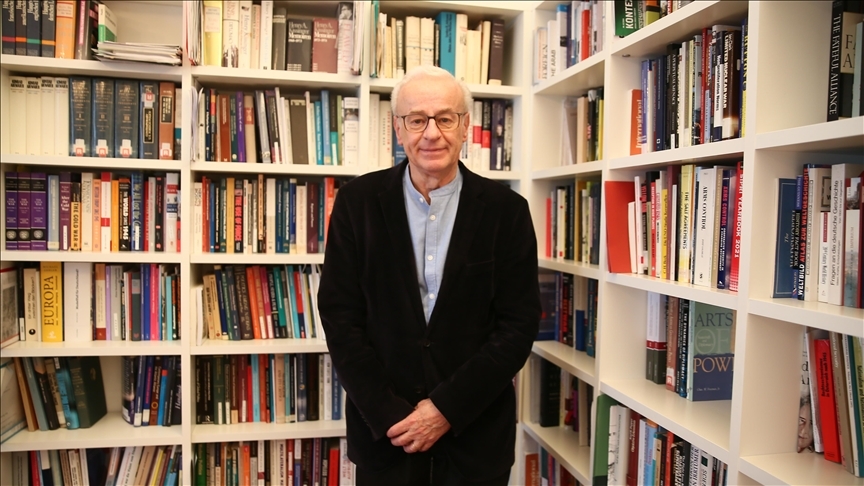
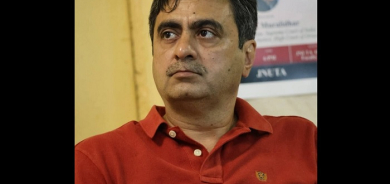
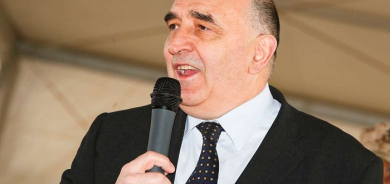
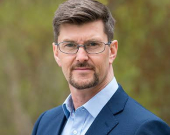
Heinz Gärtner is one of Europe’s leading scholars on international security, neutrality, and strategic studies. He is Professor of Political Science at the University of Vienna and a Senior Research Fellow at the Austrian Institute for International Affairs. His research focuses on global security order, arms control, neutrality, and European foreign and security policy, with particular attention to great power relations and conflict prevention. Professor Gärtner has advised governments and international institutions, contributed extensively to policy debates on European and global security, and published widely in leading academic journals and books. He is internationally recognized for his critical engagement with deterrence theory, military strategy, and alternative approaches to security, and is a frequent commentator on contemporary geopolitical developments in Europe and beyond.
Gulan Media: In recent years, the international security system has appeared increasingly fragmented, with long standing rules and norms under visible strain. From your perspective, how should we understand this moment in world politics. Are we witnessing a deeper systemic breakdown, or are we instead seeing a strategic reordering of power on a global scale?
Heinz Gärtner: After the so-called Fukuyama moment, when the world appeared to be free of opposing blocs, and following the phase of United States unipolarity, the international system is not moving toward multipolarity with several roughly equal power centers. Instead, it is moving toward a new bipolarity primarily between the United States and China.
Russia is likely to become China’s junior partner. Its economy is comparatively small, roughly the size of Italy’s, and it is heavily dependent on energy exports to China and India. At the same time, Russia is increasingly surrounded by NATO states, has lost much of its influence in the Middle East, and will be largely confined to the role of a regional power with nuclear weapons, facing confrontation with the West in Europe.
Gulan Media: Military force and deterrence have once again moved to the center of international politics. In today’s strategic environment, how do you understand the role of deterrence in preventing conflict, and where do its limits become visible or even dangerous?
Heinz Gärtner: Nuclear deterrence is fundamentally a state of mind. It depends on the credible threat of a counter reaction to an unacceptable attack. For deterrence to be credible, nuclear weapons must also be deployable. This means they are not only deterrents but also weapons of warfare.
The strategy of deterrence developed during the East West conflict and directly contributed to the arms race. New gaps constantly emerged in bombers, missiles, and delivery systems, which led to continuous rearmament. Both sides aimed for escalation dominance, meaning the ability to strike the final blow.
True nuclear disarmament will likely only be possible if the concept of mutual nuclear deterrence itself is fundamentally questioned. Nuclear deterrence has not prevented wars between nuclear armed states and conventionally armed states, as seen in the Korean War, the Vietnam War, the Falklands War, conflicts between India and Pakistan, and Ukraine’s defense against nuclear armed Russia.
Gulan Media: Foreign policy today seems to operate across military, economic, and technological domains at the same time. From a strategic perspective, how do states combine these tools, and what kinds of risks emerge when security becomes defined primarily through power and capability?
Heinz Gärtner: The pursuit of greater security by one side often produces greater insecurity for others. Threats provoke counter threats, mistrust feeds mistrust, and investments in armaments lead to counter investments. This dynamic is known as the security dilemma.
The security dilemma can be mitigated by reducing threatening behavior. This can be achieved through diplomacy, changes in the language of threat, confidence building measures, and arms control and disarmament agreements.
Gulan Media: Europe is often described as an economic giant but a strategic lightweight. Considering recent geopolitical crises and shifts in transatlantic relations, do you see Europe beginning to act as a coherent security actor, or does strategic dependence still shape its foreign policy behavior?
Heinz Gärtner: Europe has supported nearly every major foreign policy decision taken during Donald Trump’s presidency, whether related to the Middle East or Asia. In response to pressure from the Trump administration, the European Union has chosen to significantly increase military spending in order to defend itself against Russia independently.
At the same time, Europe fears abandonment by the United States, particularly under President Trump, which would leave the European Union vulnerable. Despite this, Europe has offered very few political negotiation initiatives of its own in major global crises. In most cases, leadership and initiative continue to come from Washington. Rearming Europe alone is not sufficient when political initiatives are lacking.
Gulan Media: Neutrality has returned to the center of debates on European security. From your perspective, how does neutrality function in today’s international system, and what does it realistically allow or restrict when it comes to foreign policy action?
Heinz Gärtner: History shows that neutral territory is almost always violated when hostile states or military alliances attack each other. One important lesson is that neutrality can help states avoid being drawn into wars through mutual assistance obligations.
In some conflicts, neutrality would have been a better option. Unfortunately, this path was not pursued in Ukraine. Ukrainian neutrality might have offered a better solution than war, both before and even during Russia’s invasion in 2022.
Neutral states are not value neutral. On the contrary, engaged neutrality means taking a clear stand against serious human rights violations, genocide, and war. Neutral states are not required to adopt the positions of major powers or military alliances. They can act through the United Nations, participate in European foreign and security policy, and contribute to peace operations authorized by the United Nations.
Engaged neutrality means taking initiative where possible and stepping back where necessary. In this way, neutrality can contribute to mediation and de-escalation in an increasingly confrontational international system. Neutrality will continue to exist as long as wars, military conflicts, and military alliances remain part of international politics.
Gulan Media: Security debates today often emphasize military readiness, deterrence, and capability. How should strategic thinking balance this focus with longer term goals such as conflict prevention, stability, and the reduction of tensions?
Heinz Gärtner: The security dilemma arises from the fear of attack and the perceived need to prepare for it. Security can be understood either as the absence of threat or as the capability to repel threats. These different interpretations lead to different strategies for achieving security.
One major attempt to change the security environment and break the security dilemma was made in 1975 with the Final Act of the Conference on Security and Cooperation in Europe. Notably, this document deliberately avoided labels such as enemy, opponent, rival, or challenger, even at the height of bloc confrontation, arms buildup, and ideological division.
Today, the world has returned to intense security competition, whether bipolar or multipolar in nature.
Gulan Media: In a world still largely organized around sovereign states, how much room exists for substate actors to shape regional security outcomes in a meaningful way?
Heinz Gärtner: Europe’s most successful autonomy arrangement is South Tyrol in Italy, and valuable lessons can be drawn from this model. It involves a territory administered largely by its German speaking population, with extensive minority rights guaranteed by the state.
These rights include religious freedom, the right to use and be educated in one’s own language, proportional representation in political institutions, and substantial, sometimes disproportionate, financial support. Such autonomy arrangements demonstrate how stability can be achieved within existing state frameworks.
Gulan Media: Looking more broadly, what lessons can regions seeking autonomy draw from successful European experiences when it comes to stability, rights protection, and long-term conflict reduction?
Heinz Gärtner: The South Tyrol model shows that stability is possible when minority rights are fully protected and institutionalized within the state. Autonomy, when properly designed and respected, can reduce conflict, enhance political participation, and contribute to long term stability without undermining territorial integrity.