Siege on Kurdish Neighborhoods in Aleppo Deepens Humanitarian Crisis
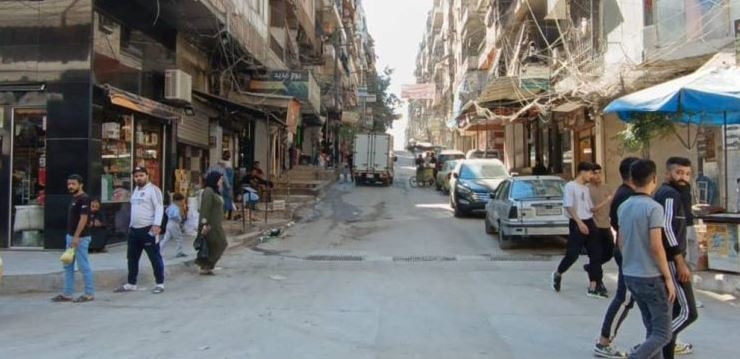
A continuing siege on two Kurdish-majority neighborhoods in northern Aleppo has severely disrupted civilian life, with residents facing a complete electricity blackout, school closures, fuel shortages, and alleged mistreatment at security checkpoints, local officials said.
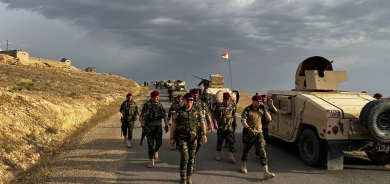
Clashes erupted late last month between Damascus-affiliated forces and Kurdish internal security forces, known as Asayish, in the neighborhoods of Sheikh Maqsood and Ashrafiyeh. Although a ceasefire was later announced, a partial siege remains in place, restricting movement and access to essential services.
Nouri Sheikho, co-chair of the civilian council administering the two neighborhoods, told Rudaw on Saturday that only two of seven access points linking the areas to the rest of Aleppo are currently open. He said residents are frequently subjected to harassment and mistreatment by state security forces at checkpoints.
“The siege is still ongoing, and due to the severe cold, we were forced to suspend schools,” Sheikho said. He added that many residents have fallen ill amid freezing temperatures and that a lack of medicine has placed lives at risk.
According to Sheikho, the electricity grid was badly damaged during clashes between the rival forces, resulting in a complete power outage. He accused Syrian authorities of blocking repair efforts for political reasons.
“We contacted them several times to allow us to fix the grid, but they refused,” he said. “They do not allow fuel to pass through and claim that Kurdish military forces will use it. These are pretexts to prevent gas and fuel from reaching civilians and to increase pressure on the population.”
The two neighborhoods, which are densely populated and home to more than 1.5 million people, remain under the security control of Kurdish-led forces. Since the collapse of former President Bashar al-Assad’s regime in December last year, tensions between Kurdish forces and state-affiliated armed groups have escalated, leading to repeated clashes.
Sheikho said previous sieges imposed under the former Assad government were less severe and shorter in duration, often eased through Russian mediation.
“At that time there was some understanding and the roads were open,” he said. “Now all entrances are completely closed and nothing is allowed to enter.”
The siege persists despite a landmark agreement signed on March 10 between Damascus and the Kurdish-led administration in northeast Syria, known as Rojava. The agreement called for the integration of Kurdish civil and military institutions into the Syrian state and included a commitment to a nationwide ceasefire.
Asayish operates under the umbrella of the Kurdish-led Syrian Democratic Forces (SDF), the de facto military authority in Rojava. SDF commander Mazloum Abdi was expected to visit Damascus before the New Year amid reports of progress in US-mediated talks aimed at integrating the SDF into a new Syrian national army.
For residents of Sheikh Maqsood and Ashrafiyeh, however, local officials say the agreement has yet to translate into relief on the ground, as the humanitarian situation continues to deteriorate.