U.S. Military Operation in Venezuela — Maduro Captured and Flown to U.S.
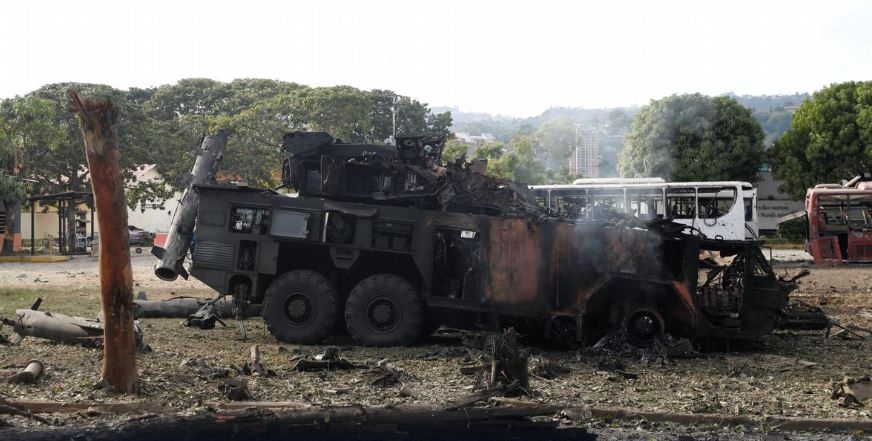
In an unprecedented escalation of U.S.–Venezuela tensions, U.S. President Donald Trump announced early Saturday that American forces have captured Venezuelan President Nicolás Maduro and his wife, Cilia Flores, following what he described as a “large-scale strike” against multiple targets across Venezuela.
Trump said the pair were flown out of the country and will face criminal charges in the United States, including on allegations related to narcotics and terrorism.
The strikes, reported around pre-dawn hours in Caracas and other regions, sparked explosions, low-flying aircraft and power outages, according to witnesses and U.S. flight restriction notices. Trump’s announcement, posted on social media, said the operation was conducted “in conjunction with U.S. law enforcement.”
According to U.S. officials, the operation was designed to seize Maduro, who has long been a target of U.S. sanctions and indictments, including a 2020 federal indictment alleging narco-terrorism and drug trafficking.
Attorney General Pam Bondi and other U.S. officials said Maduro will be prosecuted in U.S. courts. Venezuelan authorities have called for proof of life for Maduro and Flores and decried the intervention as military aggression.
The Venezuelan government also declared a national state of emergency as the conflict unfolded, and top military officials condemned the U.S. action.
The U.S. operation has triggered sharp international responses:
United Nations: UN Secretary-General António Guterres called the events a “dangerous precedent,” warning that unilateral military interventions risk undermining international peace and established legal norms.
European Union: EU leaders reiterated support for a peaceful, democratic transition in Venezuela and stressed the importance of respecting international law and the UN Charter, even as some noted Maduro’s contested legitimacy.
Latin America: Brazilian President Luiz Inácio Lula da Silva condemned the U.S. strike as crossing an “unacceptable line” and a violation of sovereignty, while other regional governments called for de-escalation and expressed concern over broader regional stability.
Russia, China and others strongly denounced the action as a breach of international law.
The widespread global response underscores deep divisions over the legality and strategic implications of the U.S. operation.
Within the United States, Trump’s action has drawn mixed reactions. Some political allies praised the decisive move against what they describe as a narco-state leader, while critics — including some lawmakers — raised concerns about bypassing congressional authorization and setting a precedent for executive military action.
Analysts note this event marks the most direct U.S. military intervention in Latin America since the 1989 deployment that ousted Panama’s Manuel Noriega, and could have far-reaching consequences for regional diplomacy, security, and governance in Venezuela.