U.S. Envoy Cautiously Welcomes Iraqi Militia Disarmament Reports, Demands "Binding" Action
The United States has described reported steps by Iraqi armed factions toward disarmament as an "encouraging development," but insists that verbal commitments must quickly evolve into irreversible, legally binding measures that bring all weapons under exclusive state control.
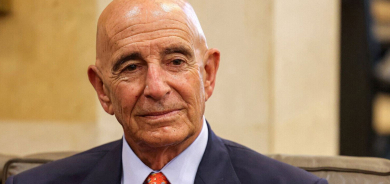
In a significant statement on social media platform X, U.S. Special Envoy to Iraq Mark Savaya framed the recent moves as a positive response to calls from Iraq’s senior Shiite religious leadership, known as the Marjaeya. He praised the Najaf-based authorities for their "wisdom, moral leadership, and principled guidance," which he said act as a "national compass" for the country.
"However, statements of intent must be followed by concrete, binding measures that place all weapons firmly under state control," Savaya cautioned. He outlined a strict U.S. vision for the process, stating, "Disarmament must be comprehensive, irreversible, and implemented through a clear and binding national framework." This, he argued, requires the "full dismantling of all armed factions" and an "orderly, lawful transition of their members into civilian life."
The envoy left no room for interpretation regarding the legal principle at stake. "No political party, organization, or individual has the right to possess or operate armed formations outside the authority of the state," Savaya stated, emphasizing that this applies uniformly across all of Iraq. He stressed that the sole authority to wield arms must reside with "legitimate federal and regional institutions."
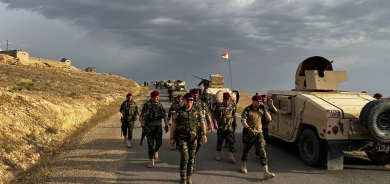
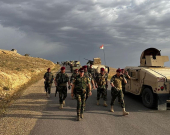
The comments come amid a renewed and intense debate in Iraq over the future of numerous armed groups, many of which proliferated during the war against the Islamic State (ISIS). While the groups were instrumental in defeating ISIS territorially by 2017, their continued existence outside formal state security structures has challenged government sovereignty, fueled political tensions, and been a point of contention with the United States.
Successive Iraqi governments have pledged to integrate or disband these factions, but progress has been slow and fraught, intersecting with delicate internal power-sharing agreements and regional influences.
Savaya positioned the current moment as a critical juncture for Iraq’s future. "Iraq stands today at a decisive crossroads," he said, presenting a choice between a path toward "sovereignty, stability, prosperity, unity, and the rule of law," and one of continued "fragmentation and insecurity," where armed groups exploit state resources.