Dr. Christopher Mole to Gulan: we really need to think in philosophically sophisticated ways to understand the significance of recent technological developments
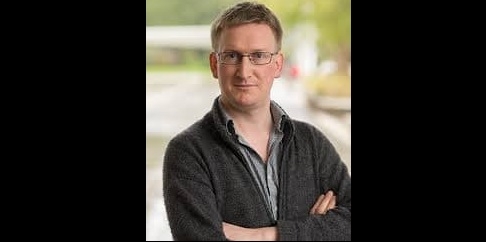
Christopher Mole is an Associate Professor of Philosophy at the University of British Columbia, Vancouver, where he also teaches in the programme in Cognitive Systems. He is the author of Attention is Cognitive Unison: An Essay in Philosophical Psychology (OUP, 2009), and of The Unexplained Intellect: Complexity, Time, and the Metaphysics of Embodied Thought (Routledge, 2016). His work is mainly concerned with philosophical questions that emerge in the course of our attempts to study the mind scientifically. In an exclusive interview He answered our questions like the following:
Gulan: What ethical discussions concerning awareness in non-human animals, fetuses, or artificial intelligence systems are influenced by the mind-body dilemma?
Dr. Christopher Mole: If we better understood how ethically-relevant mental phenomena (like pain, or self consciousness) relate to the brain, or to the other physical systems in which they might be based, we might then be able to tell whether those phenomena or present in animals, foetuses, etc. In the absence of a theory of this, it’s difficult to show that those phenomena themselves (rather than some simulacra of them) are really present. This means that some ethical questions are difficult to settle decisively, but it doesn’t leave us completely in the dark as to how those questions should be answered, and even if we knew exactly which systems do and don’t instantiate these conscious phenomena, there would still be some difficult ethical questions that remained open.
Gulan: Does the idea that "we think because we are conscious" represent a fundamental understanding of human nature or is it only a philosophical fallacy?
Dr. Christopher Mole: I don’t really know what you mean here, when you say ‘we think because we are conscious’. Quite a lot of our thoughts are indeed conscious, but in many cases it’s hard to know how much difference is made by them being conscious. That’s not to deny that consciousness is an essential part of the nature of the human mind. I don’t think my mind (or your mind) would really exist if you or I had never been conscious, but if we’re asking about individual thoughts, rather than whole minds, it’s much harder to make the case for thinking that consciousness is essential: perhaps some of the particular individual conscious thoughts that we have could have occurred unconsciously.
Gulan: What is the basic connection between cognition and consciousness—are they separate entities or do they both arise from one another?
Dr. Christopher Mole: My answer to (2) touches on this third question somewhat: some mental phenomena — like simple sensations, or tickles — seem like they could exist even in a mind that didn’t do much thinking (and that was, instead, the mind of a much more primitive merely sensory creature, not a cognitive one). If those phenomena can nonetheless be conscious then consciousness must be possible without cognition. And perhaps the opposite is also true: perhaps a purely computational mind might instantiate some cognitive phenomena, without instantiating any conscious ones. So, in that sense, consciousness and cognition are separate. But it surely isn’t merely happenstance that these two phenomena tend to be found in one another’s company in naturally occurring systems, so there does seem to be some tight explanatory connection between them.
Gulan: How do philosophical conceptions of consciousness change as a result of our growing awareness of the mind-body connection?
Dr. Christopher Mole: It’s interesting to see how, even in the middle of the twentieth century, philosophers often used the word ‘consciousness’ more loosely than we now try to. Part of this increase is precision is probably due to the progress that has been made in identifying the neural bases of different psychological phenomena, but since we don’t have any very well-defined explanatory theory of how those neural bases create the psychological phenomena that depend on them, it is hard to credit this progress to any particular discoveries about the mind/brain relation.
Gulan: Do thoughts transcend the physical functions of the brain, or are they only neurobiological phenomena?
Dr. Christopher Mole: To understand how it is possible for our thinking to be intelligent, I think that you need to take account of the ongoing relationship between the thinking creature and its environment. You’ll be left with an explanatorily inadequate theory if you only think about the brain, without taking account of the physical environment in which that brain is situated. That, of course, doesn’t imply that you'd need to think about anything beyond that environment.
Gulan: Would a deeper comprehension of consciousness allow us to reinterpret moral obligation, mental disease, or even individual identity?
Dr. Christopher Mole: I think there are certainly some forms of mental disease that would become more explicable if we had a better idea of the way in which conscious phenomena relate to their neural bases. Schizophrenia is probably the most likely example, since it really does seem like the consciousness of schizophrenic patients is disrupted at some quite basic level. But that’s an enormously complicated condition. Even if we had a better philosophical understanding of the processes that are disrupted in it, we’d probably be a long way from knowing how to develop any effective treatments for it.
Gulan: With brain imaging increasingly tracking thoughts in real time, is philosophy being replaced by technology—or revitalized by it?
Dr. Christopher Mole: Philosophy’s relation to technology-enabled scientific progress has always been a somewhat ambivalent one, but at the moment I think that we really need to think in philosophically sophisticated ways to understand the significance of recent technological developments, and so I think that those developments are giving a new urgency to some of our philosophical enquiries. This urgency is itself a bit of a mixed blessing, since it’s hard to rush good philosophical thinking.