US House Moves to Repeal Caesar Act in Landmark Shift on Syria Policy
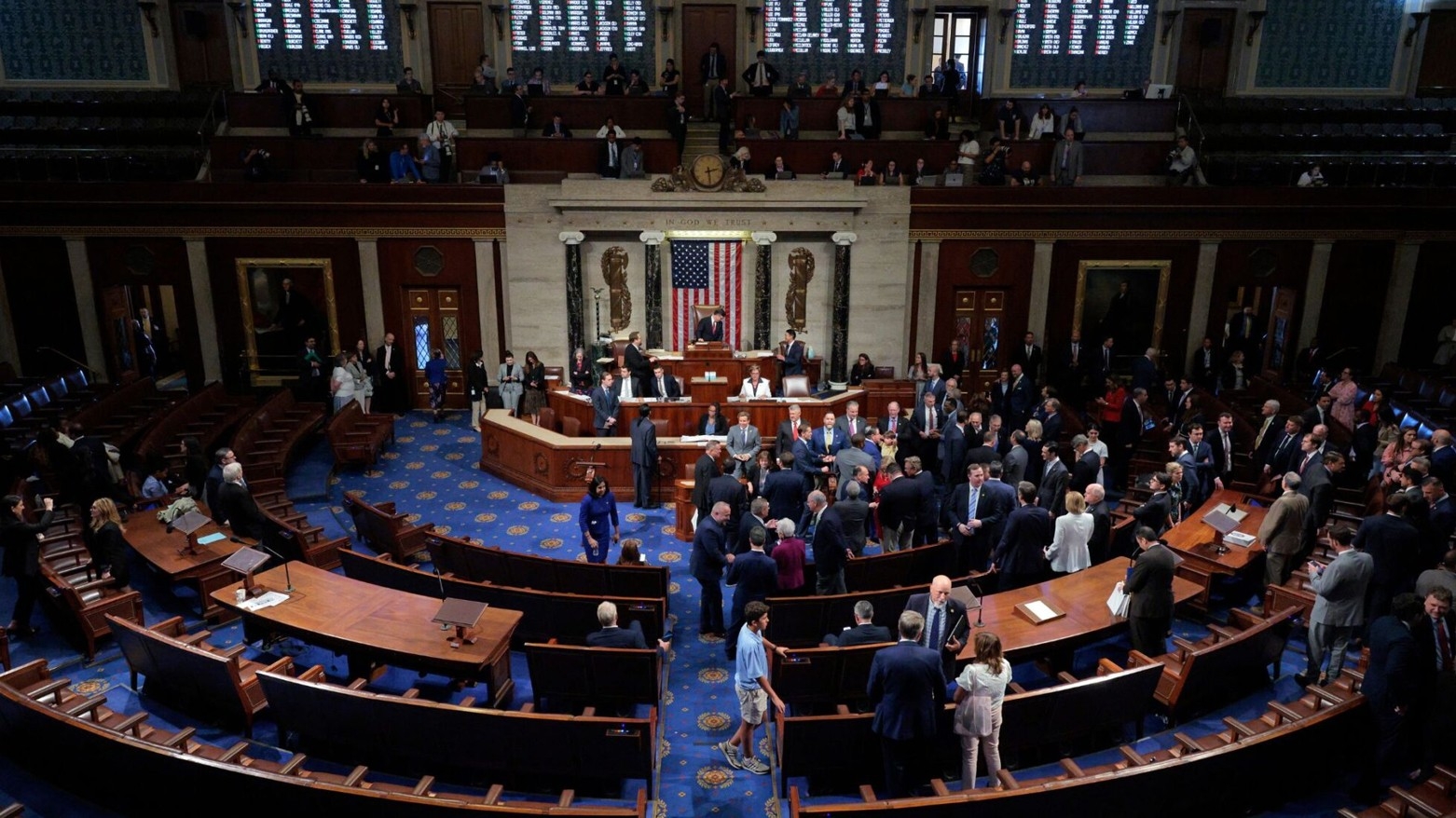
In a major realignment of American policy toward Syria, the US House of Representatives on Thursday approved legislation that would formally repeal the Caesar Act, paving the way for President Donald Trump to sign the measure before the end of the year.
The repeal—embedded within the annual National Defense Authorization Act (NDAA)—marks Washington’s most significant move toward re-engaging with Damascus since opposition forces ousted former president Bashar al-Assad in December 2024.
The bill now heads to a Republican-controlled Senate, where a final vote is expected next week. If passed, it will be sent directly to the White House for immediate implementation.
For Syrians who have endured years of economic hardship under sweeping sanctions, the proposed rollback raises pressing questions: Will easing restrictions accelerate recovery, or impose new layers of political oversight on the transitional government?
If enacted, the law would nullify the 2019 Caesar Act, which had severely targeted Assad’s regime. In its place, the administration would be obligated to deliver periodic assessments confirming that Syria’s new authorities are combating extremist groups and safeguarding the rights of ethnic and religious minorities.
The initiative comes nearly a year after a dramatic shift in Syria’s political landscape. Assad fled to Russia following an uprising that installed President Ahmed al-Shara. Since then, the Trump administration has moved rapidly to restore relations, lifting several restrictions and expanding cooperation with Damascus on counterterrorism and border security.
Under the new legislation, the United States would evaluate Syria’s progress using nonbinding political and security benchmarks. These include:
Demonstrating adherence to international security commitments
Refraining from unilateral attacks on neighboring states, including Israel
Removing foreign fighters from key national institutions
One of the most important conditions involves the March 10, 2025 agreement between Damascus and the Syrian Democratic Forces (SDF), which calls for proportional integration of SDF units into the Syrian army and guarantees political representation in ministries and parliament.
US agencies would also monitor Syrian efforts to fight money laundering, disrupt terrorist financing networks, curb the spread of weapons of mass destruction, and halt support for sanctioned individuals or groups viewed as hostile to Washington.
Within 90 days of the repeal, the White House must submit a detailed report to Congress, followed by updates every 180 days for four years. These reports must assess whether Damascus is making “effective, tangible efforts” to dismantle ISIS and other extremist groups in cooperation with the United States.
The oversight extends to human rights accountability as well, requiring documentation of government actions to prosecute individuals responsible for grave abuses, including crimes against religious minorities. Another focus will be Syria’s role in combating the Captagon drug trade, which expanded significantly during the war.
Although the President may reinstate certain sanctions if two consecutive reports show insufficient progress, the authority remains discretionary and does not include import-related measures.
US defense officials say Syria’s future stability depends heavily on successful security reforms. Speaking at the Middle East Institute’s “Syria Conference,” CENTCOM commander Admiral Brad Cooper emphasized that integrating SDF units into the national military would “enhance the security environment.”
Cooper noted that although US-backed efforts have significantly degraded ISIS capabilities, the threat remains active. “We are cooperating with the Syrian government to eliminate the threat of ISIS in Syria, and this will require international cooperation,” he said.
His remarks signal a broader shift in Washington’s military posture: open coordination with Syria’s post-Assad government on counterterrorism operations, reflecting what US officials describe as shared security priorities.
Inside Syria, debate is intensifying. While the repeal does not require Damascus to meet the listed benchmarks before sanctions are lifted, the four-year reporting mechanism may strongly influence the country’s political direction and its relationship with Washington.
Syria’s economy has been devastated since the Caesar Act was introduced in 2019, exacerbating the destruction caused by more than a decade of conflict. Despite Assad’s departure, recovery has been slow, with many key sectors dependent on humanitarian aid.
The coming months will reveal whether easing US restrictions will translate into real economic improvement—especially as Damascus works to integrate the SDF, manage new expectations from Washington, and continue the fight against ISIS remnants operating in the country’s desert regions.