New UN Report Charts Cost of Climate Inaction, Prescribes Path to Trillion-Dollar Benefits
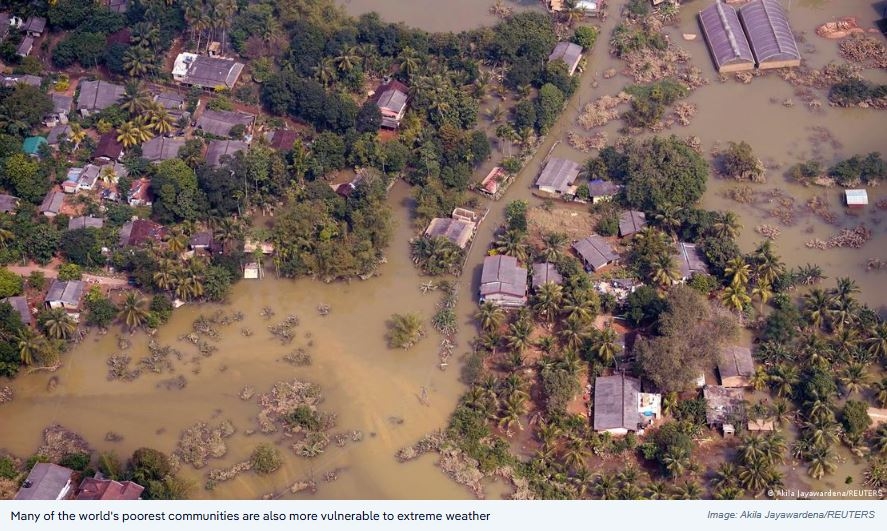
Inger Andersen, Executive Director of the United Nations Environment Programme (UNEP), wakes each day with a singular fear: complacency. In an interview as a major new UNEP report is released, the Danish economist warned that failure to act decisively on climate and environmental crises will inflict the greatest suffering on the world’s poorest, even as the global economic price skyrockets.
The UNEP’s Global Environment Outlook, compiled by 287 scientists across 82 countries, presents a stark crossroads. Continuing on the current path, it states, leads to a future "devastated by climate change, dwindling nature, degraded land and polluted air." The alternative is a pivot towards "a healthy planet, healthy people and healthy economies."
The economic argument is compelling. The report calculates that climate change alone could slash 4% off global GDP by 2050 and 20% by 2100. The price of air pollution’s health impacts, already 6% of global GDP in 2019, could balloon to $18-25 trillion annually by 2060. Over the past two decades, extreme weather events have caused an estimated $143 billion in damages.
Conversely, the scientists outline a “roadmap” requiring coordinated global action across governments, business, and society. This includes accelerating sustainable agriculture, restoring ecosystems, switching to clean energy, and designing longer-lasting, less wasteful products. Such a transformation, the report concludes, could yield $20 trillion in annual economic benefits by 2070, rising to $100 trillion thereafter.
While a significant annual investment of around $8 trillion is needed to restore biodiversity and achieve net-zero emissions by 2050, the report stresses this is far outweighed by the catastrophic cost of inaction.
Andersen emphasized the need for intergenerational equity. “It is a reminder of the importance of limiting our overuse of important resources… so there is a degree of intergenerational equity for our children and grandchildren.”
The report lands at the end of a turbulent year. EU Copernicus data confirms 2025 is set to be the joint-second warmest year on record, with emissions hitting new highs. Andersen acknowledged the difficulties of multilateralism, expressing disappointment that the recent COP30 climate summit in Belem, Brazil, failed to deliver a consensus on phasing out fossil fuels.
However, she remains focused on future diplomatic opportunities, including a conference led by the Netherlands and Colombia next April aimed at accelerating the fossil fuel phase-out. “The climate convention is working, but we need to accelerate,” she said, warning of the escalating human and economic toll from fires, floods, and heat.
Looking ahead, Andersen finds optimism in the unstoppable momentum of market forces and public demand. “Renewable energy is becoming very, very competitive,” she noted, citing the “interesting phenomenon” of wind and solar now undercutting fossil fuels on cost. She pointed to the example of oil-producing Texas, which now sources nearly 40% of its electricity from renewables.
Her greatest hope, she said, lies in the powerful, irreversible coalition now demanding action—from businesses and scientists to youth activists and religious leaders. “What gives me hope is that there are solutions and there are millions of people crying out for this.”
Andersen ended with a plea for personal political responsibility: “Take your grandchild by the hand... as you walk into that voting booth and vote for them as well as for your own interests. That is a commitment each of us has to make to those we love the very most.”
The message is clear: the roadmap exists and the economic case is overwhelming. The only missing ingredient, according to UNEP, is the collective will to choose a viable future.