Professor Michael J. Boyle to Gulan: The proliferation of drones in the Middle East is a dangerous development
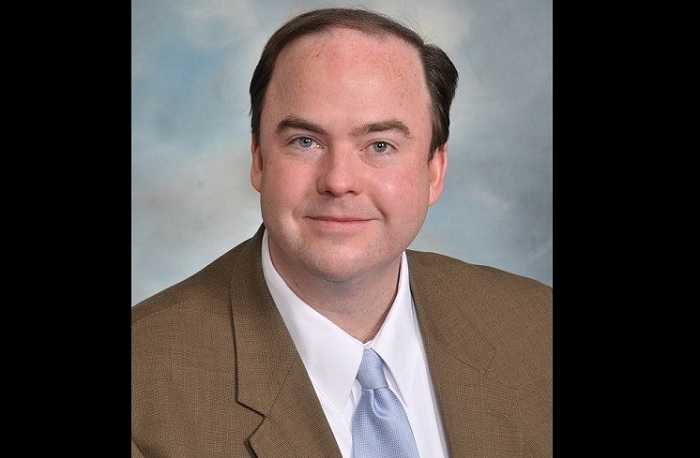
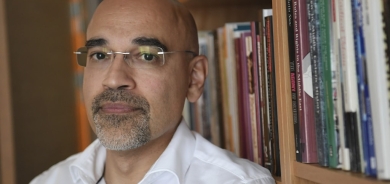
Michael J. Boyle is a Political Science Professor at Rutgers University-Camden and the author of The Drone Age: How Drone Technology Will Change War and Peace, focusing on terrorism, political violence, drone warfare, and U.S. foreign policy, previously teaching at La Salle University and St. Andrews, and is a Senior Fellow at FPRI, known for exploring how drones alter conflict dynamics and necessitate new legal/ethical frameworks. In an interview, he answered our questions like the following:
Gulan: Which features of drone technology, in your opinion, are most likely to obfuscate the conventional moral and legal distinctions between the military and civilian domains?
Professor Michael J. Boyle: There are several features that will challenge these distinctions. The first is the inherently remote nature of drone warfare, which removes pilots from the risk of death and injury normally associated with fighting and means that governments using drones now have the option of fighting a virtual, almost riskless war by using drones to strike their enemies from above. Whether they will do that more often, or more recklessly, remains to be seen. The second is speed: small drones are making fighting on the ground increasingly quick, hard to contain and hard to respond to. And finally the dual use nature of commercial drone technology means that it will be hard to distinguish between civilian and military drones, thus bringing the risk that militaries may begin to mistakenly attack peacekeepers or humanitarian organizations using commercial drones as potential threats.
Gulan: Drones are portrayed by many countries as a precision instrument that reduces injury to civilians. Do you think that public responsibility for the use of force has really decreased as a result of the narrative surrounding "precision warfare"?
Professor Michael J. Boyle: There is a clear democratic deficit to drone warfare in that populations are often offloading their responsibility to scrutinize military force by saying, in essence, that drones are precise so they don’t have to worry about it much longer. But this is not always true: we know from evidence presented by the U.S. government that its drone strikes were not as precise as advertised. We cannot always trust that governments will tell the truth about how precise drones are. It’s important to have an active, engaged population and a legislature that scrutinizes claims about precision warfare rather than just trusting governments to tell the truth about their precision.
Gulan: Do drones undermine democratic limits on the use of force if they make killing simpler and less dangerous for governments? Is it possible for society to successfully regulate weapons that virtually conceal war?
Professor Michael J. Boyle: It is difficult, but not impossible, for democratic societies to regulate these weapons. What is needed is a demand for transparency: to know what drones are being used, how they are being used, what strikes have occurred, how many have been killed and injured and what the target was. All of this information is necessary to ensure that drone use complies with the laws of war. No government is going to be wholly transparent, or to reveal sensitive or classified material regarding their strikes, but to insist that they release summary data to allow the public to judge the morality and legality of drone usage is not too much to ask. Only if that is done do we have a hope of placing some democratic limits on drone use.
Gulan: You contend that drones alter not just how conflicts are waged but also how they are perceived. Do drones make military action in the Middle East less morally and politically acceptable?
Professor Michael J. Boyle: I think there is a great danger that if drones are seen as clean, precise and easy that states in the Middle East and elsewhere may find conflict more morally and politically acceptable. This is the great moral hazards with drones. And we are seeing some evidence that this is true: states are using drones to “police” regions that are restive or prone to insurgency, and others are engaging in tit-for-tat drone strikes because they seem easy and cheap. But we don’t understand precisely how conflict spirals can emerge if states and non-state actors alike are hurling drones at each other. The proliferation of drones in the Middle East is a dangerous development that may portend a future of greater conflict unless this is studied and understood.
Gulan: According to what you've written, drones cause "anticipatory anxiety." How would living under continual surveillance affect social trust, radicalism, or political activity in Middle Eastern societies?
Professor Michael J. Boyle: We do not really understand the full effect of living life under drone surveillance. There is some evidence that those in areas like the FATA in Pakistan and Gaza who are under near constant drone surveillance experience psychological distress or anticipatory anxiety because they never know when the next strike will happen. Obviously this is a serious problem and one which should make us rethink our embrace of drones. Leaving aside the obvious moral problem of terrifying people under the gaze of drones, it’s not clear to me that it has a clear strategic benefit. If I am using drones to police a region, or to strike at my enemies, but I am terrifying people, radicalizing them, making them consider joining violent groups out of fear of the drones, it’s not a clear win in any way. We do a lot of moral and legal arithmetic around the use of drones, but we rarely consider whether this psychological cost for the people living under drones renders all of the benefits we get from their use moot.
Gulan: Are we seeing a future where drone combat resembles "mutually assured disruption" between governments and militias if non-state entities in the Middle East are quickly catching up technologically?
Professor Michael J. Boyle: In general, with drones, it’s going to be difficult for non-state actors to catch up to states. Even the most sophisticated non-state drone users – Hezbollah, for instance, and the Houthis in Yemen – are not equivalent to their state opponents. And they had help from Iran. So a mutually assured destruction (MAD) situation where states and non-state actors deter each other with drones is not obvious. But what is also concerning is what Thomas Schelling identified years ago as a breakdown of bargaining – that states and non-state actors will just hurt each other over and over again with more and more drone attacks and come to no resolution of their underlying dispute. In other words, they are not bargaining with drones, but bludgeoning each other. This is in some ways worse than a MAD outcome, which is stable but high cost when it breaks down.
Gulan: In 20 years, do you think drones will strengthen state authority or enable non-state actors to oppose it? Who will gain more from this advancement in technology?
Professor Michael J. Boyle: It’s commonplace to argue that drones will allow non-state actors to catch up and in some ways this is true. We can see that non-state actors like the Houthis are more able to strike a state like Saudi Arabia than they once were. But Saudi Arabia is still more powerful, and as a well-resourced state it is more equipped to take advantage of drones and next generation technology like AI than the Houthis are. So drones will strengthen non-state actors to a point, and allow them to hurt states more, but if it comes to it states will still retain the lead if they want to and may develop even more abilities to punish non-state actors than they have now.
Gulan: How might peace talks or post-conflict reconstruction be hampered by widespread access to AI-enabled drones? Is it possible for technology to exacerbate conflict even after it has ended?
Professor Michael J. Boyle: Yes, it certainly is. One of my concerns here is attributability. If a state is negotiating a delicate peace agreement with an enemy, there is a chance that drone overflights or incursions may unravel the program between them. And this is even more of a problem if we cannot attribute the drone overflights to a specific actor. It may be hard to sign a peace agreement, for example, if a cease-fire is being broken by drone incursions by an unknown actor, or by an actor which is hiding its responsibility for the drone incursions. So in this small, somewhat overlooked way, drones can pose a real threat to a post-conflict state even after a cease-fire is in place.