Professor Dr. Melani Cammett to Gulan: fear is probably the biggest obstacle at the community level to promoting better coexistence
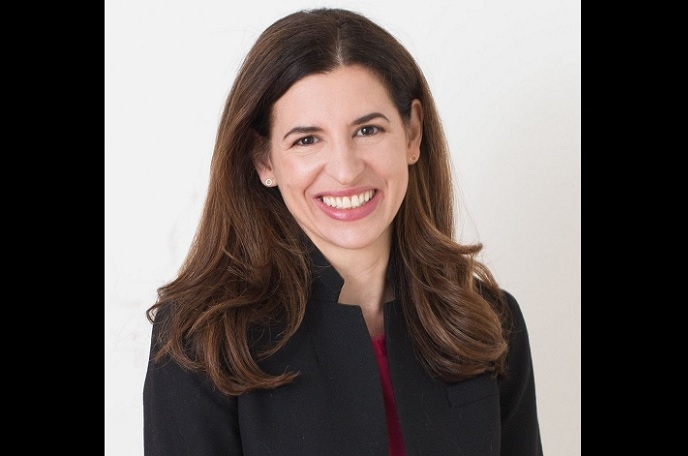
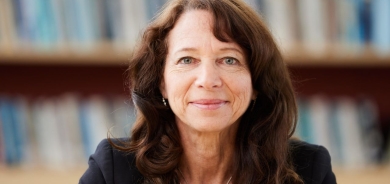
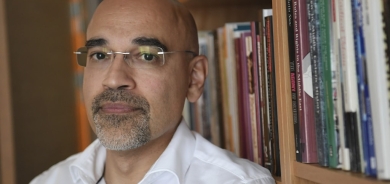
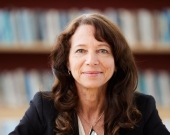
Melani Cammett is Clarence Dillon Professor of International Affairs in the Department of Government and Director of the Weatherhead Center for International Affairs at Harvard University. Her research explores ethnic politics, conflict, development, and authoritarianism in the Middle East and other contexts. She is currently working on a book about how people live together after violence, focusing on Bosnia-Herzegovina, Lebanon, and Northern Ireland. Cammett’s books include The Oxford Handbook on Politics in Muslim Societies (co-edited with Pauline Jones, Oxford University Press, 2022), Compassionate Communalism: Welfare and Sectarianism in Lebanon (Cornell University Press 2014), which won the American Political Science Association (APSA) Giovanni Sartori Book Award and the Honorable Mention for the APSA Gregory Luebbert Book Award; A Political Economy of the Middle East (co-authored with Ishac Diwan, Alan Richards, and John Waterbury, 2015); The Politics of Non-State Social Welfare in the Global South (co-edited with Lauren Morris MacLean, Cornell University Press 2014), which received the Honorable Mention for the ARNOVA book award; and Globalization and Business Politics in North Africa (Cambridge University Press 2007). A new edition of A Political Economy of the Middle East is forthcoming (expected 2026). Cammett has published numerous articles in peer-reviewed academic journals and policy outlets, consults for development policy organizations, and is the recipient of various fellowships and awards. Cammett holds a PhD in political science from the University of California, Berkeley, an MA from the Fletcher School at Tufts University, and a BA from Brown University. She teaches graduate and undergraduate courses on comparative politics, the political economy of development, ethnic politics, research design, and Middle East politics, and is an elected member of the American Academy of Arts & Sciences. In an exclusive interview he answered our questions like the following:
Gulan: You have a profound expertise on coexistence and peace after conflict. So let me first start with a theoretical question about how people live together after conflict, violence, and war. And what mechanisms have you found that most powerfully sustain coexistence in divided society, especially you have worked on Bosnia, Lebanon, and Northern Ireland?
Professor Melani Cammett: On the one hand, it's incredibly challenging for people to live together comfortably and without fear and animosity after violence has been waged in the name of ethnicity or religion. And I should say as a kind footnote, I say “waged in the name of ethnicity or religion,” because it's very rare that violence is actually due to ethnicity or religion; it's usually more about other factors, but it gets wrapped up in ethnicity or religion. Nonetheless, it feels very real to people: People feel that they're targeted in the name of their ethnic identity or religious identity, even when other factors might be driving the violence. So, it is very difficult for people to suddenly live together comfortably after being threatened in the name of their ethnicity or religion by members of another group. That said, over time, these feelings tend to soften. What we find is that ordinary people – and, by “ordinary people,” I mean people who don't hold elected offices or are in politics -- are very interested in moving on and are comfortable living with each other. So, at the level of ordinary social relations, particularly in economic exchanges and basic social interactions, things are better than we often think on the ground. The second part of your question was about what factors make things better. In considering this question, we also might think what factors make things worse. In my research, what I'm finding so far is that politicians, elected and unelected, play an important role in facilitating coexistence. (The book that I'm writing is by no means done, and I'm still analyzing data, so these are preliminary observations.) Politician influence occurs for different reasons. In some places, politicians control access to resources. People are dependent on politicians for things like jobs and health benefits and schools and access to infrastructure, and so forth. In this way, politicians have a direct influence on their communities through material channels. But they also have an indirect or less material influence, because they are leaders in their communities. People often look to them for cues about what is acceptable and how to interact with people from different communities. Thus, politicians play an important role in shaping how coexistence plays out on the ground. In my research, I’m interested in the conditions under which politicians actually encourage better coexistence. The answer is context dependent, of course.
Gulan: Have you ever found that memories of violence become a stumbling block in designing interventions or mechanisms aimed at fostering the trust?
Professor Melani Cammett: Memories can be either of direct experience of violence or memories passed down through families or generations. This is a major obstacle to promoting better interethnic relations, especially when people are reliving experiences of violence or recounting them, even they didn’t experience it themselves, because it activates fear all over again. Fear is probably the biggest obstacle at the individual or local, community level to promoting better coexistence. Fear makes people do a lot of things that are obstacles to better coexistence. In short, memories are very profound. I don't mean to minimize them: Memories of violence are very important and need to be respected. And people's need for healing and recognition are very important. But they definitely pose an obstacle. For that reason, some people working on transitional justice argue that you can't really ever move on after ethnic violence until people's victimization is recognized and respected. The problem is that it's very hard to do that.
Gulan: You have written “Compassionate Communalism.” You explore how sectarian welfare provision both could alleviate suffering and, and entrenches communal boundaries. So, do you see any evolving or dynamic, this dynamic evolving in today's Middle East amid, especially amid state fragmentation and some economic crisis, especially if you take into account the situation in Lebanon?
Professor Melani Cammett: In Lebanon and other countries in the Middle East and elsewhere , people are dependent on ethnic or sectarian networks in order to meet their basic needs. One pathway out of that, which we know from the social science literature on clientelism, is for people to advance socioeconomically and to shed their dependence on these networks. The problem is how to develop economically. This is a big unanswered question. It's really hard to set in motion the processes that bring about economic development. This is not really a realistic policy recommendation because it's very hard to generate wealth and make sure that that wealth is distributed evenly. While I do think that economic development is the number one pathway out of this situation, it's very hard (if not impossible) to orchestrate. It often takes many years, decades, and is contingent on a lot of factors. So this is not a realistic policy prescription, even if it is the reality of how ethnic patronage systems unravel. Ironically, before October 2019, when Lebanon experienced a total economic meltdown, I thought that one way that the ethnic patronage-based system could unravel is if there were an economic crisis such that the sectarian parties no longer controlled sufficient resources to keep people dependent on them. I remember teaching a class at Harvard in September 2019, when students asked me how this situation unravels. I speculated that a total economic crisis might be the only answer. Then, one month later, the Lebanese economic crisis occurred. I thought that we would now have the opportunity to see if this really does change things. In fact, it had the opposite effect of what I expected because everyone became very poor. The World Bank refers to the Lebanese economic crisis as among the top three worst economic crises in 150 years across the world. In the 2019 Lebanese economic crisis, the vast majority of the population became very poor. At the same time, some of these sectarian parties retained and even expanded their wealth, in part because they held accounts in dollar denominations outside of the country. In the end, the economic crisis intensified the control of some ethnic sectarian networks on welfare allocation, because they were the only groups that retained enough resources to support such programs. To be sure, their resources have declined, and different sectarian parties experienced differential decline in their resources, but some were able to bolster their control over their respective communities. Thus, things didn't play out as I expected because of the nature of the impact on resource holding across these different groups.
Gulan: have you ever encountered the paradox of people depending on sectarian institutions for welfare, while at the same time, expressing frustrations with sectarian politics?
Professor Melani Cammett: Yes, and it's interesting. I have a research paper that's is now under review that looks at this explicitly, so come back to me in six months and I'll tell you.
(After we publish it, I'll send it to you.) But yes, privately, many, many people are fed up with this system. This is not their preferred system. Obviously, the people that are at the center of the networks, who are really benefiting from it, are not complaining too much. But the vast majority of people don't get that much from the system. Many people are excluded from these networks and so many people are frustrated. The problem is they many are directly or indirectly dependent on elites, so they do not feel comfortable vocally expressing their opposition. In the co-authored paper I just mentioned, we focus on whether people are willing to sign a petition calling for the end of ethnic power sharing in Lebanon. We find that people who are dependent on patronage networks by sectarian elites and are fearful of retribution by these elites are less likely to sign this petition openly. Thus, somewhat paradoxically, people are dependent on the networks, even if they don't get very much from them, because they're very poor. They are not happy with the situation but they're afraid to speak out because they don't have alternatives. To my mind, the only way out is to build truly inclusive political systems and welfare regimes that provide for people irrespective of their ethnic, sectarian, or political identity. Incumbent elites don't want such a system to emerge because it undermines their authority and their power. So this presents a fundamental paradox, and we'll have to see how this evolves. Eventually, because enough people are getting nothing from the system, the ethnic patronage-based parties may just lose their influence.
Gulan: Do you have any specific perspective about the sectarian institutions or sectarian politics in Iraq, especially with regard to what's called popular mobilization forces that are causing considerable controversy and force the United States to intervene directly to pressure the Iraqi government or Iraqi parliament not to pass the popularization force acts in parliament. So, do you have any specific point of view in this regard?
Professor Melani Cammett: I am not sufficiently versed in all the details so I hesitate to comment on this situation. However, we do know that for states to become cohesive and have adequate capacity and for citizens to truly experience their states as representative of all citizens, you need a state monopoly on the use of violence within a given territory. We know this from the German sociologist Max Weber. Thus, it is a threat to territorial integrity and to national political community when you have armed groups, even armed groups that are aligned with the government, that operate in a way that is not necessarily representative of all citizens. Again, I can't say that I know enough of the details of the proposed legislation to make specific comment on this state of affairs in Iraq.
Gulan: But all in all, you haven't found any evidence that sectarian solidarity has ever become a foundation for inclusive politics. It's always inherently exclusionary by design, right?
Professor Melani Cammett: It depends on the population and the nature of the polity. I don't believe in essential categories in the sense that a group exists for time immemorial. At some point in history, every ethnic or religious group was a social construction. This could have occurred centuries and centuries ago or millennia ago, and so it feels very real. In a sense, it is real. But we know from the work of sociologists like Andreas Wimmer, for example, and others, that countries create national political communities. Political elites can forge national political communities through actions like creating national welfare policies and the integration of the military in an inclusive way. There's a great book by Eugen Weber, a scholar of French history, called Peasants into Frenchmen, and he shows that up until relatively recently in world history, the last couple of centuries, France was not a unified entity with a French national identity. It was composed of many, many different regional identities often speaking different languages. Over time, through the creation of a unified education system, through universal conscription, through broader based social policies, France was created as an entity called France with people identifying as French. Over time, even the most diverse places can become integrated into a national political community, depending on state policies.
It's better if this happens in a nonviolent, gradual way rather than a repressive way. My answer to your question is that a country can have an ethnic or religious identity if it has sufficiently built a shared national political community around that identity over time. There are examples of countries in the world that are largely homogeneous, like Greece, for example, which is a largely homogeneous country with a predominantly Greek Orthodox identifying population. Of course, Greece has become increasingly diverse with migration, and, because of the Ottoman Empire, Greece has hosted Turkish speaking populations, especially prior to the Greek-Turkish population transfer in the 20th century. Many countries are largely unified around one ethnicity or one religion, and inclusion is facilitated by that shared identity, alongside inclusive set of policies and institutions. The larger point I want to make is that this is itself a product of history. It's not the product of an innate identity of community that has existed for time immemorial. It's a product of how the populations got constructed and how state-builders and nation-builders built national political communities.
Gulan: In your work you have focused also on Bosnia-Herzegovina and Northern Ireland. So are there any insights you have gained from studying the society that have reshaped how you think about sectarianism and coexistence in the Middle East?
Professor Melani Cammett: Two factors pop out at the macro-political level that make me think that some conditions are more or less auspicious for moving beyond ethnic or sectarian strife. One of them is material resources. When you look at the case of Northern Ireland, as much as the Northern Irish population thinks that their country is very divided, in comparison it is much more unified and peaceful than the other contexts I'm studying. Part of the reason is that Northern Ireland has more resources, thanks in part to the British government, to the Irish government, to the European Union, to aid from the United States over time, and so forth. By comparison, this is just a wealthier context. Most households are not wealthy, and there is a lot of economic, socioeconomic deprivation in Northern Ireland and the UK, but by comparison it is wealthier. A ton of money has been poured into peacebuilding in Northern Ireland, allowing former paramilitary fighters to work in the civil society sector. I think that has helped to smooth things over. In short, certainly money helps. I don't think this is a profound insight, but it is a reality. I also think that the buttressing of peace from these powerful external actors has really helped. In Bosnia, you also have powerful external actors like the Office of the High Commissioner in Bosnia. You have the OSCE and the European Union and other actors that have played an important, on-the-ground role in stabilizing the situation. At the same time, multiple incentives, particularly on the Serb side, encourage Bosnian political leaders to express their opposition to integrating Bosnia. The leadership of Republika Srpska, the predominantly Serb entity in Bosnia-Herzegovina, openly calls for secession from the country. Geopolitics have been exacerbating tensions in Bosnia. On the global stage, tensions with Russia, which is very connected to Republika Srpska and the Serbian government, have helped to exacerbate these divisions, encouraging the leadership of Republika Srpska to amplify its calls for secession. This suggests that, when the leadership is committed to unity and coexistence, this helps the situation. In Northern Ireland, Sinn Féin, the party that came out of the Catholic Nationalist IRA, has benefited from playing the political game, from participating in the political process. Sinn Féin has been benefiting from electoral politics. The party leadership sees that elections work in their favor and that playing peaceful politics works in their favor. When you can make the payoffs work such that the actors feel that they have something to gain from playing “normal” politics, this is helpful. Conversely, it has been very tense in Bosnia because there are lots of incentives for the Serb leadership in Bosnia to secede and cause trouble. Likewise, the Croat political leadership is very connected to Croatia, which is a member of the European Union, creating tensions as well. As a result, I worry about the stability of Bosnia. Lebanon, of course, lives in a neighborhood where there's a lot of external interference. Israel has been bombing Lebanon and continues to intervene. Hezbollah has been weakened tremendously because of Israeli attacks and the situation in Syria, but it remains a key political actor in Lebanon and disarming the group will not be easy and would no doubt lead to conflict. In general, many external factors have affected stability in Lebanon. Yet the country somehow seems to hang together – not necessarily peacefully and in a precarious way, but it remains unified. All the powers-that-be, the sectarian elites, realize that it's in their interest to try to keep the peace and not descend into violence for the time being.
Gulan: In light of your work on political economy of the Middle East, how do you assess the current phase of the region's political economy? And in your evaluation, what's the effectiveness of the development policy? Do you believe it has meaningfully addressed structural inequality in post-conflict and authoritarian contexts, or on the contrary, it has risked reproducing the very inequality or hierarchy it seeks to eliminate or dismantle?
Professor Melani Cammett: Great question. I'm currently finishing up a new edition of a book, A Political Economy of the Middle East, with two co-authors. A key theme of that book is that the Middle East is not one region. It's actually at least three different regions with very, very different political economies, in part shaped by GDP per capita, which sets the parameters for different kinds of development pathways. The Gulf, oil-rich and gas-rich countries, some of which are at the beginnings of green transitions, have very different prospects for economic development and histories of economic development than the middle-income countries and than the low-income countries, which tend to be conflict-affected. We can't really speak of one development pathway. The Gulf countries, some of which have very low populations and therefore extremely high GDP per capita for citizens, are in pretty good situation. They've profited tremendously from oil and gas sales through the last number of decades, contributing to climate change along the way. But they are in a position to continue to profit extremely well, and some of them are diversifying their economies and moving out of dependence on oil and gas. They all know they need to diversify because of the prospect of “peak oil,” and with the world starting to transition away from dependence on fossil fuels. But they are making efforts to diversify, and the important thing is they have the money to diversify. It's expensive to undertake a “green transition.” The wealthy Gulf countries in a very different position than the middle-income countries, including those with oil and gas reserves like Iraq. Middle-income countries are serious problems trying to escape development traps and to getting on trajectories of stable economic growth. They just don't have enough resources to invest in the transition to develop higher-value-added economies and, in the case of oil-dependent countries, to transition out of dependence on fossil fuel exports. It's not all economic by any stretch of the imagination. These countries also have short-sighted political leadership, which doesn’t invest in inclusive growth and tends to be characterized by extreme corruption, where connected political elites have disproportionate access to economic opportunities. These countries need to invest in more inclusive economic growth strategies, in which more people have access to economic opportunities to invest, where more business owners can grow their businesses, where people can get access to really good, high-quality basic education and health services, because if you don't have a healthy, well-educated population, you simply cannot develop in today's global economy. The middle-income countries are in a development trap, and it's very hard to escape out of it unless they adopt profound changes in the way political elites share the wealth. It’s not in their short-term interests for connected elites to share the wealth. They don't want to do that. Finally, the low-income countries tend to be conflict-affected and can barely focus on investing in basic services, because their countries are getting bombed and destroyed, and often their political leaders are complicit in conflict and violence. War economies, in which people profit tremendously from things like the Captagon trade, or illicit oil and gas flows, or whatever it might be, and vade sanctions, further prevent the adoption of inclusive growth strategies. Well-connected political elites tend to profit from war economies while the population suffers. In short, there are very, very different worlds of development possibilities in these low-income, conflict-affected countries, versus middle-income countries, versus the high-income countries.