The Survival of Kurdistan Is a Historic Achievement: Professor Hamit Bozarslan on the Region’s Challenges, Autonomy, and Future
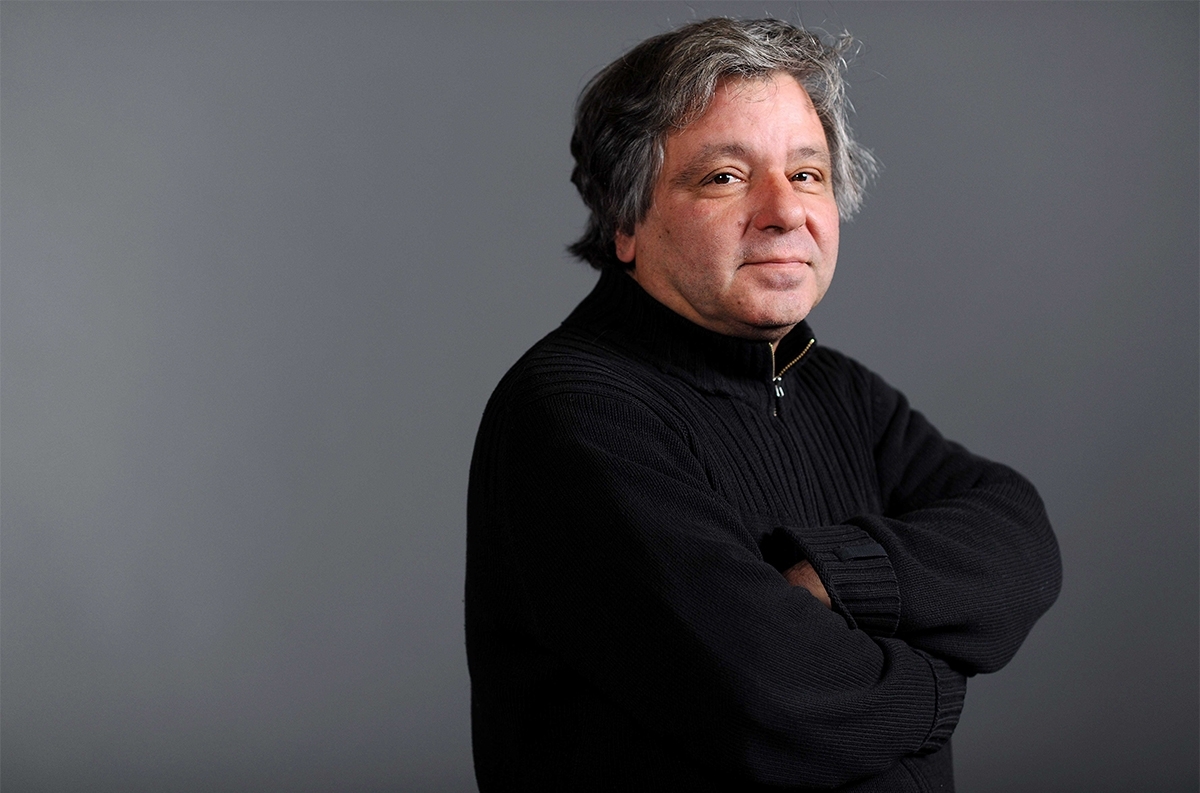
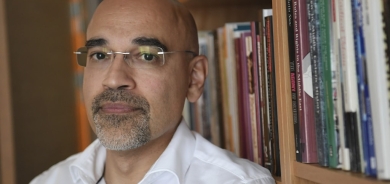
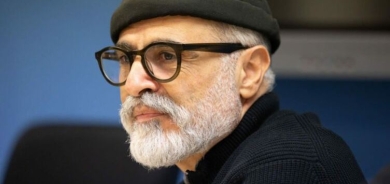
Professor Hamit Bozarslan, a renowned historian and political scientist at EHESS (École des Hautes Études en Sciences Sociales) in Paris, is one of the leading voices on Kurdish history, state violence, and the political transformations of the Middle East. In this interview with Gulan Media, he reflects on the survival and transformation of the Kurdish question, the process of “decivilisation” in the region, and the political and social challenges shaping the Kurdistan Region of Iraq (KRI) today.
Gulan Media: Given your expertise on the Kurdish question, how do you assess the current political stability and future prospects of the Kurdistan Region of Iraq amid ongoing regional tensions and internal challenges?
Professor Hamit: In order to answer this question, I would go back to the 1980s. The 1980s were a very decisive period in Kurdish history, and at that time, none of us were sure that the Kurds would survive.
Today, we can see that the Kurds did survive. There is a Kurdistan in Bashur, and hopefully tomorrow, one in Rojava. This is a very important point. It means that the survival of the Kurds has been achieved to some extent.
At the same time, of course, the Kurdistan of Bashur could have been very different. I think that the social integration and internal interaction of Kurdistan could have brought new political generations and new perspectives to Kurdish society. We could imagine that this might have changed the old political culture and created space for new political elites.
Once again, I would underline the importance of the very existence of Kurdistan. The fact that Kurdistan exists is, in itself, an achievement. Yet there remains much to be done — it is both a positive reality and a reminder that further progress is needed.
Gulan Media: In your work Crisis, Violence et Dé-civilization, how do you see these concepts manifesting within the context of Iraqi Kurdistan’s post-ISIS landscape and its relations with Baghdad?
Professor Hamit: The concept of civilisation is a very important one. One should keep in mind that civilisation is not defined by nationality, culture, or religion. For instance, there is no such thing as an Islamic civilization or a Chinese civilisation or a Christian civilisation. Civilisation, as I understand it, is universal — it belongs to humanity.
Civilisation also means trust: trust in time, trust in space, trust in language, trust in institutions. When we look at the history of the Middle East in the twentieth century — and particularly Iraq — we see that civilisation has been repeatedly destroyed: destroyed by the brutality of power, by chemical weapons, by the totalitarian experience of Saddam Hussein, and by ISIS. It has also been destroyed by sectarian logic.
So, I think the factors of “decivilisation” have been massively present, and they are still there today. Yet, at the same time, as I said earlier, Kurdistan exists — and that existence itself is crucial. The Kurdish society may be able to recreate that trust: trust in time, trust in space, mastery over generational relations, and mastery over language as a tool of communication and confidence. This trust must also extend to the future.
Gulan Media: Considering your research on the “revolutionary fact” and the role of violence in the Arab world, what unique dynamics of revolution or social change have you observed in Iraqi Kurdistan, if any, compared to other parts of the Middle East?
Professor Hamit: We can certainly observe revolutionary dynamics during the 1950s and 1960s in Kurdistan, which was attracted to left-wing ideologies that were quite popular at that time. Take the example of the Barzani rebellion — Mullah Mustafa Barzani himself was, by and large, a conservative figure, but the Kurdish movement at the time was influenced by left-wing currents.
The same was true in the 1970s, especially after the downfall of certain operations and the creation of an autonomous administration. Of course, these revolutionary dynamics are no longer present today.
Why is that? Because any successful revolutionary dynamic must eventually transform itself into a process of building a society — of creating and reshaping social life, of building a new perception of time and purpose. In Turkish history, we can see something similar: revolutions that, over time, lost their transformative energy once they became institutions.
Today, for the Kurds, the very existence of Kurdistan makes it irrelevant to return to a revolutionary dynamic. The focus must now be on building and sustaining a functioning society and state.
Gulan Media: Based on your historical perspective, particularly from your book A History of Turkey: From the Empire to the Present, how has Turkey’s evolving relationship with the KRI impacted regional stability and the KRI’s autonomy?
Professor Hamit: If we look at Turkish ideology from around 1876 to 1909 and beyond, we can see the development of a national doctrine which insists on the Turkish nation’s “historic mission” — a mission of domination.
We must be aware that this ideology still exists today. In this framework, only Turks are considered as historical and political subjects — as the subjects of history. All other groups are seen as subordinate, as people with little or no right to become collective, historical subjects.
This is also reflected in Turkey’s relations with the Kurdistan Region of Iraq. Ultimately, Turkey was obliged to accept the existence of an autonomous Kurdish entity — especially after 2008–2009 — but in Ankara’s perception, this entity remains subordinate. It is not viewed as an autonomous region where the Kurds, as a collective subject, can freely determine their own future.
This creates an ambiguous relationship. On one hand, Turkey engages with the Kurdistan Region economically and politically. On the other hand, the ideological foundation that denies the Kurds full subjectivity has not fundamentally changed.
Gulan Media: You mentioned Turkish ideology. How do you think that ideology affects the Kurdish population in Syria today, and what forces might compel Turkey to eventually accept a Kurdish administration there?
Professor Hamit: If we look at the past fifteen years, Turkey has done everything it can to destroy Rojava. It has tolerated the existence of Kurds in Iraq, and even, to some extent, in Rojava — but only on the condition that they serve Turkish interests and remain subordinate to the Turkish nation.
The destruction of Rojava — in Afrin, in particular — began the moment Kurdish forces there declared that they would not be dominated by Turkey and would determine their own future. From that moment, Turkey could no longer tolerate their existence.
Perhaps today the situation is somewhat different. The context has evolved due to American pressure, Israeli involvement, and the overall transformation of the war in Syria. Turkey may now be obliged to accept the existence of a limited Rojava administration — not as a federation, but as a political and social reality that continues to persist.
Several factors could make this unavoidable. The first is the military capability of the Kurds themselves — something Turkey cannot ignore. The second is the weakness of the current Syrian regime, which survives only through the support of foreign militias and lacks any genuine popular legitimacy. It cannot mobilise society or risk provoking another civil war.
The third factor is the presence of the United States — a dual presence, in fact, of both the Pentagon and the State Department. Although these two institutions do not always agree, they act together in Rojava. And finally, there is Israel, which, whether one likes it or not, plays a decisive strategic role in maintaining the regional balance of power.
Gulan Media: Your work, A History of Violence in the Middle East suggests a deep understanding of historical conflicts. How do historical grievances and past violent episodes continue to shape contemporary political discourse and inter-group relations within Iraqi Kurdistan and with its neighbors?
Professor Hamit: I think violence has become one of the central components of the region’s political culture. It is not just an instrument used occasionally — it has become part of political life itself. In many cases, political actors no longer even try to hide their resort to violence; it becomes a mode of expression, a tool of legitimacy, even a language.
In the Middle East, this long history of violence has created societies in which trust has been eroded. It affects not only relations between states and peoples, but also within communities — between generations, between political movements, and within families.
In Iraqi Kurdistan, the memory of the Anfal, of chemical weapons, of displacement, of betrayal, and of internal conflict is still very present. These memories continue to structure the collective consciousness. They also shape how political authority is imagined and how fear is managed.
This is why I believe that rebuilding trust — through institutions, education, and the creation of a shared public space — is the only way to move beyond this long heritage of violence. Otherwise, the past keeps returning, again and again, in new forms.
Gulan Media: Given the Kurdistan Region’s significant energy resources, how do you see the interplay between natural resources, economic development, and political autonomy in Iraqi Kurdistan — especially in relation to Baghdad and international actors?
Professor Hamit: Oil and gas are, at the same time, both a blessing and a curse for Kurdistan. They offer the possibility of economic independence and leverage, but they also make the region extremely vulnerable.
The more an economy depends on natural resources, the more it risks becoming fragile — because resources can be manipulated, controlled, or blocked by external powers. We have seen this repeatedly with Baghdad, and even with international companies.
The second danger is that oil tends to create rentier economies. Rentier economies, by definition, weaken institutions, undermine meritocracy, and concentrate wealth and power in the hands of a few. They discourage innovation, education, and the development of productive sectors.
If Kurdistan can use its resources to build real infrastructure — educational, industrial, and social — then these resources become a force of autonomy. But if they are simply used for consumption or political patronage, they will reproduce dependency.
So, oil can make Kurdistan freer, or it can make it weaker. It depends entirely on how it is managed.
Gulan Media: From the perspective of your book The Kurdish Question: States and Minorities in the Middle East, what is the most significant evolution you have observed in how regional states approach the Kurdish question — particularly concerning the KRI?
Professor Hamit: What has changed most is that the Kurdish question is no longer perceived only as a “security problem.” It has become a structural question of statehood in the Middle East.
For decades, the Kurdish question was dealt with through repression — by denying the Kurds’ existence or rights. Today, even if that denial persists in some places, the states of the region can no longer simply erase the Kurds. They have to deal with them as political, social, and cultural actors.
This is true in Iraq, in Turkey, in Syria, and even in Iran. The Kurdish issue has become a mirror through which each of these states must confront its own internal contradictions — its definition of citizenship, sovereignty, and identity.
So yes, there has been evolution, but it remains deeply ambivalent. The Kurds are recognized as actors, yet that recognition is still often framed within hierarchies of domination. The challenge for the future is to transform that limited recognition into genuine equality and political partnership.
Gulan Media: In your view, what role can Iraqi Kurdistan play in fostering regional stability and dialogue, considering its unique geopolitical position and internal political landscape?
Professor Hamit: Iraqi Kurdistan has, paradoxically, both fragility and strategic centrality. Because it lies between Turkey, Iran, Syria, and the Arab world, it can act as a bridge — a mediator — if it succeeds in maintaining internal cohesion and a balanced foreign policy.
The KRI could become a space of dialogue: between Arabs and Kurds, between Sunni and Shia actors, between Iran and the West. But for that to happen, Kurdistan must strengthen its institutions and its democratic life.
Regional actors will only trust Kurdistan as a mediator if they see it as a stable, coherent, and legitimate political entity. Internal division, corruption, or authoritarian tendencies weaken credibility.
So, the first condition for Kurdistan to play a regional role is domestic reform. Once that is achieved, it can project itself as a peaceful and constructive partner — a rare example of stability in a turbulent region.
Gulan Media: Looking ahead, what are the most critical internal and external challenges that Iraqi Kurdistan will need to navigate in the next five to ten years to secure its future and achieve greater prosperity and stability?
Professor Hamit: Internally, the biggest challenge is political renewal — to move beyond the same faces, the same structures, and the same divisions that have dominated Kurdish politics for decades. The new generation is different: it is more connected, more demanding, and less patient with old-style politics.
If the political system does not open itself to new actors and new ideas, there is a real risk of stagnation — or even regression.
Externally, Kurdistan must manage its relations with its neighbours with great caution. Turkey, Iran, and Baghdad will each continue to exert pressure. The challenge is to maintain autonomy without isolation — to build partnerships without dependency.
And finally, the region is entering a period of deep uncertainty. Climate change, economic shocks, the decline of oil, and shifting alliances will all test Kurdistan’s resilience.
In short, the next decade will require both wisdom and courage: wisdom to understand the limits of power, and courage to reinvent the political imagination.