Dr. Michael Breen: “Self-Rule Without Shared Rule Tends to Increase Division”
Modern political systems increasingly face the challenge of balancing diversity, governance, and accountability. Around the world, nations have sought to design institutions that can manage cultural, linguistic, and regional pluralism while maintaining stability and democratic integrity.
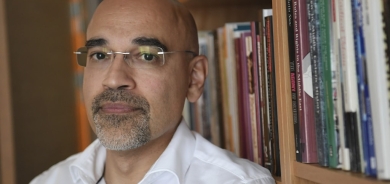
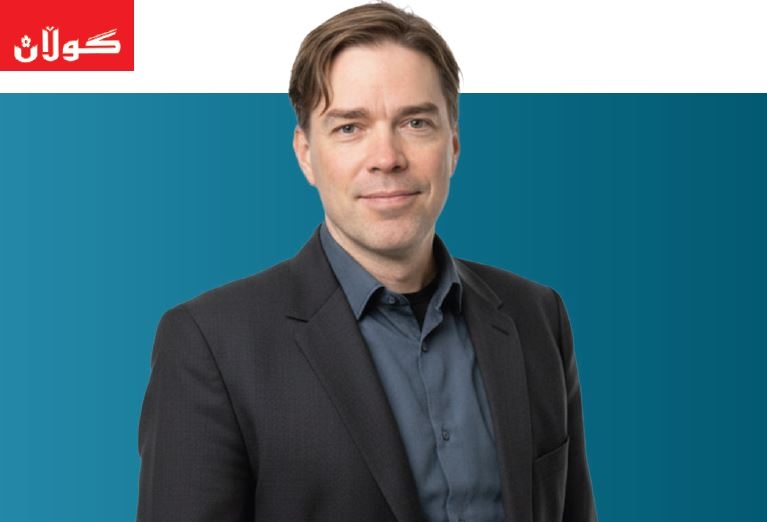
To explore these questions, Gulan Weekly Magazine spoke with Dr. Michael Breen, a scholar whose research focuses on political institutions, governance, and the interaction between identity and power structures. His work offers valuable insights into how societies can design systems that accommodate differences while fostering cooperation and trust.
Gulan: Many countries have adopted systems intended to manage diversity—whether cultural, ethnic, or regional—through institutional design. From your research, what are the key ingredients that make such systems stable and inclusive?
Dr. Michael Breen:Perhaps the biggest challenge when designing political institutions to manage diversity is finding a balance between stability and inclusion. The first key ingredient is democracy. Democracies are better at managing diversity and enabling inclusion, but there are many different ways of designing democratic institutions. Some are more stable than others.
Most democratic countries that have been effective in finding a balance have done this through a combination of electoral system reform and federalization. Federalization, in particular, is about combining shared-rule, and self-rule. So, there should be autonomous subnational governments (provinces) that recognize diversity and there should be a range of integrating institutions that create interdependency. I discuss each of these in more detail below.
Gulan: In societies marked by deep cultural or regional divisions, governments often struggle to balance autonomy with national cohesion. How can policymakers design institutions that respect diversity without encouraging fragmentation?
Dr. Michael Breen: Often there is a tradeoff between these two objectives, but it is possible to find a balance through institutional design. Federalism, or at least special autonomy, is the most common approach, and is a feature of almost all modern-day peace settlements. It is a direct response to a risk of fragmentation - we call it “holding-together federalism” and there is an inherent risk of secession. To mitigate this risk, it is important to create interdependence between the different groups and their institutions. This can be achieved through an upper house of parliament that represents different groups, revenue-sharing, an executive (Cabinet) that includes different groups through a coalition of parties or inclusive (multiethnic) political parties, and through the design of the subnational units themselves.
Gulan: Your work often emphasizes how trust in institutions shapes democratic stability. What role does institutional trust play in divided or post-conflict societies, and how can it be built or restored after years of political exclusion or instability?
Dr. Michael Breen: Trust is essential to the functioning of democracy, but in divided societies, it is often in short supply. Most people associate democracy with elections, but elections are only one approach to establishing an inclusive collective will and organizing decision-making. A more deliberative democracy can supplement, or even replace, an electoral democracy. Deliberative democracy is about finding common interest through the exchange of reasons and reflection, free from the influence of power (whether political, economic or military). There are specific approaches, such as a Citizen Assembly or a Deliberative Poll, that have been proven to build trust between different groups, to moderate extreme positions, and to contribute to the creation of innovative solutions to collective problems. Sometimes it is as simple as creating an environment where participants feel safe to share their perspectives.
Gulan: From your studies in the Asia–Pacific region and beyond, what lessons can be drawn for societies trying to establish systems of shared governance that respect different communities and power structures?
Dr. Michael Breen: Mostly, these countries have established some kind of federalism as a response to the political and economic domination of one ethnic group. The problem in these countries is not diversity as such, but the domination and assimilation that is undertaken in the name of nation-building.
I identify three main lessons. Perhaps the most important is to design subnational units (provinces) so that there is a mixture of different groups in each, where practical, and to ensure that the dominant groups is split across more than one province. It is not so much about creating a new majority of one group, but of overcoming the hegemony of the dominant group. Secession, which I discussed above, is most likely when a dominant group is co-located in one large province.
The second lesson is to establish a strong local government layer that provides targeted autonomy on a smaller scale and that has a more direct connection to citizens and citizen deliberation. I will discuss this further below.
The third lesson is the creation of mixed electoral systems and mixed political party systems. I discuss electoral systems below in relation to representation. Regarding party systems, multiethnic parties are more conducive to peaceful inter-ethnic relations. But they work best when operating in a system where minority groups may have their own (ethnic) parties. In this way, minorities can join major multiethnic parties and establish their own parties, both of which enhance the accountability of major or dominant ethnic groups to minorities. At the same time, political parties that represent the dominant group only are a bad thing for democracy and are linked to assimilation and conflict.
Gulan: In Iraq, and specifically within the Kurdistan Region, questions of governance, inclusion, and institutional development remain central. From a comparative political perspective, what principles or safeguards are most important to ensure that regional autonomy contributes to stability rather than division?
Dr. Michael Breen: One challenge with special autonomy as compared to a more conventional federal system is that the autonomous unit tends to have minimal participation in the institutions of the central government. So this means that there will be little interdependence and a failure to establish a common civic identity. It is important for stability that autonomous regions also participate in national elections and in governance at the center, such as through an upper house of parliament, an intergovernmental council, and through revenue-sharing arrangements. It comes back to the very principle of federalism that I mentioned earlier, a combination of shared rule and self-rule. Self-rule without shared rule tends to increase division.
Gulan: How can political systems ensure that representation reflects both the diversity of identity groups and the broader interests of the state? Are there models or approaches that successfully balance these two competing goals?
Dr. Michael Breen: Electoral systems (in democracies) are the most important institution when it comes to political representation, A proportional representation (PR) electoral system prioritizes inclusion, while a majoritarian system, like a first-past-the-post (FPTP) system where there is only one winner in each constituency, prioritizes stability. Many countries in Asia now use mixed electoral systems and quotas to ensure that underrepresented minorities are included. The problem with pure PR systems is that it often results in so many parties that the formation of government requires a large coalition, which tends to instability. But a purely majoritarian system exaggerates the size of the majority meaning many parties and the groups that they represent are left out. Creating a mixed electoral system, for example, 50% by PR and 50% by FPTP, tends to mean that the largest party will still need to join with other parties to form government, but the government will not include so many parties (who may have very different ideologies and agendas) that it becomes unwieldy and unstable.
Gulan: Looking for the future, what trends do you see shaping the way divided or diverse societies govern themselves? How can political systems adapt to globalization, technology, and shifting notions of identity while maintaining democratic legitimacy?
Dr. Michael Breen: There are two key trends that I think will be particularly important into the future. One is the increasing role for deliberative democracy, such as by the integration of the kinds of tools that are mentioned above. These can help to improve democratic quality and legitimacy and overcome some of the problems that are associated with electoral (competitive) democracy and its system of winners and losers.
The second is multilevel governance – so not just federalism but a range of horizontal and vertical approaches to governance, including the community, transnational organizations and different levels of government. In particular, there is a trend towards an increasing role for local government, resulting in a kind of “hourglass federalism” where the central and local levels are strong, but the provincial level is comparatively weaker. I argue that this approach is often suitable for highly diverse societies where provincial autonomy is at too high a level (too many groups) to equate with ethnic autonomy. It also complements a more mixed provincial design, as described above.