Professor Neophytos Loizides to Gulan: Federalism Carries Risks of Disunity — Here’s How to Manage Them

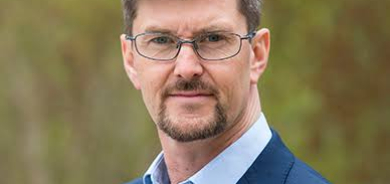
Neophytos Loizides, is a Professor of International Conflict Analysis at the University of Warwick. His research and teaching focuses on citizens and political institution building within violently divided societies, forced migration studies and the study of displaced and migrant communities. He has been awarded an ERC advanced grant PEACERETURN that focuses on the study of peaceful voluntary return and durable solutions to displacement. He also currently leads the Inclusive Peace project funded by an Open Research Area (ORA7) in collaboration with the ESRC (UK), SSHRC (Canada), ANR (France/New Caledonia) and JSPS (Japan). As part of outreach engagements, he has developed interactive mediations and negotiations training programs delivered in partnership with several universities, NGOs and international organizations such as the Organization of American States providing training to more than 120 diplomats from 25 countries. He has also served as a consultant to various governments and international organizations including the Council of Europe and have contributed commentaries to international media such as the Guardian, the Washington Post and the Wall Street Journal. Before joining University of Warwick, he has taught at the University of Kent where he directed the Conflict Analysis Research Centre (CARC), Queen’s University Belfast and Princeton University. He also held fellowships at the University of Essex, the University of Pennsylvania (Solomon Asch Centre), the Kennedy School of Government at Harvard University. He is currently an honorary Professor at the University of Kent and a Senior Advisor at the Forum of Federations, Ottawa. In an exclusive interview he answered our questions as follows:
Gulan: First of all, we would like to ask about your work, which often highlights the potential of federalism and power-sharing arrangement in post-conflict societies. So, can federalism be considered or instrumentalized as a peace-building tool? How do you assess the effectiveness of federalism in peace-building?
Professor Neophytos Loizides: Our collaborative projects focus on comparative analysis looking at different countries and their federal systems, as well as power-sharing arrangements more broadly, in order to understand what works best. Recent federations are mainly about peace-building. Countries where majorities and minorities cannot agree on the nature of the state, majorities will normally aim for a centralized state. Minorities will say, we don't want to be under the control of another group, we want to have a state of our own. And as part of the peace-building, federalism becomes an option that both societies in one country will consider. It is within what we call in recent papers the zone of possible agreement for both majorities and minorities normally. It allows for the state to be united in one international entity, but also enables communities who have different identities to express themselves, and to have an extensive form of self-governance internally in their own territories, and more importantly, to have meaningful participation when it comes to decisions of the centralized state.
Gulan: you have used “zones of possible agreement.” as you have used conjoined experiments to map these zones. So, how do these experiments, challenge traditional elite-centric models of peace negotiators?
Professor Neophytos Loizides: That's an excellent question. Our conjoint experiment and recent collaborative studies show exactly how to do so. Conventionally, what we will hear is that one community would like to have a centralized state, another community will have to have two states. Occasionally, we can ask the question, would you tolerate the option of a federal arrangement? And often, to our surprise, we find out that people will accept a federal arrangement. That's a first good sign, to hear that people are willing to accept federalism or another decentralized arrangement on both majorities and minorities. But then, the next question that arises is whether they will accept the same type of arrangement. Federalism for instance with specific dimensions. And here is where a conjoint experiment becomes a very useful tool, because we can identify, let's say, five, six different key dimensions of federalism. We can give values to those dimensions, different options of what can work or not. And then, we can ask those in an experimental fashion to both majorities and minorities. Normally, the way it looks if someone comes to you with a conjoint experiment and asks you to fill up the survey, is that you get two packages of, let's say, federal arrangement in Iraq, with different borders, with different entity powers, with different political systems, different judges deciding the deadlocks, if those arise. And then, you choose one or the other. And what we do, we run an algorithm to estimate which package is most acceptable to both community A, then community B, or if you have a third community, community C. So, this is how we normally run our experiments seeking for zones of possible arrangements. It gives us another way of contributing to mediation that is different to what has been conventionally assumed when the public was consulted in the past.
Gulan: What conclusions have you drawn concerning the discrepancy between public wishes and the plans put forth by international mediators or political leaders?
Professor Neophytos Loizides: That's precisely the case, and thank you for reading our work so carefully. I think you're probably the first among the people who have interviews as a journalist who got exactly the right point. So, in the case of both Northern Ireland and Cyprus, as well as Bosnia, where we run similar polls, we find that there is a package that is already proposed by the United Nations that might not get majority support on both sides. And then, with revised amendments, as those are expressed in our conjoint experiment, we also find something even more surprising, that there is a zone of possible agreement when it comes to detailed provisions. There are options out there that can give majority support across communities. This is an extremely important finding because it can tell us both the possibility that exists for genuine, innovative solutions, but also the direction we can take. So, often, for instance, we wrongly assume that it's better to have solutions that are primarily driven by locally or regionally i.e. local and regional actors. Where a better answer might be is involving international dimensions into a peace settlement including external arbitration. So, these are some examples of not relying on assumptions, but relying on research and relying on options that could be more negotiable when it comes to citizen endorsements and citizen acceptance of those settlements.
Gulan: So, do you agree that academic ideas of peacebuilding and negotiations may be successfully applied to actual mediation practice?
Professor Neophytos Loizides: Not only that, I think this is essential, but we could, for instance, come up with more tangible options. Recently, our team has created a software where the negotiators can go online, they can design themselves a peace settlement, and by the nature of the same algorithm that we have created as part of the conjoint experiments, we can estimate the levels of support for that peace settlement without running a new poll. So, we created a sophisticated tool that can help us understand the concerns of the citizens, the concerns across communities. If we have an even larger sample, we can understand how people who are more victimized feel, how people who are displaced can feel, compared to the rest of the population. So, we can divide the sample by ethnicity, we can divide it by class, by age, by victim status, and we can understand better how a peace settlement will affect those who have suffered the most.
Gulan: you have developed mediation and negotiation training programs, so, what are the most, and significant skills gaps that even experienced diplomats bring to conflict resolution?
Professor Neophytos Loizides: The Café Diplomatico intiative aims to build skills around this same concept that we have discussed earlier, the zones of possible agreement. So, the first question anyone can ask in the negotiation is, is there a zone of possible agreement? Is the zone of agreement obvious? Is it hiding? Is it somewhere in the past? Is it in the future? Does it involve bringing more people in? Does it involve bringing more issues into the negotiating table? So, these are five, six key scenarios that people face all the time in their lives. What we do with our training is that we take the life of a diplomat or an activist, most recentlu a climate activist and run possible scenarios on a single day of training. So, imagine all the key negotiation challenges that you have faced throughout your lifetime, being caught on a single day with various challenges that you need to solve. If you solve them, you move to the next stage. From the point, let's say you're a diplomat and you pass an exam for your foreign service in Erbil, to becoming the UN Secretary General, all major challenges. Each of these challenges has a memorable lesson, something we can learn that can help us in the future negotiate better, being better listeners, observing to details, identifying win-win strategies, focusing on the issue rather than individuals, being strategic, and at the same time thinking of alternative options that can help us improve outcomes. This is a core element that one can learn by taking a training on negotiations at the Universit of Warwick or one of our partner institutions.
Gulan: you have done research in Cyprus and Northern Ireland also, what specific lessons can fragile democracies or fragile federalists like Iraq learn about reconciling local autonomy with national unity?
Professor Neophytos Loizides: I lived in Northern Ireland for five years and had an opportunity to host delegations from across the world including Iraq and Cyprus. Our starting point in any negotiation is that it's never possible for any side to win its maximum goals. It requires a compromise and careful thinking about trade-offs. It also requires sides, if they're genuine and if they want to talk about their issues, to abandon violence or threat of violence. That's a precondition that we had in Northern Ireland. So, you start with the assumption that I'm going to negotiate and both sides will win in the negotiation. Then, in the method of negotiating, you abandon violence because violence can make things worse. And the third, you make the negotiation as much as possible inclusive of all key players. Not all sides, but all groups within each group need to have an incentive to negotiate and talk to each other. In Northern Ireland, what was the biggest success was inclusivity. The fact that they created a power-sharing system, even at the time of negotiation but later on in the implementation, that sustains itself today, where every group could participate in governance. There are no predetermined exclusions. Every party gets a share in the cabinet, analogous to its political support in the ballot.
Gulan: with regard to the federal arrangement of federalism, is there the risk that institutionalizing group identity will lead to the division rather than the healing of this division within the society?
Professor Neophytos Loizides: There's always a risk that federalism could lead to disunity. That's not unprecedented. We have examples in the past.These examples are very few. It's only non-democratic federations at the USSR, Czechoslovakia, Yugoslavia, that were divided. Among democratic federations though supported by the international community, collapse is very unlikely, it never happened. That's a very important observation to make. Normally, if you compare similar countries: federations vs non-federations, it's the latter who end up with more violence and de facto secession. But there is a better answer to this. It is the strategic answer. If the fear is that federalism could lead to division, then countries can write into their constitution specific safeguards—for instance, any attempt to dissolve the unity of the state, let's say in Syria, could lead to the seceding entity losing its legal entitlements. So, what I'm trying to say here is that federalists can provide the incentives to keep the country together, and it's important that those incentives are clearly spelled out in the constitution with enforcement mechanisms and safeguards for both the state all its communities.
Gulan: based on the findings of your research and work, do you believe that transitional justice mechanisms, truth commissions, reparations, lead to consolidate federal arrangements or to weaken them?
Professor Neophytos Loizides: It always depends on the context. You have federal arrangements, like in Spain, that did not use any of these transitional justice mechanisms, but because the country was prosperous being in the European Union, it ended up with a functioning federation. Then we have cases like South Africa, where the truth and reconciliation commission became a very important part of the transition from apartheid; today South Africa has a quasi-federal system, a system that is de facto federal, one could say. Having truth and reconciliation commissions is not necessary or sufficient, but it's an enabling factor to a successful transition. It can lead to better quality peace particularly for vicrims. But, per se, it does not necessarily guarantee that federalism will work out. One needs to acknowledge that people suffer in places such as Iraq, but there are a lot of people who suffer disproportionately more, and we need to do something for these people in order to make their lives better. We don't know exactly, in most cases, what transitional justice mechanisms would look like, and that's why we need to go back to what we have been discussing before, some of the surveys, because we often assume that it's better for the victims to do A, B, and C, but it might not be the case. So, we need to find out is people’s views first from surveys other then from other forms of consultation such as citizen assemblies. You asked me before about Northern Ireland. Northern Ireland did not have its own version of transitional justice. It was left for the future. The agreement was implemented for three decades now, it was approved since 1998, almost three decades, and what we need to do next is to identify a transitional justice mechanism. This is what is being discussed and debated right now, both in the UK and Northern Ireland Assembly committees and we hope to run a conjoint experiment on the same topic very soon.
Gulan: to what extent the constitutional guardrails or guarantees can provide robust protection for federal arrangements, and what would be the, if not ideal, an optimal constitutional design for preserving federalism?
Professor Neophytos Loizides: there are three ways to do that. You can have informal mechanisms, so no agreement, but sides understand that they need to have some kind of decentralized arrangement that they respect. Those are the easiest to negotiate, but the easiest is to break down as well, because they are informal. Easy to bring in, easy to take away. So, this is often called decentralization. You can have it by legislation, you can revise it very quickly if you have majority in parliament. The other mechanism is to have constitutional robust arrangements that are guaranteed within a constitutional setting, very difficult to change, protects the minority against a tyranny of the majority, especially in situations where the minorities have military power. These are the most likely to happen, because no minority will enter a relationship if they can't be in a situation of running their own affairs. And then the third option tends to be a little bit more complicated. It involves, again, a constitutional arrangement, but one that can change very easily through Supreme Court decisions or through some kind of an externally-led arbitration tribunal that can decide on the future of the federal arrangement. These are not uncommon either, and they are probably the best in terms of backstop mechanisms (safeguards), because they can force both sides to implement the agreement. Otherwise, any of the non-implementing sides risk losing tribunal decisions in the future.
Gulan: You have worked with institutions from Harvard to the Council of Europe How much has your understanding of inclusive peacebuilding been influenced by this multidisciplinary and global exposure?
Professor Neophytos Loizides: Inclusive peace is a priority for many of those organizations. You read, for instance, in the 2254 UN Security Council resolution for Syria in 2015 provisions that the country needs to be governed in an inclusive system. You hear about inclusivity in every organization, in every occasion. It was a couple of years ago that I had a conversation with a leading South African diplomat, and one thing that he told us is that inclusive peace speaks to my heart, but doesn't speak to my brain. So, it's something that we all want to see, but we're not always convinced that it could be successful by engaging more people, but also, we don't know how it could be successful, who to talk to and when, and where do we stop talking and start implementing the peace agreement. So, since this conversation, our research group has attempted to cover this gap, speak to the brain, produce academic research that demonstrates not only that inclusivity matters, but also how inclusivity could be achieved in the most beneficial way for the societies that embrace it.