Iraq Inks Deal with Global Intelligence Firm to Recover Stolen Funds and Fugitives
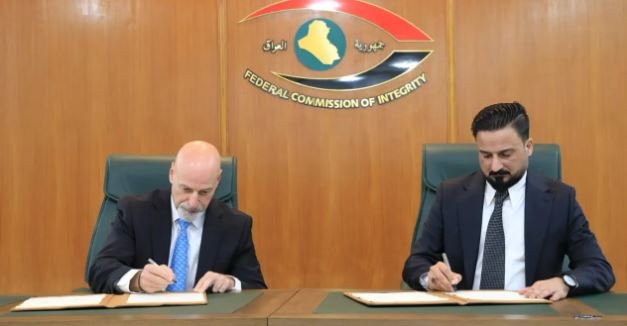
In a significant move to combat large-scale corruption, Iraq has signed a cooperation agreement with the Soufan Group, a leading international security and intelligence consultancy, to accelerate the recovery of stolen public funds and the repatriation of fugitives wanted in major graft cases.
The deal, finalized in Baghdad on Monday, pairs Iraq's Federal Integrity Commission with the global firm to deepen coordination on tracking illicit financial networks, recovering assets hidden abroad, and establishing direct channels with foreign law enforcement agencies, including Interpol.
Following the signing, Federal Integrity Commission chief Muhammad Ali al-Lami stated that the agreement is designed to "strengthen Iraq’s ability to pursue high-profile corruption cases that span multiple jurisdictions." He revealed that collaborative efforts with executive and judicial bodies have already led to the successful return of 51 wanted individuals from overseas.
The partnership extends beyond information sharing to include a significant capacity-building component. It will provide specialized training for Iraqi investigators in critical modern disciplines, including:
Digital forensics
Modern financial-tracking tools
Artificial intelligence systems to detect forged documents
Advanced interviewing and behavioral-analysis techniques
Al-Lami emphasized that developing this technical expertise is essential for tracing money flows through both traditional and digital banking systems. The goal, he noted, is to ensure Iraqi investigative teams can match the sophistication of transnational corruption networks.
The Soufan Group, founded and led by former FBI Special Agent Ali Soufan—renowned for his counterterrorism work post-9/11—brings a wealth of experience to the table. The firm operates globally, providing governments and major institutions with expertise in intelligence analysis, financial-crime tracking, cyber investigations, and security planning.