Dr. LIuis Pereze-Lozano to Gulan: I think that international actors can play an important role in a secession conflict
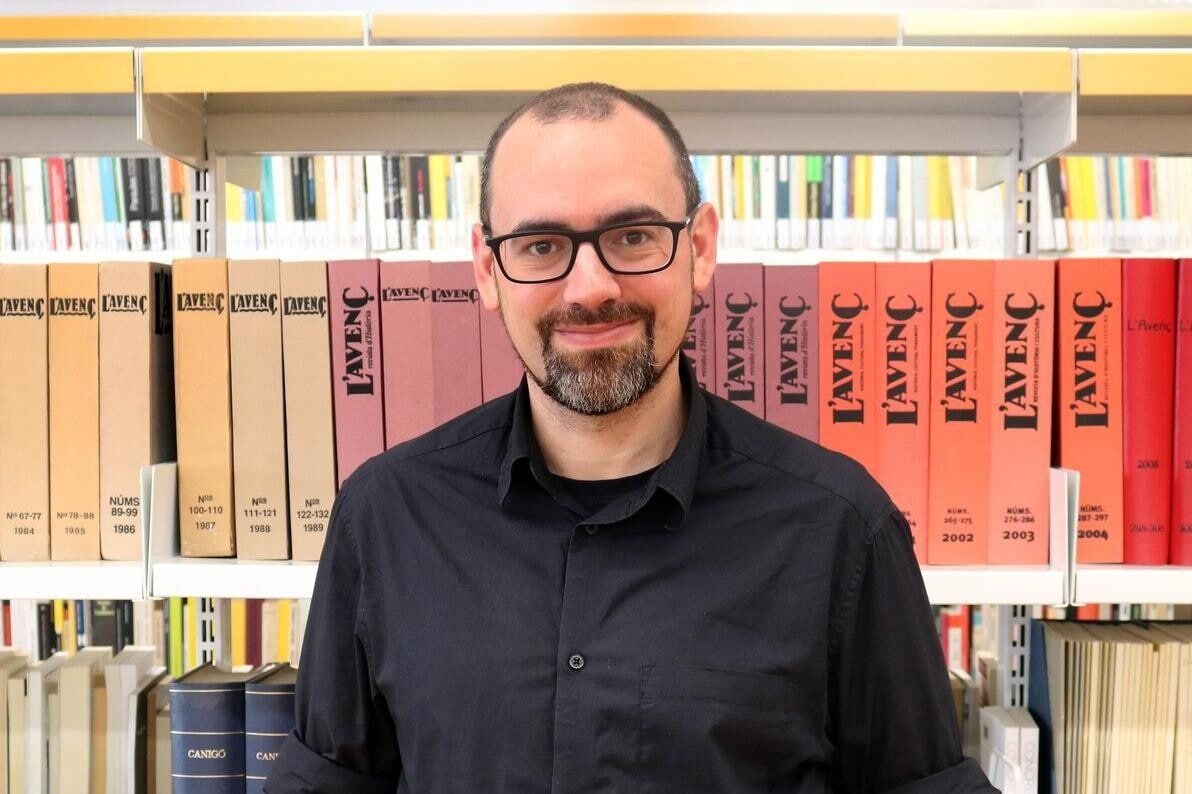
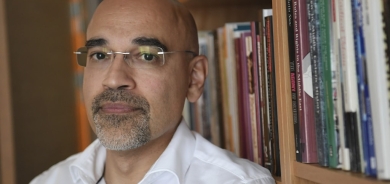
LIuis Pereze-Lozano Is an Adjunct Professor at Universitat Pompeu Fabra. My primary research interests are theories of democracy and justice; more specifically, He is focused on republicanism: its theoretical traits, its origins and evolution, its variants, and its possibilities and weaknesses in dealing with normative issues in modern democracies. He earned my PhD at the Universitat Pompeu Fabra with a dissertation devoted to the development of a republican theory of right of secession. In an exclusive interview he answered our questions like the following:
Republicanism and Democratic Theory
Gulan: How does the republican conception of freedom as non-domination inform your understanding of self-determination and secession in modern democracies?
Dr. LIuis Pereze-Lozano: Domination, in republican terms, is the arbitrary power of the individual or group X over the individual or group Y, i.e., as a power that can be exercised by X over Y without having to consider Y's interests and opinions. A common topic in republican thought is the importance (and the danger) of factional conflicts when it comes to designing non-dominating (therefore, legitimate) political institutions. To republicans, political institutions should manage political conflicts in such a way that no contending faction can gain absolute (therefore, arbitrary) power over the others. Republicanism, however, has not concerned itself with designing institutions that are able to manage secession conflicts, in which the contending factions neither seek to win power within a state, but either to become a state formed out of another one (secessionism), or to prevent another group doing so (unionism). The purpose of my work on secession has been to fill this gap.
Gulan: Republicanism emphasizes civic participation and collective self-rule. Do you think these ideals are compatible with movements for political separation, or are they inherently tension-laden?
Dr. LIuis Pereze-Lozano: There's a problem no theory of democracy has been able to definitely solve by now: how to decide who is the demos. If democracy is the government "of the people, by the people, and for the people", then who's exactly "the people"? Is it humankind as a whole? If it is, then what justifies states' sovereignty? If we assume it is somehow justifiable that humans live in independent states, and that the justification for them is that they embody their people's right to self-determination, then how do we decide who are "the peoples" that populate the earth and have such right? Republicanism is no exception to this theoretical gap. And in a tradition that concerned with participation of "the people" in public affairs, that's a major gap.
On the one hand, if we assume that "the people" are just the inhabitants of a state as a whole, then we're just assuming the legitimacy of the status quo without further justification than its plain existence, which probably will be rejected (as it actually is) by many permanent minorities "trapped" in those states as a result of past wars, royal marriages or alike. That in turn will end in a lower degree of democratic legitimacy for those states. If, on the other hand, we assume a too generous approach to centrifugal tendencies within states, then the instability that may follow might make democratic self-government quite shaky.
Gulan: In your view, does republican theory offer a unique normative framework for territorial disputes that liberalism does not?
Dr. LIuis Pereze-Lozano: Actually, it is important to take into account that "republicanism" and "liberalism" are only labels that we assign to a number of political currents that share a family resemblance; of which several of them may overlap. Meaning: there are "republicanisms" and "liberalisms", in plural. But, to this day, none of them has worked much on territorial disputes between unionists and secessionists, being primarily concerned with conflicts within the state or between states, not between states and people who want to break away from them and build their own states.
Theories of Secession
Gulan: How would you compare remedial-right theories of secession (which permit secession only after injustice) with primary-right theories (which recognize a standing right to secede) from a republican standpoint?
Dr. LIuis Pereze-Lozano: In a nutshell: they are all focused on "who has a right to act unilaterally, a priori". For remedial right theories, it's the host state; for primary-right theories, are either certain cultural groups or groups of people that are more or less united in their will to break away from the host state. And the problem is that this focus on unilateralism gives the upper hand to either one of these two groups: permanent majorities or powerful minorities. In my view, a republican approach to secession must focus on multilateral mechanisms that channel the conflicts between unionists and secessionist, force them to negotiate their agendas and allows them to actually pursue their goals by peaceful and democratic means. Unilateral mechanisms must be seen as a last resort for when certain circumstances concur (e.g. when one of the two sides refuses to negotiate with the other).
Gulan: What do you see as the strongest and weakest aspects of normative theories of secession in handling real-world cases like Catalonia or Scotland?
Dr. LIuis Pereze-Lozano: The strongest aspect is that these are theories that, finally, have started to question the assumption that the borders of "the demos" are obvious. The weakest aspects are, in my view, two: (1) they usually give an arbitrary upper hand to one of the two sides of secessionist conflicts, as we have seen; and (2) they are usually far removed from the harsh realities of international politics. But this last aspect is a political weakness, not a normative one.
Gulan: Given that many secessionist claims invoke democracy and justice simultaneously, how should political theorists balance these values when they point in different directions?
Dr. LIuis Pereze-Lozano: Democracy is a set of methods that we use in order to reach legitimate collective decisions. Legitimacy and justice, though, are different things: I can think that my government is legitimate because its power stems from legitimate sources (e.g. free and fair elections), while at the same time criticizing its fiscal policies as unjust. And in reversal: I can think that a fiscal policy is just but that it's being decided by a government whose power comes from illegitimate sources (e.g. a military coup). The trick lies in organizing institutions in a way that it will tend, in the long term, to be reasonably just. Secession conflicts, and the institutions that should manage them, must not be an exception to this principle.
Gulan: In your article you defend a constitutional or quasi-constitutional approach to secession. What key institutional safeguards would you recommend to make this approach both legitimate and workable?
Dr. LIuis Pereze-Lozano: Through an examination of the Quebec Secession Reference (which recognized a sort of a constitutional right of secession for Quebec), I think we can conclude that this Reference designed a useful, if imperfect, framework in terms of governing Quebec's possible secession in a manner that would minimize domination (in republican terms). The Reference not only recognized a constitutional right of secession for Quebec, but a constitutional right to a non-unilateral secession. It denied Quebec the right to unilaterally secede, but it also denied the rest of Canada the right to unilaterally ignore a clear majority of Quebecers asking for secession. Thus, it created for both sides the obligation to resolve the controversy by negotiating in good faith, therefore minimizing the threats of domination (either by blackmailing minorities or by arbitrary permanent majorities), exclusion and instability. That's a good template for a constitutional right of secession.
Gulan: Do you think constitutionalizing secession risks normalizing or even encouraging break-up movements, or does it instead provide a stabilizing effect?
Dr. LIuis Pereze-Lozano: It's hard to know because the number of actual cases to draw lessons from is rather small; but according to the empirical research undertaken by Jason Sorens in his book Secession (2012): (1) people tend to be risk‐averse, and there is evidence showing that only a limited range of groups with some sort of “ethnic” or “national” identity show a relevant share of its members as supporting secession; and (2) there is also some evidence that the existence of a legal path towards secession tends to favor the peaceful and stable development of secession conflicts and the promotion and protection of self‐government agreements. In fact, the case of Quebec seems to point out to that direction: the peak secessionist tensions with Canada (that led to the sovereignty referendums in 1980 and 1995) happened before the Supreme Court of Canada acknowledged a sort of constitutional, non-unilateral right of secession to Quebec, in 1998.
Gulan: How can democratic states design constitutional mechanisms to manage secessionist demands without undermining the legitimacy of the existing constitutional order?
Dr. LIuis Pereze-Lozano: Again, it's difficult to say due to the scarcity of practical experiences, but cases such as Quebec or Scotland show that it's basically a matter of taking into account all stakeholders' voices in designing those mechanisms. This seems to strengthen the legitimacy of democratic states, rather than undermining it. The problem is that this is largely dependent on the political culture of the state: states with a deeply nationalistic and/or authoritarian tradition will usually prefer to resort to ignore and/or repress secessionist movements if given the choice, even if it means to erode their democratic legitimation.
Gulan: What lessons from the Catalan experience might be useful for other democracies facing secessionist pressures, such as Canada, Belgium, or the UK?
Dr. LIuis Pereze-Lozano: I think the question must go in the opposite direction: what can Spain (and, particularly, its anti-authoritarian forces) learn from Canada, Belgium and the UK? Right now, the Spanish Socialist Party is complaining that a prominent section of the Spanish high courts (which are controlled by Spanish nationalist, right-wing elements) are waging lawfare against the Socialist-led Spanish government, with some right-wing leaders even threatening to send Spanish Prime Minister to jail; but the truth is that between 2017 and 2019 the Spanish Socialist Party supported those very same methods when they were directed against Catalan pro-independence leaders. When you support authoritarian measures instead of democratic channels in order to deal with political opponents, you know where that starts but you don't know where that ends. All in all, Canadian, British and Belgium approach to secessionist movements look healthier than the Spanish approach, at least in democratic terms.
Gulan: In the Catalan case, how should public opinion and democratic majorities be weighed against constitutional constraints and the rights of dissenting minorities within the seceding region?
Dr. LIuis Pereze-Lozano: In keeping with the republican spirit of balancing the power of different factions, I think that the main point is that constitutional mechanisms must force (and enable) the different factions in conflict to discuss and negotiate their agendas with each other according to their level of public support. That doesn't exactly mean "there should not be winners and losers"; in the end, a democratic decision always leads to somebody "winning" and somebody "losing", in a certain sense. But even then, everybody's voices should be taken into account when it comes to figure out how those decisions must be carried forward. Institutions should be designed so that this conflict is channeled through democratic and peaceful means, so that nobody "wins" or "loses" absolutely. That's how democracy works when it comes to decide who has to hold legislative or executive power and how it has to exercise it; I don't see why we can't apply this same spirit to the governance of secession political conflicts, be it in Catalonia or elsewhere.
Gulan: How do you see the role of international law or external actors in shaping norms and expectations around secession?
Dr. LIuis Pereze-Lozano: I think that international actors can play an important role serving as more or less impartial referees in a secession conflict. They won't be perfect (nobody is 100% impartial), but in a conflict between a state and a secessionist community, it's reasonable to assume that secessionist communities will have a hard time trusting the host state's central institutions that would normally be trusted as quasi-impartial referees in domestic political conflicts (e.g. constitutional courts). Of course, one can't beat something with nothing; so until some sort of institutional mechanism is put in place in order to govern secession conflicts (and territorial conflicts generally speaking), constitutional channels for secession demands will be better than nothing (provided they are deliberately designed as actual channels instead of cul de sacs).