Dr. Waleed F. Mahdi to Gulan: The use of official religion to cultivate a sense of national identity is increasingly becoming a common practice in today’s world
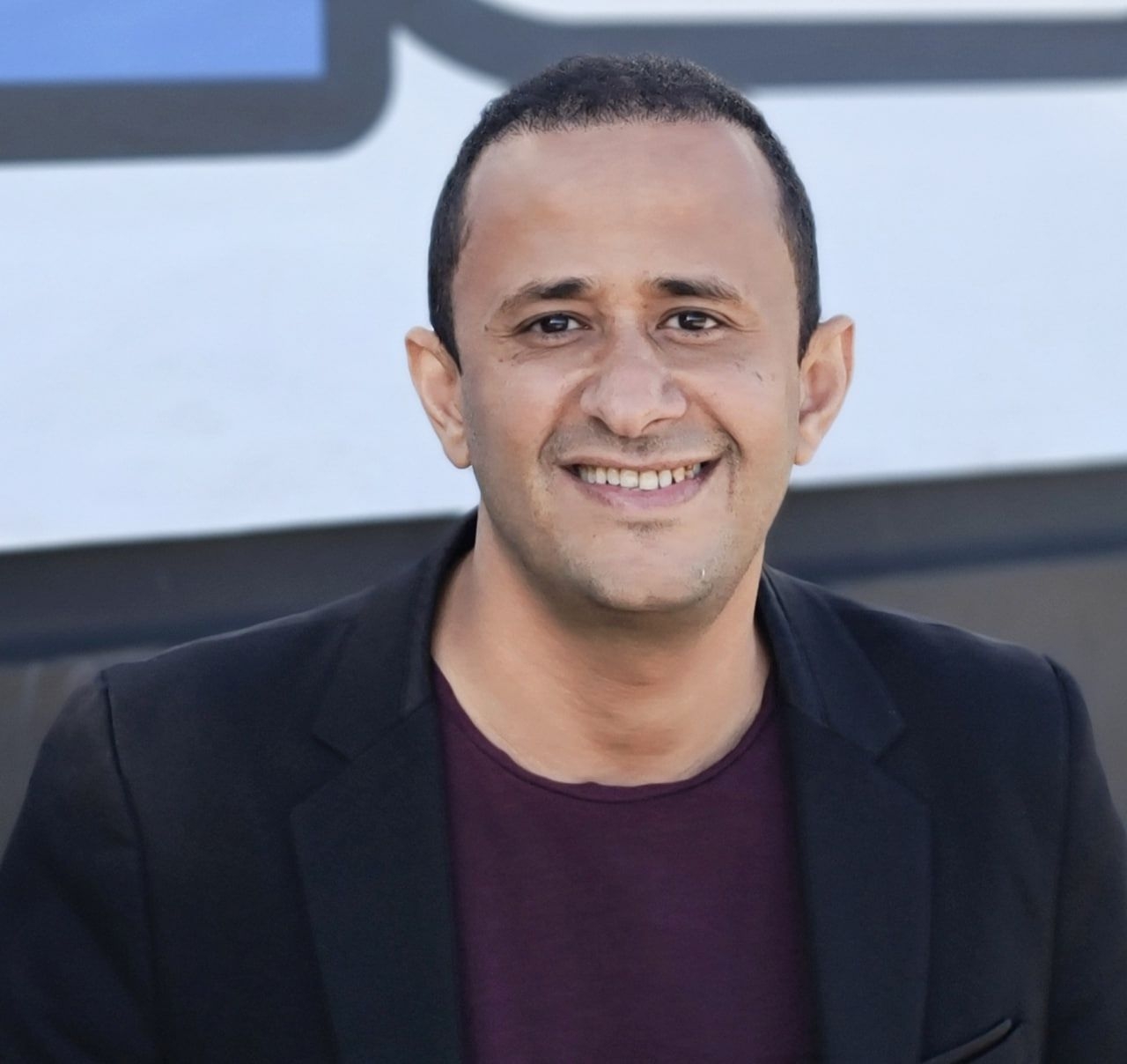
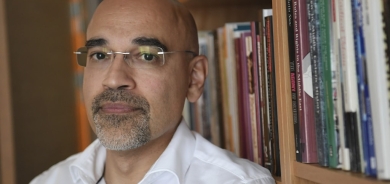
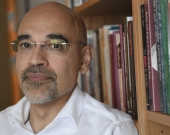
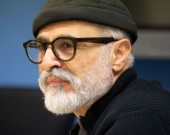
Dr. Waleed F. Mahdi is an associate professor at the University of Oklahoma, where he co-directs the Center for Middle East Studies. He is currently the President of the Arab American Studies Association (2024-2025). His first book, Arab Americans in Film: From Hollywood and Egyptian Stereotypes to Self-Representation (Syracuse University Press, 2020), examines how Arab American belonging is constructed, defined, and redefined across Hollywood, Egyptian, and Arab American cinemas. His current book project offers a multi-faceted analysis of competing visual modes in seeing Yemen from a US-securitized lens characterized by violence and imperial amnesia to a Yemeni lens marked by witnessing, grieving, and defying erasure. His peer-reviewed work appears in top-tier journals, including American Quarterly, Journal of American Ethnic History, and Journal of Cinema and Media Studies. In a written interview He answered our questions like the following:
Gulan: Your work often explores Arab and Muslim representation in U.S. media and film. How have these portrayals shifted since 9/11, and what do you see as the most persistent stereotypes that remain today?
Dr. Waleed F. Mahdi: In my work, I have found that media and films in the United States have historically represented Arabs and Muslims as either a foreign policy issue or a national security concern. The stereotypes of Arabs and Muslims as terrorists or anti-American conspirators originated during the 1970s within the context of post-1967 Arab-Israel “Six-Day” war, which is referred to as the “Naksa” (setback) in the Arab world. While this war dealt a heavy blow to dreams of geopolitical unity in the Arab world, it created momentum for advocacy among Arab students and Arab immigrants in the United States, which invited institutional surveillance by the Nixon Administration and a heavy public backlash, ushering in a wave of anti-Arab racism. Those stereotypes were further polished following the tragic attacks on the United States on September 11, 2001.
However, there have been noticeable improvements in these representations since 2001. Journalists and filmmakers have paid attention to how Arabs and Muslims fell victim to the US-led “War on Terror,” which led to the US invasions of Iraq and Afghanistan, and adopted tactics, such as indefinite detentions, torture practices, and targeted killing through drone strikes. Beyond this attention to victimization, the US media and filmmaking industries have often promoted some positive portrayals, but conditioned them to the binaries of a “good Muslim” versus “a bad Muslim.” These binaries often conceive good Muslims in their detachment from political and religious discourses and their attachment to a process of Americanization, readily traced through allegiance to the US flag and patriotic performance in working for the country’s military and security apparatus. I have yet to see media coverage and filmmaking representations that do not confine Arabs and Muslims to issues rooted in geopolitical tensions or terrorism.
Gulan: In your view, what role does cultural production—film, literature, popular media—play in shaping U.S.–Middle East relations, beyond traditional diplomacy and politics?
Dr. Waleed F. Mahdi: I would characterize cultural productions as a double-edged sword because of their potential to build bridges between people of different cultures or create gaps by fostering isolated understandings of each other through inflated conceptions of the “self” and the “other.” Unfortunately, mainstream cultural productions in the United States and the Middle East thus far have produced a legacy of misperceptions that have nurtured feelings of enmity and animosity while robbing both Americans and Middle Easterners of truly understanding each other beyond geopolitics. Unlike the entertainment and media industries, I should state that literary productions, especially by Arab and Muslim literary figures, have been relatively successful in capturing the shared nuances of human living conditions, albeit in limited ways. In my opinion, emphasis on shared experiences serves as a common ground to build bridges between American and Middle Eastern cultures. Cultural production should ideally play a crucial role in shaping this emphasis and promoting mutual understanding with curiosity and respect. Cultural productions certainly have the potential power to help develop an appreciation for difference and cultivate a spirit of friendship and collaboration. I wish to see more of this investment in the years to come.
Gulan: You examine identity politics at the intersection of Arab and American cultures. How do you navigate the tension between self-representation by Arab voices and representation imposed from outside?
Dr. Waleed F. Mahdi: Since the tragic attacks of September 11, 2001, Arab and Muslim self-representations in the United States have undergone a process of evolution and evaluation. Throughout the years, Arabs and Muslims engaged with media and film industries in meaningful ways by pushing back against racial profiling, wrestling with the meanings of producing Arab and Muslim American cultural productions, and aspiring to realize mainstream success. The experiences of Arab and Muslim American filmmakers, actors, and comedians in this process varied based on their connections to their Arab and Muslim communities and the power dynamics in the entertainment and media industries. Perhaps, a central question related to Arab and Muslim American entertainers and media professionals is how one can measure “success”: is it in connecting with the community, in pushing back against stereotypes, or in pursuing professional careers that transcend the “Muslim” and the “Arab” boxes?
Since the early years of the 2000s, we have seen waves of filmmakers like Cherien Dabis, Rola Nashef, and Sam Kadi, actors like Tony Shalhoub, Sayed Badreya, Sammy Sheik, Khaled Abol Naga, Rami Malek, and Riz Ahmed, along with comedians like Dean Obeidallah, Maysoon Zayid, Ahmed Ahmed, who have sought self-representations with varying levels of success while undergoing pushbacks from mainstream entertainment. However, recently, alternative platforms such as Netflix and Hulu, along with independent media outlets, have provided fertile ground for self-representations to bypass institutional filters and directly reach the public. Think of the Netflix show “Mo” and the Hulu show “Ramy,” where Arab American comedians Mo Amer and Ramy Youssef, respectively, have introduced Americans to humanistic portrayals of Arab and Muslim experiences. Consider media personalities like Bassem Youssef and Mahdi Hasan, who pushed for straightforward conversations about the Middle East, often presented through US and Israeli national security lenses in mainstream media. This contemporary energy of self-representation is promising but has yet to produce changes within the media and entertainment systems.
On U.S.–Arab Relations and Global Politics
Gulan: How do you assess the current state of U.S.–Middle East relations, particularly in light of recent regional upheavals and shifting global power dynamics? Especially with regard to Gaza war, Yemen situation, recent war between Israel and Iran, that also involved USA?
Dr. Waleed F. Mahdi: Consistent US interests in the Middle East can be traced back to combating terrorism, accessing resources, and seeking influence through alliances and military presence. There have been inconsistencies with respect to the US discourse on democracy, women's empowerment, human rights, and minority inclusion. The Obama administration sought to pivot US foreign interests away from the Middle East toward Asia, and the subsequent Trump and Biden administrations led efforts to move beyond the United States’ “war on terror” legacies. These legacies included direct invasions and occupations in Afghanistan and Iraq, as well as indirect drone operations in countries like Pakistan, Syria, Somalia, and Yemen. However, the three administrations have found themselves increasingly pulled back into Middle East politics.
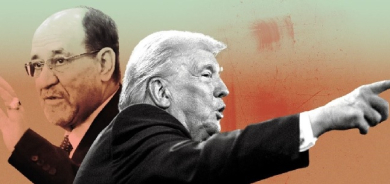
Since the 2010s, other contending powers, such as China and Russia, have increasingly marched toward a global multipolar system, seeking economic investments and geopolitical influence in the Middle East. This context of US reluctance and competition unfolds against the backdrop of a wave of populism in the United States, mobilized by an “America First” mantra that prioritizes the nation’s interests in addressing issues such as trade, migration, or foreign policy. One may see this move toward populism as a reaction to the post-Cold War valorization of globalization, at a time when the United States was the primary dominant power. The wave of populism and nationalist fervor advanced in the second Trump administration, and the accompanying withdrawal from UN commitments and rough conversations with reliable allies in NATO, Europe, and Canada, are caught at odds with deteriorating security in the Middle East, accelerated by Israel’s increasingly destabilizing attacks on Gaza, Iran, Lebanon, Syria, and even Qatar since 2023.
The United States continues to maintain renewed interests in resources, investments, and security, often through collaboration with regional powers such as the State of Israel, the Kingdom of Saudi Arabia, the Republic of Türkiye, the State of Qatar, and the United Arab Emirates. This alliance frequently tests the limits of US foreign policies and approaches, navigating the contradictions presented by the conflicting nationalist priorities of those major regional powers. Amidst these conditions, the populism narrative in the MAGA (Make America Great Again) movement and President Trump’s inclination toward de-escalation could offer some hope for moving toward stability and security, though this unfortunately involves moving away from US commitments to democracy and human rights.
Gulan: The Arab Spring initially raised hopes for democratization but led to complex outcomes. From a cultural and identity perspective, what lasting legacies has it left on Arab societies and their global image?
Dr. Waleed F. Mahdi: I think of the Arab Spring as more than a mere historical moment in which the Millennial generation led a revolutionary wave across the Arab world, demanding democracy, dignity, and a better way of life. The pulse of the Arab Spring was an overdue moment of awakening for peoples long haunted by Western colonial legacy, long-term authoritarian control, and a lack of prospect for inclusive citizenship. It is true that local counter-revolutionary forces, empowered by regional and world powers, created perpetual warning conditions. These often led to more authoritarianism and, in some cases, state failure, resulting in humanitarian crises and mass displacements across the globe, which caused brain drain and the erasure of institutional memory. It has been heart-wrenching to experience the grief that followed the euphoria of the 2011 peaceful protests. For me, this grief has been personal as I have witnessed the destruction of the country, which I once called home, Yemen. In addition to these lasting legacies of hope and despair, the Arab Spring led to Egypt’s retreat as a regional power and the rise of Saudi Arabia and Iran, along with states like Qatar and the United Arab Emirates, in shaping regional politics, often leading to contestations over Islamism and sectarianism.
I see the Arab Spring as a revolutionary spark that has continued to be triggered, despite the destruction that followed 2011. Even when accounts of regret seem to dominate public discourse around the Arab Spring, the youth have never stopped protesting, as in Algeria and Sudan in 2018, or the GenZ 212 in Morocco in 2025. The Arab Spring’s premise of rejecting government corruption, aspiring for better futures, and seeking socio-political change lives on.
Gulan: Many governments in the region use “official religion” as a cornerstone of national identity. How does this shape minority rights, pluralism, and the global perception of these societies?
Dr. Waleed F. Mahdi: The use of official religion to cultivate a sense of national identity is increasingly becoming a common practice in today’s world. You can trace it through the rise of the Hindutva in India, the Buddhist nationalists in Myanmar, the Christian nationalists in the United States, the Jewish nationalists in Israel, and the Islamist nationalists in Türkiye. This cultivation of official religion often imposes a coherent sense of national identity, which risks erasing complexities in a given society, whether by rewriting histories or by not recognizing minority needs. This clearly extends through legal and institutional discriminatory practices, restrictions on rights, and limitations on religious expression. Perhaps more alarmingly, this could result in forcing minority groups to be questioned, their citizenship and identity being presented as fringe, if not outright excluded from public discourse. In the most extreme cases, this exclusion could result in a lack of protection in law enforcement and judicial systems, and push minorities to become vulnerable to hate crimes or persecution. The practice of endorsing an “official religion” per se certainly creates a singular cultural trend that moves away from pluralism, toward homogenization, and marginalizes diverse religious experiences. Some theorists rush to conclude that these practices necessarily ferment future conflicts that destabilize our world. But I choose to have faith in the resilience of lived experiences and humans’ mutual need for co-existence. After all, nation-states often operate through other logics beyond religion to ensure survival, such as economic interests, security perceptions, and global flows of labor and capital. There is no doubt that today’s “official religion” practice is wrapped in a current global trend that is consumed by a dangerous populist discourse, but there is more to international affairs than religion.
Gulan: In your research, how do questions of race, religion, and nationality intersect in the lives of Arab Americans today?
Dr. Waleed F. Mahdi: In the United States, the majority of Arab Americans are Christian, even though many have experienced racial profiling and the rising sentiments of Islamophobia since the 1970s. Meanwhile, Arab Americans constitute about a third of the Muslim American population. They maintain their own distinct understandings of religion, and their practices are distinctly different from those of major Muslim communities such as South Asian Americans and African Americans. That said, Arab Americans tend to experience an identity crisis informed by generational differences with respect to religious practices, the nation-states they migrated from, and their level of investments in Middle East geopolitics, as well as US domestic and foreign policy. It should not be surprising that Arab Americans today encounter various struggles at the individual, community, state, national, and international levels. All these factors add complexities that are at odds with what one may assume to be a coherent Arab American identity.
Take, for example, the metropolis of Detroit in the state of Michigan, which includes the Dearborn and Hamtramck suburbs. These areas have an overwhelming presence of various communities from different parts of the Arab world, including Lebanon, Iraq, and Yemen, among others. In the South end of Dearborn, the Yemeni American community has been dealing with the cancerous effects of the toxic emissions from the steel and car manufacturing factories, while the Yemeni American community in the neighboring Hamtramck has been preoccupied with maintaining a socially conservative environment for their families. Both communities have been steadily gravitating toward the Republican Party, while still experiencing repercussions from the party’s anti-immigrant narrative, including a recent travel ban on individuals from Yemen. This happens simultaneously while the two communities are grappling with the trauma of civil war conditions in Yemen and the unfolding tragedy in Gaza. These layers of traumas and emergencies are developing alongside other progressive Arab American communities that lean in support of the Democratic Party and alongside established religious differences between Muslim Arabs and Christian Arabs, as well as Muslim Sunnis and Muslim Shias. The differences are further enhanced through class as Arab Americans living on the east and west sides of Dearborn experience stark disparities in terms of affluence and access to health, education, and public support. So, the overall picture of Arab Americans in this particular region of the United States, like many Arab American communities, is one disrupted by the intersections of race, religion, and nationality, among many other factors. Still, there are institutional efforts to contribute meanings to today’s Arab American vibrance, be they through the University of Michigan’s Arab American Studies programs, the Arab American National Museum, the Arab American Studies Association, or the dozens of organizations that seek to cultivate these different energies into a mosaic enriched by commonality and difference.
Gulan: Looking ahead, what cultural or political shifts do you think will most significantly reshape the Arab world’s relationship with the United States over the next decade?
Dr. Waleed F. Mahdi: The Arab world, and broadly the Middle East, is too complex to predict in terms of cultural and political shifts. The entire region has the potential to shift and shape depending on how prominent regional actors utilize their soft and hard powers. Take, for example, how the new Syria is becoming possible as a result of the retraction of Russian and Iranian influence, the blow dealt to the Lebanese Hezbollah forces, and the shift of support from Turkey, Saudi Arabia, Qatar, and the United Arab Emirates, as well as the increasing support from Europe and the United States. Similarly, the Arab world’s relationships with the United States are contingent on how global and regional powers proceed. Will the current Trump administration be able to circumvent the increasing Chinese and Russian encroachment into the region? Will the unfolding prospect of peace last long enough to see through the creation of a Palestinian state and a broader Abraham Accords that normalizes relations between Israel and the Arab world? What is the trajectory of Iran’s outreach in the region? How will the next US elected president and congressional bodies perceive the current administration’s retraction from advocacy of democracy and human rights? How would younger generations like Gen Z mobilize their sophisticated literacy of technology to seek out better living conditions? How would advances in Artificial Intelligence shape prospects of truths and grievances? These are some of the many questions at play in determining how the Arab world’s relationship with the United States will unfold over the next decade.