U.S. Hits Global Network with Sweeping Sanctions to Curb Iran's Missile and Drone Programs
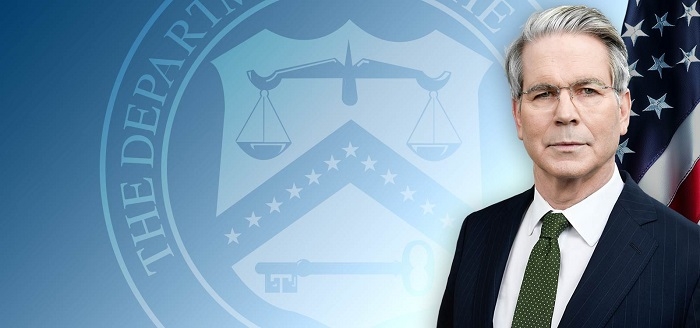
The United States unveiled a major set of sanctions on Thursday, targeting a vast international network of 32 individuals and companies across multiple continents that it accuses of supplying Iran's ballistic missile and drone programs.
The action, taken by the Treasury Department's Office of Foreign Assets Control (OFAC), aims to dismantle procurement systems that Tehran allegedly uses to illegally acquire missile propellants, chemical precursors, and components for unmanned aerial vehicles (UAVs).
“Across the globe, Iran exploits financial systems to launder funds, procure components for its nuclear and conventional weapons programs, and support its terrorist proxies,” said John K. Hurley, Under Secretary of the Treasury for Terrorism and Financial Intelligence. He added that the U.S. is acting "at the direction of President Trump" to apply "maximum pressure" on Iran and expects the international community to fully implement reimposed UN sanctions.
The sanctions, authorized under executive orders targeting weapons proliferators and terrorists, represent the second such round since UN sanctions were snapped back on Iran in September 2025 for its noncompliance with international obligations.
A key focus of the sanctions is the dismantling of a multinational procurement network dubbed the “MVM Partnership.” According to the Treasury, this group has coordinated the supply of critical missile propellant ingredients—including sodium chlorate and sebacic acid—from China to Iran since 2023. These materials are used to produce ammonium perchlorate, a vital component for solid-fuel ballistic missiles.
The network was allegedly operating on behalf of Parchin Chemical Industries (PCI), a subsidiary of Iran’s Defense Industries Organization, which is already under sanctions. Three primary facilitators—Marco Klinge (based in the UAE and Germany), Majid Dolatkhah (Iran/Türkiye), and Vahid Qayumi (Iran)—were sanctioned, along with their affiliated companies in the UAE, India, and Germany, which acted as procurement fronts.
OFAC also designated several entities tied to Iran's Kimia Part Sivan Company (KIPAS), a defense manufacturer known for assisting the Islamic Revolutionary Guard Corps in developing UAV technology. Two affiliates, Baspar Puya Company (PARPO) and Pars Navandishan Artificial Intelligence Projects Company (ARIAPA), were sanctioned for producing and repairing UAV components. Four KIPAS employees were also named for their roles in assembling and supplying drones used by IRGC forces.
Furthermore, the Treasury exposed a China-Türkiye network accused of procuring UAV engines and aerospace parts for Iran’s Oje Parvas Mado Nafar Company (MADO), a key producer of Shahed-series drones used in conflicts in the Middle East and Ukraine. Chinese national Ma Jie and several of his companies in China and Hong Kong were sanctioned for facilitating millions of dollars in transactions with Turkish firms that supplied drone materials.
The sanctions also extended to Ukraine, where two companies, GK Imperativ Ukraina LLC and Ekofera LLC, were blacklisted for supplying aviation materials to Iran’s state-owned Iran Aircraft Manufacturing Industrial Company (HESA), which produces Ababil-series UAVs. Iranian nationals Bahram Tabibi and Batoul Shafiei were identified as key intermediaries.
Under the new measures, all property of the designated individuals and entities within U.S. jurisdiction is blocked, and Americans are prohibited from transactions with them. OFAC warned that foreign financial institutions engaging with them risk losing access to the U.S. financial system.
“The ultimate goal of sanctions is not to punish, but to bring about a positive change in behavior,” the Treasury stated, emphasizing that compliance with international nonproliferation standards is a "global security imperative."