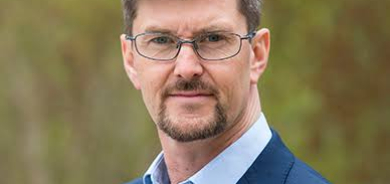
Authoritarian Snapbacks and the Fragmenting World Order: Professor Cooley on the Erosion of Liberal Governance and the Rise of Regime Cooperation
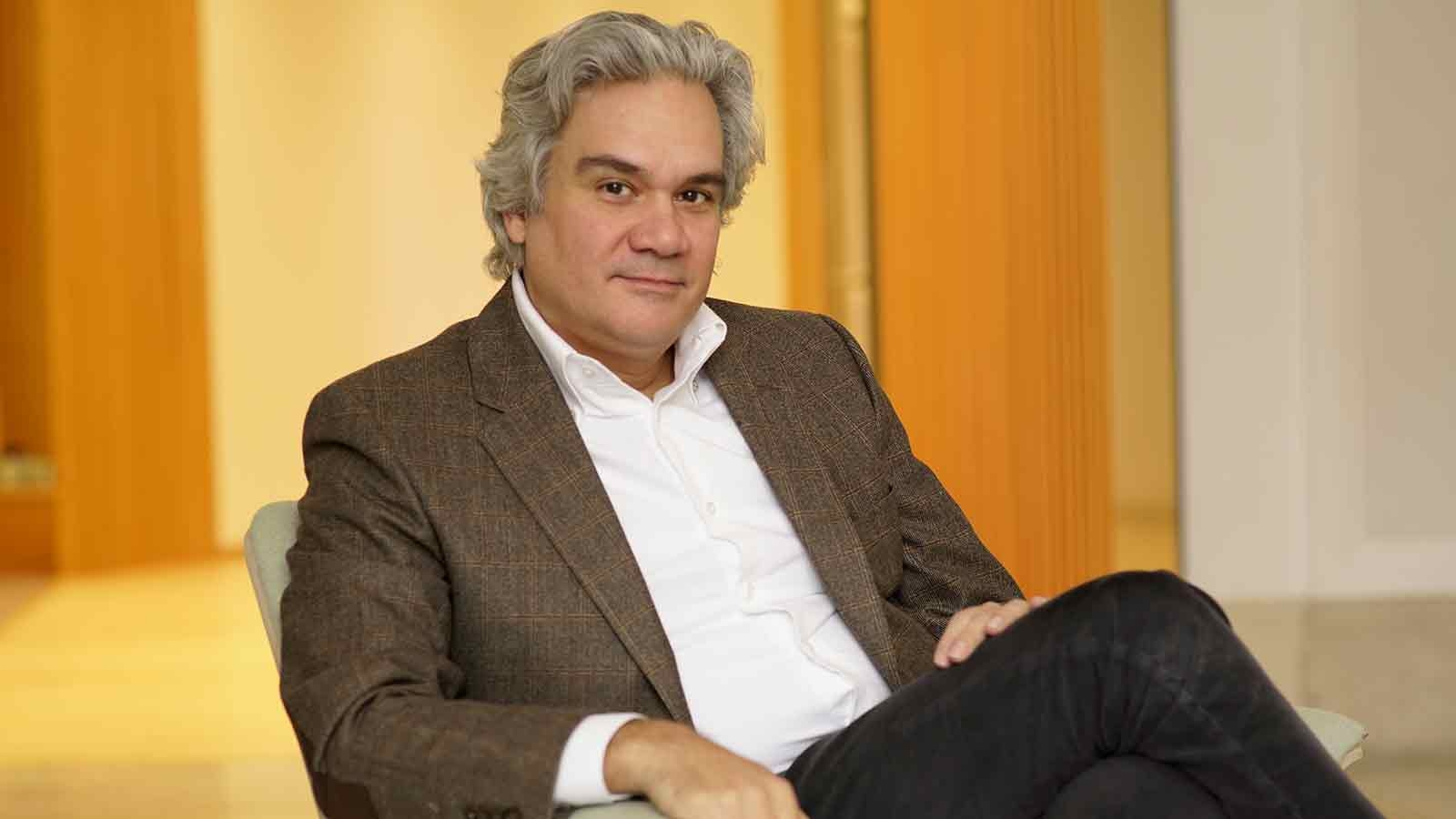
Alexander Cooley is the Director of Columbia University’s Harriman Institute for the Study of Russia, Eurasia, and Eastern Europe, and the Claire Tow Professor of Political Science at Barnard College, Columbia University. His research focuses on sovereignty, global governance, and political developments in the former Soviet space, particularly Central Asia and the Caucasus. He is the author or co-author of six influential books, including Dictating the Agenda, Great Games, Local Rules: The New Great Power Contest for Central Asia (Oxford University Press), and Ranking the World: Grading States as a Tool of Global Governance (Cambridge University Press). Professor Cooley has testified before U.S. congressional committees, served on numerous international advisory boards, and contributed to major outlets such as The New York Times, Foreign Affairs, and Foreign Policy. He earned his Ph.D. from Columbia University.
Gulan Media: In your latest book, Dictating the Agenda, you introduce the concept of the “authoritarian snapback,” describing how regimes are not only resistant to Western norms but actively reshaping global institutions and narratives. Could you elaborate on what you mean by this term “snapback,” how it differs from earlier phases of authoritarian resistance, and why you see it as such a critical turning point in the dynamics of global governance?
Professor Cooley: Yes, thank you very much for that question. I would say that for the first about fifteen years of the post–Cold War era, from roughly 1990 to 2005, authoritarian and semi-authoritarian regimes were in a relatively defensive and protective mode. When they took actions against, especially, civil society, non-governmental organizations, or philanthropic foundations whose politics they found threatening, they did so in a way that concealed their intent. They would implement regulatory or tax measures, ensure paperwork was in order, or conduct similar administrative checks, but they didn’t actively attack these organizations’ missions or question their very existence or purpose.
What “snapback” describes is how authoritarian regimes have now gone on the front foot. Rather than assuming that engagement with civil society and NGOs would transmit norms or standards to authoritarian regimes, we are seeing these regimes actively dismantle civil society. They stigmatize these organizations, control their operations, and reframe the agenda in a way that puts civil society on the defensive. They question the geopolitical intent of these organizations and, in some cases, even whether they qualify as domestic organizations. The “snapback” occurs when these pressures force organizations to fold or go into exile overseas.
The key distinction is that authoritarian regimes are now offensive rather than defensive, and they actively stigmatize these independent organizations, whereas previously, their countermeasures were defensive and hidden.
Gulan Media: Can you give a concrete example of this “snapback” in action, perhaps in the United Nations, multilateral banks, or another institution?
Professor Cooley: Yes, certainly. One prominent example is in the Human Rights Council, particularly with China but also with groups of allies, where NGOs are being denied accreditation at human rights meetings. This is part of an effort, initially led by Russia, to stigmatize foreign-funded groups as “foreign agents,” and then to classify them as undesirable or even ban them on security grounds, claiming they pose a threat. As a result, the inputs that global civil society and different interested NGOs had at UN Human Rights meetings are now being contested, and these groups are being denied accreditation. The conduct of these hearings is increasingly shaped by broader geopolitics.
Another example is the Central European University in Hungary, founded in the 1990s with substantial funding from George Soros’ Open Society Foundations to provide Western-style liberal education for students in post-Communist countries. After 2010, the Hungarian government under Prime Minister Viktor Orban escalated tactics against the university. First, it questioned certain fields of study, such as gender studies or migration studies. Then it imposed bans on engagement with migrants, launched a disinformation campaign against its activities and professors, and eventually terminated its accreditation, forcing the university to relocate to Austria. By the end, many in Hungary viewed the university as a foreign entity, ignoring its history and contributions, and it became politicized in a way it never intended.
Gulan Media: Some analysts argue that authoritarian regimes today cooperate with each other more effectively than democracies coordinate among themselves. From your perspective, do we now see the emergence of an “authoritarian international”? If so, what forms of collaboration — whether in diplomacy, security, technology, or narratives — best illustrate this trend, and how does it shape the broader international order?
Professor Cooley: Thank you for this question. Whether authoritarian regimes collaborate more effectively than democracies is hard to say in the abstract, as it depends on specific areas and countries. But inter-cooperation among authoritarian countries is definitely a feature of the international system and is changing the international order.
This cooperation occurs both formally and informally. Formally, we see it enshrined in regional security treaties, such as the Shanghai Cooperation Organization, which includes China, Russia, Central Asian states, India, Pakistan, and Iran, and also in the Gulf Cooperation Council. These treaties often include opposition movements to regimes as security threats, providing mutual recognition of these threats across countries. There are formal mechanisms allowing security services from one country to operate in another and bypass international asylum procedures.
Informally, we see increasing cooperation among security services targeting political exiles, journalists, or dissidents. For example, Uighurs living in Egypt have been detained by Egyptian authorities in cooperation with Chinese authorities.
A third avenue is contracting services on the open market, including software for surveillance, lobbying services, or management consulting to prevent protests or improve regime image internationally. Authoritarian countries use global markets to strengthen their regimes while bypassing liberalizing influences.
Gulan Media: Do you think democracies underestimate the coherence of this authoritarian alignment?
Professor Cooley: For a long time, yes, they did underestimate it. For example, in the mid-2000s, election monitoring was seen as a specialized, expensive, and relatively neutral endeavor by organizations like the OSCE or Carter Center. Authoritarian countries exploited this by inviting more regime-friendly election monitors, sometimes from CIS or SCO states, whose reports would dilute or contradict more credible monitoring. Western officials initially ignored these laternative monitors which eventually created dangerous gaps in the integrity of democratic processes. Over time, these tactics have become widespread, even influencing Western countries themselves.
Gulan Media: In much of your work, you highlight the role of corruption, patronage networks, and global money flows in sustaining authoritarian systems. Could you explain how these transnational financial and institutional linkages allow regimes to entrench themselves at home while projecting influence abroad? And to what extent do Western institutions, often unintentionally, facilitate these practices?
Professor Cooley: Yes, thank you. This has been a focus of my research for quite a while. It began with studying grand corruption and kleptocracy in Central Asia and has expanded globally. Dictators and kleptocrats, despite having control over political and economic assets, must protect their wealth against losing power. To do this, they convert domestic assets into forms legally protected abroad.
Western financial systems, law firms, shell company structures, and real estate markets are all used for this purpose. For example, the Panama Papers show how kleptocrats and their families use offshore shell companies and complex structures to obscure ownership, open bank accounts, and buy real estate in places like Manhattan. Many of these services are legal, but collectively they create networks that help authoritarian regimes secure wealth and influence internationally.
Even efforts to increase transparency, like the U.S. Corporate Transparency Act, face slow enforcement or political opposition. The global financial system, therefore, both intentionally and unintentionally facilitates authoritarian consolidation of power.
Gulan Media: In Exit from Hegemony, co-authored with Daniel Nexon, you argued that U.S. global dominance was unraveling and giving way to competing forms of order. Five years later, how do you assess this trajectory? Has the decline of American hegemony accelerated, stabilized, or shifted into new forms, and what does this suggest about the future of global leadership?
Professor Cooley: I think the decline of American hegemony is accelerating. The Biden administration initially tried to stem it, for example with diplomacy in early 2022 around the Russia–Ukraine war, but some messaging inadvertently accelerated it. For instance, framing the war as part of a global battle between democracy and autocracy played into Russia’s narrative.
With the Trump administration, we now see “exit from within,” dismantling global leadership infrastructure, including diplomatic corps, foreign aid programs, and global media support. Tariffs undermined free trade commitments, and there was less focus on promoting democracy or human rights internationally. While the U.S. retains raw military power, credibility of alliances and security commitments is increasingly questioned, which reduces the geopolitical effectiveness of that power.
Gulan Media: Is there an area — military, economic, ideological — where U.S. dominance remains stronger than expected?
Professor Cooley: Yes, raw military power remains a major advantage, but it is contingent on credible alliances and partnerships, which are increasingly fragile due to political unpredictability and unilateral claims by the U.S. on allied territories or spheres of influence.
Gulan Media: Beyond the major powers, so-called middle states such as India, Turkey, or the Gulf countries are playing increasingly active roles in global affairs. How should we understand their place within this contested order? Are they best seen as strategic “swing states” that tilt the balance between competing blocs, or are they building their own independent models of influence and governance?
Professor Cooley: I think it’s the latter. While they may act as swing states, most now aim to maintain partnerships with all major global powers. The Ukraine war, for example, shows that countries in the Global South prefer not to choose exclusively between the U.S., China, or Russia. India, for instance, has become more assertive, maintaining dialogue and trade with multiple powers, while Gulf countries manage relations with the U.S., China, and Russia, often pursuing their own diplomatic and soft power initiatives.
Gulan Media: For stateless peoples and smaller nations caught between great powers — I’m thinking in particular of Kurdistan, alongside regions such as the Caucasus or Central Asia — the contestation of the liberal order raises profound questions about sovereignty, security, and political agency. From your perspective, what strategies are available to Kurdish leaders and civil society in navigating a world where authoritarian influence is growing and democratic institutions appear less effective? More broadly, how can communities in hybrid or semi-authoritarian contexts carve out space to preserve their agency and shape their futures in this shifting landscape?
Professor Cooley: That’s a very good question. The landscape is still changing, so I wouldn’t want to say anything definitive. But there are some opportunities. For one, the norm of territorial sovereignty is weakening, which may open space for engagement by stateless entities. Economic interests, particularly energy, can serve as leverage. For example, in sectors like oil and gas, engagement with global powers may provide new opportunities.
However, this is not guaranteed. Geopolitical crises, such as the Israel–Gaza conflict, show that outcomes remain unpredictable. But the diminishing focus on territoriality as the primary lens for engagement can create new avenues for communities to influence their futures.
Gulan Media: Looking toward the next decade, what scenarios do you foresee for global governance? Are we more likely to witness a renewal of the liberal order, a fragmentation into competing multipolar blocs, or the further entrenchment of authoritarian influence? And what signs should we be watching to understand which direction the world is moving?
Professor Cooley: I think we are trending toward more authoritarian governments. Domestic political imperatives are increasingly shaping foreign policy. Populist movements are de-institutionalizing areas like monetary policy and judicial systems, placing them under regime control.
As a result, foreign policy is becoming more transactional and regime-focused rather than about great power competition. Most regimes are trending toward competitive authoritarian systems or authoritarian systems. Unless democracies can demonstrate that they deliver tangible benefits to citizens, this trend is likely to continue.