Health as a Bridge for Peace: Dr. Paula Gutlove Calls for Psycho-Social Healing, Human Security, and a New Leadership Paradigm in Iraq and the Kurdistan Region
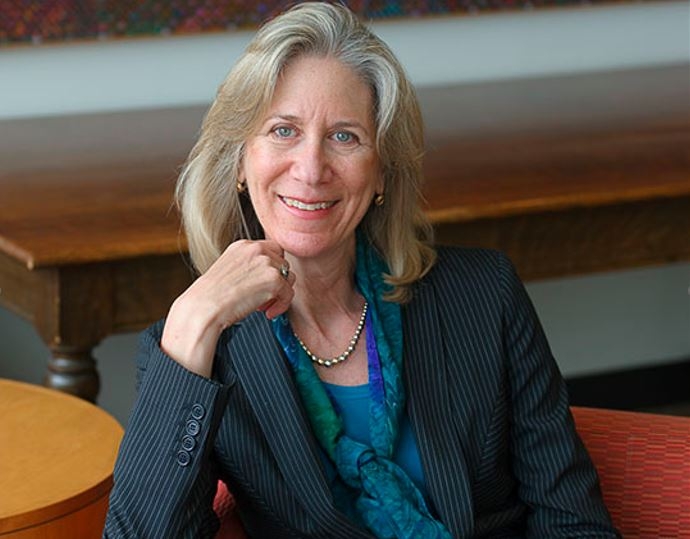
Dr Paula Gutlove is a speaker, teacher, trainer, and international consultant on negotiation, leadership, and conflict management. In this context she works with a wide range of academic, business, government, and non-government organizations. Dr Gutlove is also the Deputy Director of the Institute for Resource and Security Studies (IRSS), director of IRSS's Negotiation and Conflict Management program, and founding director of IRSS’s Health Bridges for Peace project, which links health care with prevention and resolution of inter-communal conflict.
Gulan: What is your approach to conflict management and the Health Bridges for Peace project?
Dr Paula Gutlove: As director of IRSS’s Negotiation and Conflict Management program , I advocate an “integrated action” approach to conflict management. This approach integrates collaborative activities in an afflicted society with conflict-management work in that society. In 1996 we founded the Health Bridges for Peace project to promote the integration of health care with social reconstruction and conflict management. The project utilizes a shared concern for the restoration of public health as a vehicle to convene, engage, and train health-care professionals and others in conflict management and community reconciliation, and to assist them in creating inter-communal activities that integrate community reconciliation and conflict prevention into health-care and social-welfare activities.
HBP brings together leaders of diverse groups engaged in health and human-welfare endeavors in their communities. HBP builds on existing health programs and develops, as needed, new health programs and new opportunities to engage health practitioners and community leaders. In this way, the project provides opportunities for capacity building in leadership, negotiation, and conflict management, in addition to (re)building health infrastructure.
The project cooperates with international organizations such as the World Health Organization (WHO), the Organization for Security and Cooperation in Europe (OSCE), UNICEF, and the UN High Commissioner for Refugees (UNHCR). HBP has worked in conflict-torn areas including the Balkans, the North Caucasus, the Middle East, the United States, and Central Asia.
Gulan: Based on your experience, what are the greatest obstacles in using shared public-health interests to build bridges between divided communities?
Dr Paula Gutlove: A major obstacle to building social bridges between divided communities, including health bridges, is the psychological and societal – i.e., psycho-social trauma of violent conflict in the present or the past. Fortunately, mechanisms of psycho-social healing are available to address this trauma. Applying these mechanisms using health bridges can provide significant opportunities for collaborative action.
Rebuilding a society in the aftermath of war and violent conflict requires rebuilding physical and political structures. It also requires psychological healing and empowerment of the survivors, and their reconnection within a functional society. A process of social reconstruction is needed to rebuild the intangible but crucial fabric of human interactions that allow a society to function, while also meeting the immediate psychological and social needs of people who have been ravaged by violence.
In a post-conflict environment, where the stress of violent conflict has affected individuals and societal relationships, social reconstruction requires a healing process that addresses both psychological and social wounds. Psycho-social healing is such a process. It promotes psychological and social health of individuals, families and community groups. It strives to address the individual’s psychological health, her ability to function in relationship to others – i.e., relational health – and the relational health of the society as a whole.
Health professionals have a special role to play in healing violence-ravaged communities. They have an intimate association with people who have suffered mentally and physically, are often well educated, have public stature, and have access throughout a community. They can create a "bridge of peace" between conflicting communities, whereby delivery of health care can become a common objective and a binding commitment for continued cooperation. Finally, they can assist reconciliation after the trauma of war, through a healing process that restores relationships at individual and community levels.
Since its founding, HBP has worked with health professionals in a range of conflict and post-conflict situations. Our experience has taught us that social reconstruction, the healing of inter-communal relationships, and the development of peaceful societies can be significantly enhanced by training and assistance in trauma healing, psycho-social support, and conflict management.
Gulan: In your view, what are the main challenges today to building peace and social cohesion in Iraq and the Kurdistan Region? Also, how can the “Health as a Bridge for Peace” model be applied to address these challenges?
Dr Paula Gutlove: As discussed earlier, a key challenge to building peace and social cohesion is the psycho-social stress that tears apart relationships and infrastructure of an afflicted society. This is a key challenge for peace and social cohesion in Iraq and the Kurdistan region.
Stress is a normal response to outside forces that disturb the equilibrium of everyday life. Stress involves physical, emotional, psychological, and/or behavioral reactions to threatening events. Traumatic stress is an extreme response to extraordinarily stressful events. Traumatic stress differs from ordinary stress in its intensity and its tendency to cause helplessness, terror, and suffering in most people, regardless of personal characteristics.
A traumatic event is an extreme situation causing profound effects. One of the most debilitating effects is an inability of the victim to cope with the situation. The lasting psychological impact of this helplessness is a hallmark of victims of violence, including the violence of war.
The human responses to traumatic events, namely traumatic stress reactions, are a complex set of interacting physical and emotional responses. After the traumatic event, the traumatic stress reactions can continue and be manifested as behavioral, cognitive, emotional, and physical responses in the individual, causing post-traumatic stress reactions. When the traumatic event overwhelms the individual’s ability to respond, an altered state can continue long after the danger is over. Post-traumatic stress reactions can inhibit a person’s ability to function.
Just as individuals are susceptible to stress and trauma, societies are similarly susceptible. A range of events can cause societal trauma, including natural disasters; man-made but accidental disasters; and violent conflict.
Natural and accidental disasters should be differentiated from situations in which massive trauma is caused by violent conflict. When nature shows its fury and humans suffer, people ultimately accept the event as “fate”. In man-made but accidental disasters, survivors may blame a small number of individuals or organizations for carelessness. Even when this happens, there are no “others” who had deliberately sought to hurt people.
In contrast, when massive trauma is due to ethnic, national, or religious conflicts and wars, the situation becomes complicated by the presence of enemies who deliberately inflicted pain and suffering on the victims. Such societal trauma can cause profound psycho-social changes not only in the current society, but also in future societies if the trauma or its effects are transferred from one generation to another through “transgenerational transmission”.
A traumatized society can undergo “psycho-social degeneration”, in which a large fraction of the society loses its sense of trust, or faith, in their society or the wider world. Feelings of rage and revenge often oscillate with feelings of helplessness, humiliation, and victimization. The sense of shame, humiliation, and helplessness may become internalized, and may complicate an already-existing guilt that survivors may feel. New, maladaptive social patterns often develop, including domestic violence, institutional corruption, and organized crime. There is often a destruction of the natural environment.
Psycho-social regeneration is possible if a society can regain the basic trust that has been lost and can undergo psycho-social healing. Often, the ability of a society to regenerate depends on the resources available to the society to restore basic functions, such as safety and order, and on the willingness and capability of the society to undergo a process of psycho-social healing.
Trauma healing is closely related to peacebuilding efforts. Both are ultimately about developing or restoring healthy human relationships. Trauma healing implies the decrease of loneliness, mood improvement, a sense of inner peace, a decrease in isolation, anger and bitterness, and a decrease in feelings of animosity and hatred toward others. Healing cannot occur in isolation because it is necessary to heal the psychological faculties that were damaged by the trauma, and this healing can only occur in connection with other people. Healing societal trauma involves the development of support groups that employ a facilitated process whereby individuals heal in the context of a group.
There are three stages through which individuals and societies move as they heal from a traumatic experience. First is the creation of safety – i.e., moving from a feeling of unpredictable danger toward one of reliable safety and security. Second is acknowledgement – i.e., moving from a sense of dissociated trauma toward acknowledged memory. Third is reconnection – i.e., moving from feeling isolated and stigmatized toward restoration of meaningful social connections.
Empowerment is an important by-product of the psycho-social healing process. It is empowering for people to feel that their collective actions can promote positive societal change. Our experience in Health Bridges for Peace shows that people feel good when they are in productive relationships with colleagues. Engaging in cooperative actions that have the power to change the course of events is empowering. Thus, empowerment and psycho-social healing can operate in a healthy cycle, each building on the other.
Gulan: You have experience working in conflict regions such as the Balkans, the Caucasus, the Middle East, and Central Asia. Have you had any specific experience in Iraq or the Kurdistan Region? If not, in your view, how can the lessons and insights you have gained in those regions be applied in Iraq and the Kurdistan Region to resolve conflicts and build peace?
Dr Paula Gutlove: I have not had direct experience with health as a bridge for peace in Iraq or the Kurdistan region. Experience elsewhere, including HBP work we have done in the Balkans, the Caucasus, the Middle East, and Central Asia could provide insights and lessons for Iraq and the Kurdistan region. Note that each HBP program I have been engaged in was initiated in response to an invitation from local leaders.
The HBP project, and local leaders we have worked with in various programs, have implemented a range of activities to promote psycho-social healing, peacebuilding, and societal reconstruction. I will highlight here three categories of activity that were found to be particularly effective: community integration; volunteer action; and capacity building.
Community integration is a process whereby vulnerable or marginalized groups, such as refugees, are integrated into a community in a manner that strengthens the overall social fabric of that community. Community-integration programs aim to establish strong social networks made up of empowered individuals who can function productively in their new environment. Integration is achieved through local-level psycho-social projects that empower members of the target groups and help them adapt to new environments.
A particularly successful application of community integration in HBP programs has been the integration of refugee women and children, two particularly vulnerable groups. Projects for children or youth were arranged to fit into the normal framework of children's lives, providing support groups and other projects in local schools as well as after-school activities including artistic and athletic workshops. Psycho-social assistance for women sought to honor the traditional role that women play in supporting the family and raising children. Projects for women sought to establish a sense of safety and community. Once clients found the courage to share their experience in a group, program activities were organized to uncover their skills and explore how to utilize these skills in the new society. This exploration was accompanied by the development of employment opportunities.
One advantage of programs of psycho-social support for women and children is that these groups provide indirect access to others in the community. Men are harder to reach and less likely to seek assistance from a psycho-social center. A community-integration program that helps mothers can overcome this reticence, gradually becoming credible to husbands and male children. Similarly, programs that support children will bring in parents and grandparents who want a better future for their children.
Volunteer action is a strategy to recruit, train, and empower individuals who volunteer to support post-conflict reconstruction. Individuals in difficult or traumatic situations frequently derive satisfaction from volunteering to help fellow sufferers. However, this sort of spontaneous volunteer activity often extends only to one’s own family and closest friends, as people will instinctively provide first for their own safety and welfare. Therefore, a more systematic means of providing consistent and organized volunteer aid is required. Volunteer action aims to harness the full capacity of humankind’s instinct to help fellow citizens, while directing this help where it is most needed.
In programs of psycho-social healing, volunteers collaborate with professionals in three ways. First, they reassure victims of trauma that their plight has not gone unheard. Second, they provide practical assistance to people who are adapting to new environments. Third, they help communities to reconcile during a post-conflict transition.
In post-conflict situations, volunteers can help combat the effects of poverty, unemployment, social inequities, disintegration of families, and the corruption and associated challenges that may characterize public institutions. Note that if volunteers are from diverse backgrounds, their joint activities may create a sense of "togetherness" between two otherwise opposing sides, building trust and dispelling notions of segregation or antagonism. Moreover, volunteers can help to rebuild and reconcile communities during a post-conflict transition. Through a variety of functions – e.g., providing psycho-social assistance, practical aid, or education – volunteers can exert a positive influence on society and on public attitudes, thereby assisting and expediting the process of social reconstruction.
Capacity building typically focuses on training of service providers. Post-conflict social reconstruction requires identification, empowerment and activation of cadres of health professionals and volunteers, trained to meet the unique psycho-social needs of a post-conflict community. Training programs in this context should be designed based on a careful evaluation of the situation and an assessment of needs in the community. While custom-designed to meet local needs, training programs should also cover the theory and practice of psycho-social healing, dialogue facilitation, collaborative problem solving, and negotiation.
Many post-war situations require not only more healers, but also new and creative healing skills – e.g., skills in assisting trauma recovery in culturally-acceptable ways Moreover, traditional, long-term, individual-oriented psychotherapy approaches have often proved inappropriate to the needs and situation of a post-war community. Helpers and healers, while delivering psychological services, should ensure that social-support structures are in place for sustainable societal regeneration.
An important component of successful training programs has been the building of mutual-support networks among the trainees. These networks have been found to improve program performance. Also, the professional self-esteem of health providers involved in these programs has grown as they tested their new skills and knowledge in practice and later became trainers themselves.
In sum, the gains from training in the psycho-social model have extended far beyond the initial focus of trauma healing and have included positive changes within the health professions and at the societal level. For example, building a community-based program of psychosocial-assistance has often opened the way for growth of the non-governmental sector more broadly. This is an important spin-off effect of trauma-relief efforts, whose long-term impacts on democratization and the development of civil society will be fully appreciated only in the future. Thus, ongoing support to the professionals and paraprofessionals who engage in psycho-social healing should be viewed as a long-term social investment.
Gulan: How has your training and experience in medicine, peacebuilding, negotiation, conflict management, social sciences, and public health influenced your perspective on the world and your work?
Dr Paula Gutlove: My perspective has evolved over time. One step in that evolution was my recognition that health as a bridge to peace should be pursued as part of a broader mission – i.e., enhancing human security. Moreover, I now see that attaining our full potential for human security requires a principles-based international order that features collaboration in a “power-with” mode instead of domination in a “power-over” mode. Finally, creating such an international order requires a new leadership paradigm.
Through my international peacebuilding work, I have seen psycho-social healing make a central contribution to social reconstruction in a post-conflict setting. In addition, I have seen that social reconstruction is one of the essential requirements for rebuilding a conflict-ravaged society. Thus, I have witnessed psycho-social healing occurring within a broader context. It has become clear that an over-arching conceptual framework is needed to guide activities occurring within this context.
Human security, an evolving concept , provides such a framework. It places the welfare of people at the core of programs and policies, is community oriented and seeks to prevent harm. Also, it recognizes the mutual vulnerability of all people and the growing global interdependence that mark the current era. By combining these features in one concept, human security facilitates the organizing of humanitarian initiatives that require cooperation by a variety of actors working in multiple sectors. Human-security principles are widely applicable and can add significant value to practical programs.
A human-security approach can add value in the health sector by linking health with related objectives such as prevention of violent conflict, improvement of governance, and post-conflict reconstruction. In situations of conflict, shared health concerns can create neutral ground for collaboration and a basis for addressing fundamental obstacles to peace, such as discrimination, polarization, and manipulation of information. Health care that features cooperation between professionals from different sides of a conflict can be a model for collaborative action and can help to create the community infrastructure that is essential for an enduring peace. Similarly, in post-conflict situations health programs can be a crucial, unifying influence.
The concept of human security adds value by guiding the planning and implementation of practical programs of action. These programs typically continue a pre-existing strand of work and must be consistent with existing strategies for that work. A notable strategy of this kind is the Millennium Development Goals through which the UN system is operationalising goals set forth in 2000.
Human security can add value in at least four ways. First, it can provide a clear objective for humanitarian work. Second, it has a preventive aspect that can stimulate forward-looking contingency planning. Third, it emphasises global interdependence and can, therefore, mobilise additional resources and new partnerships. Fourth, it addresses interacting threats in multiple domains and can, therefore, stimulate holistic, comprehensive threat assessment and program planning.
The fourth point can be illustrated by the interacting threats that can occur in the health domain. For example, poor economic conditions, social injustice, or bad governance can undermine health care and promote political or criminal violence. In turn, violence can adversely affect health, either directly or through collateral impacts. Adverse effects on health can then have adverse impacts on the economy. The potential for a downward spiral in the conditions of life is obvious.
Planning and implementing a holistic, preventive response in each relevant situation will require new mechanisms for cooperation among actors. To facilitate this cooperation, and to ensure that the lessons of experience are incorporated into programs, new mechanisms of information exchange, organisational learning, and program evaluation will be needed.
Gulan: Drawing on your experience with international organizations such as WHO and UNHCR, how do you see their role in rebuilding civil society and promoting recovery after conflict?
Dr Paula Gutlove: International organizations, such as WHO and UNHCR, together with the broader international community, can be key partners in rebuilding a conflict-torn society. As partners, they should work with governmental authorities and non-governmental organizations in the afflicted society, taking guidance from leaders within that society.
Through the HBP project and in other contexts, I have worked with international organizations including WHO, UNHCR, and others. I have found that these bodies are, in general, alert to the importance of collaborating with local actors and sharing leadership with them.
WHO has played a key role in linking health care with human security. I have been privileged to work with WHO on that task, in the arenas of diplomacy, policy development, and practical programs. In 2006, the director of WHO’s Department for Health Action in Crises, Dr Ala Alwan, asked IRSS to review Health as a Bridge for Peace programs globally. Our mandate was to assess HBP achievements, challenges, and opportunities for action. Many specific action recommendations came out of our research. Dr Ala Alwan, who later became the regional director of WHO EMRO, and the Minister of Health and Environment for Iraq, used the information internally within WHO to promote HBP and related programs. IRSS published our study in a Working Paper which is available upon request.
Through my work I have seen that a human-security approach can add substantial value in the health sector, across diverse objectives including prevention of violent conflict, improvement of governance, and post-conflict reconstruction.
Many practical lessons were learned through our HBP field programs in conflict-torn communities. These lessons can be distilled into guidance for international-local partnerships. For example, experience shows that the greater the ownership local groups have of a program, the greater is the likelihood that they will find ways to use and sustain it. Future programs should take full account of such lessons.
WHO has helped us to understand that health as a bridge to peace will be most effective when pursued as part of a broader strategy to enhance human security. The same is true for a range of programs that could benefit humanity. However, across the three decades since the term “human security” was coined, this concept has not yet received the attention, in the halls of government, that it deserves.
It has become evident that attaining our full potential for human security requires a principles-based international order. We already have much of the needed order, in terms of agreements and institutions. The United Nations Charter of 1945 is a notable example. However, these instruments have not yet yielded the full suite of actions we need if human civilization is to endure through the 21st century and beyond. For example, WHO has not been empowered to pursue a human-security strategy for health.
Several factors account for the failure of the existing international order to implement principles such as those articulated in the UN Charter. A key factor is that major powers have repeatedly sabotaged the order by ignoring or flouting it in pursuit of their perceived, short-term advantage.
Breathing life into the international order does not require that we re-invent it. Its principles are sound and are embodied in diverse agreements and institutions. We should re-interpret the order, and build upon it, with an understanding of the wise use of power in an interdependent world. Specifically, we should pursue power-with rather than power-over. Finally, to do that, we need a new leadership paradigm.
Gulan: At a time when the world faces many new and complex conflicts, what would your message be to those working in the fields of negotiation and conflict resolution?
Dr Paula Gutlove: Professionals in these fields are indeed finding that modes of conflict are changing. They observe the 21st century unfolding with numerous, intersecting crises and challenges. To some extent, these challenges could be addressed by updating established techniques. However, if the fields of negotiation and conflict resolution are to have continuing utility, their practitioners must seek deeper change. A key part of that effort should be the development of a new leadership paradigm.
A new leadership paradigm for the 21st century could transform emerging challenges into opportunities for meaningful, peaceful change. This paradigm would involve the strategic application of integrative negotiation and collaborative problem solving. Under the aegis of this new paradigm, leadership through inspiration and mutual empowerment could create the conditions for innovative, collaborative solutions to complex problems.
We need a new leadership paradigm to address multiple, intersecting global crises in a world characterized by growing global interdependence and mutual vulnerability of people everywhere. This paradigm will be applicable across many, diverse fields of activity. Practitioners in peacebuilding, negotiation, and conflict resolution could play a special role. They are uniquely positioned to appreciate, model, and advance the new paradigm.
The new paradigm would emphasize the importance of human security as an organizing principle. In some contexts, human security would supplant national security, a concept that in many situations is now obsolete and even dangerous. For example, national-security thinking has led to a nuclear arms race and a growing risk of nuclear war.
Also, the new paradigm would emphasize global solidarity and coordination, and a change in consciousness. In terms of consciousness, we need to move away from scarcity, fear, and division and toward abundance, courage, and collaboration.
In addition, the new paradigm would alter the perception and practice of power. The currently-prevailing, “old” leadership paradigm focusses on “command and control” to achieve “power over” others. By contrast, the new paradigm inspires a shared vision of change and uses “power with” others to create mutual advantage.
Moreover, the old paradigm guards the ownership of information as a source of power over, while the new paradigm shares information and knowledge, nurturing innovation and creativity. Also, the old paradigm places leadership within a hierarchical, authoritarian structure that emphasizes individualistic competition and aggression, while the new paradigm prefers a horizontal, networked structure featuring collaboration and inclusion.
Gulan: Dr. Gutlove, do you have any specific recommendations for the government of Iraq and the Kurdistan Region, or for civil society organizations there, regarding strategies of negotiation, conflict resolution, and community reconciliation after crises?
Dr Paula Gutlove: This is a historic moment in which government in Iraq and the Kurdistan Region, and civil-society organizations there, could embrace opportunities for healing, empowerment, and new-paradigm leadership. These opportunities exist at all societal levels.
There are many opportunities for HBP programs, using a human-security lens, to provide healing, empowerment, and social regeneration, locally, regionally, and globally. Leaders in Iraq and the Kurdistan Region could model the new leadership paradigm as they work locally, regionally, and globally to improve health and human security. By demonstrating the effectiveness of collaborative, power-with leadership, they could help to create conditions for a sustainable future for all people worldwide, and for generations to come.