
Dr. Marianna Charountaki to Gulan: The future of the Kurdistan Region within Iraq depends largely on domestic political developments and negotiations

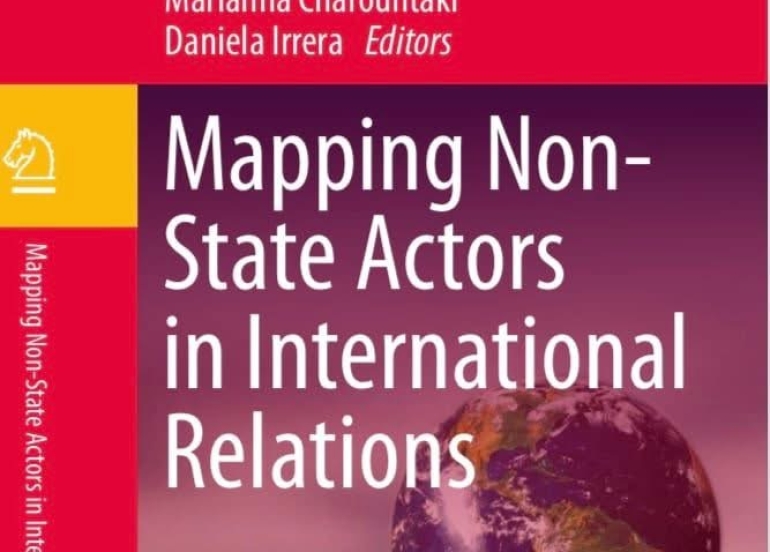
Marianna Charountaki is Senior Lecturer in International Politics at the University of Lincoln (School of Social and Political Sciences). She has acted as Director of the Kurdistan International Studies Unit (2016-2019) at the University of Leicester. She is a BRISMES and BISA trustee and co-convener of the BISA Foreign Policy Working Group. She is also Research Fellow at Soran University (Erbil, Iraq). She has worked as consultant at the Iraqi Embassy in Athens (Greece, 2011-2012). Marianna has been researching the Middle Eastern region, in light of IR discipline, but also through extensive field work research (2007 to present). Her research lies at the intersection of IR theories, foreign policy analysis and area studies with an emphasis on the interplay between state and non-state entities as well as the latter’s conceptualisation and foreign policy standing. She is the author of the monographs The Kurds and US Foreign Policy: International Relations in the Middle East since 1945, (Routledge, 2011) and Iran and Turkey: International and Regional Engagement in the Middle East (I.B. Tauris, 2018) and co-author of Mapping Non-State Actors in International Relations (Springer, 2022). She has published articles in Harvard International Review, Cambridge Review of International Affairs, International Politics Journal, Third World Quarterly, British Journal of Middle Eastern Studies and others. She responded to our questions as follows in a written interview centered on her recent article: "Institutionalising Foreign Policy-Making between Non-State Actors: From Reactive to Proactive Relations between the EU and the KRI." in Non-State Actors and Foreign Policy Agency: Insights from Area Studies. March 2024, pp. 65-81.
Gulan: Having conceived the book projects of "Mapping NSAs in IR" and "Non-State Actors and Foreign Policy Agency: Insights from Area Studies," what was the primary motivation behind compiling such work, and what key gap in existing literature does it aim to address?
Dr. Marianna Charountaki: My argument that non-state actors (NSAs) have a more informed and active role to play in foreign policy-making is the result of over a decade of work on the case of Kurdistan. This work has focused on demonstrating how a non-state entity can indeed exercise agency within the realm of foreign policy. Having already developed a typology of NSAs and argued that all types—regardless of structure or level of institutionalisation—possess the capacity to act as foreign policy actors, this effort aims to prove that argument through concrete, empirical examples.
Today’s context—such as the situation in Syria—illustrates how, even in the most extreme cases, an actor initially categorised as a fundamentalist group can evolve into an official representative and a significant player in foreign policy formation. This not only supports the conceptual framework I propose but also grounds it in real-world evidence.
I believe this is the first book to address this specific subject matter directly. At the same time, I develop a novel conceptualisation of foreign policy itself, particularly with regard to its ontology. I conclude that this understanding encourages and, indeed, necessitates the expansion of traditional foreign policy analysis—typically confined to the three levels of the state—to also include the non-state level.
Finally, the need for new terminologies in the field of foreign policy aligns with the conceptual foundation I proposed in my 2010 book U.S. Foreign Policy and the Kurds. There, I framed international relations as a set of “multidimensional interrelations,” based on the understanding that politics, international relations, and foreign policy are interconnected domains. These interrelations occur not only between state actors—shaped by both internal and external structures, whether material or ideal, but also between state and non-state actors. This broader, more nuanced perspective continues to guide my work today.
Gulan: Your chapter, "Institutionalising Foreign Policy Making Between Non-state Actors: From Reactive to Proactive Relations Between the EU and the KRI," examines the EU and the Kurdistan Region of Iraq. What makes this particular relationship a compelling case study for understanding foreign policy agency among non-state actors?
Dr. Marianna Charountaki: First of all, I would like to emphasise that as foreign policy is increasingly undertaken by a broader range of actors, it is also practised differently depending on the specific actorhood under examination. In this case, we are referring to two collectives—a criterion of collectivity that is often overlooked by International Relations, including International Law and related subdisciplines—as autonomous agents: namely, the European Union (EU) as an institution, and the Kurdistan Region of Iraq (KRI) as a state-to-be. The latter is understood here as a more consolidated manifestation of ethnic groups. While such actors may not have achieved formal independence, they nonetheless aspire to occupy a position comparable to that of recognised state entities within the international system.
More specifically, this work defines states-to-be as entities with state attributes and an ability to adjust the status quo – that is, to drive or shape the process of development in an effort to preserve or consolidate their power-base and self-governance. This implies that their status may culminate in full independence or evolve into a condition of co-existence. In this context, the practice of foreign policy becomes a prerequisite for their survival and further development.
Although the degree of institutionalisation among such actors varies depending on context and their unique characteristics, broadening our understanding of actorness in foreign policy analysis allows for a more nuanced reading of how non-state actors (NSAs) exert direct influence on both the process and the outcomes of foreign policy. In this case, two key conceptual and a number of empirical findings emerge. Conceptually, the study engages with the question of institutionalisation and explores its gradual development in the context of foreign policy-making, as it unfolds within and between two different types of NSAs. It demonstrates the very fact that non-state actors not only interact on the foreign policy level but also function as foreign policy agents in their own right. Empirically, we observe a shift from the EU’s former policy of ambiguity toward a more interactive and collaborative approach, particularly in its relations with the KRI. This is articulated through ad hoc forms of engagement, marking a notable transformation in EU-KRI relations.
Notably, the KRI has also emerged as a strategic facilitator in the implementation of the EU-Iraq Partnership and Cooperation Agreement (PCA), signed on 11 May 2012. This agreement institutionalised the role of the Kurdistan Regional Government (KRG) as a primus inter pares interlocutor within the relevant EU-Iraq/EU-KRI dialogue committees. Since 2015, the EEAS-KRG Mission to the EU has held its own seat in these forums, underscoring the KRI’s formalised presence in EU foreign policy structures.
At this point, it is worth noting France’s distinctive role in Kurdish politics. While it may set a precedent and open a window of opportunity for a more coherent and decisive EU foreign policy toward the KRI, the development of a broader "European Kurdish foreign policy" can be more accurately attributed to geopolitical dynamics. These are driven less by normative agendas and more by the pragmatic need to balance growing Chinese and Iranian influence in Iraq—and perhaps more critically, Russia’s presence in the KRI. This indicates that there is no unique pragmatism or singular or coherent reading of the EU’s pragmatic foreign policy conduct. What is often described as a realist or strategic performance is, in reality, shaped by reactive tendencies and institutional constraints. Its “slow” policy responses are largely shaped by formal procedures, and the need for collective agreement among 27 member states.
Nevertheless, this new model of EU-KRI relations, running in parallel with the EU’s broader Iraq policy, stands out as a notable development—both in practice and in the conceptual evolution of foreign policy analysis.
Gulan: In your chapter, you discuss the EU's shift from an "ambiguous foreign policy practice" to a "more deliberately interactive and collaborative approach" towards the Kurdistan Region of Iraq. What specific events or factors were most influential in triggering this shift, especially since 2014?
Dr. Marianna Charountaki: The EU’s stance toward the KRG has become one of recognition. Although the EU as a foreign policy actor has never truly engaged with the Kurdish issue as such—and notably, there is no official EU Kurdish policy—this stands in contrast to the emergence of a distinct EU policy toward the Kurdistan Region of Iraq (KRI) over the past eight years, especially following the 2017 referendum, which served as a key turning point in this trajectory
While the rise of the Islamic State prompted the EU to strengthen its presence in the Kurdistan Region of Iraq (KRI)—culminating in the opening of the EU office in Erbil in August 2015—it was the 2017 Kurdistan referendum and its aftermath that effectively catalysed a more defined and targeted EU engagement with the KRI. This engagement, however, has been shaped by geopolitical considerations specific to the KRI, and does not form part of a broader or systematic EU Kurdish policy.
Gulan: You developed a typology of non-state actors, which is referenced in the book, classifying them into categories like institutions, irregular militaries, fundamentalist groups, ethnic groups, and states-to-be. Could you elaborate on how this typology enhances our understanding of foreign policy analysis?
Dr. Marianna Charountaki: This is because various non-state actors (NSAs) have, at times, been analysed within International Relations (IR) as separate and individual actors in their own right. Yet, as has already been noted in the literature, there is neither a uniform definition of what constitutes a NSA nor an agreed-upon methodology for their identification or classification (Heffes et al., 2019). In light of this conceptual gap, the formation of a broad and inclusive typology becomes a necessary step, particularly as a means of moving beyond the current reliance on example-based classifications.
To date, scholarly attempts to explain the rise and role of NSAs have largely relied on specific examples, often aligning them with particular categories such as intergovernmental organisations (IGOs), international non-governmental organisations (INGOs or NGOs), multinational corporations (MNCs), enterprises, armed groups, and others. However, this example-based approach tends to obscure the broader analytical landscape. Given their infinite variety and constant evolution, NSAs are commonly approached through ad hoc or illustrative divisions. This not only constrains theory-building but also risks overlooking existing types or failing to account for emerging ones. It is precisely for this reason that conceptual rethinking is warranted: the development of a comprehensive typology is underpinned by a four-fold rationale, which aims to re-establish the relevance of NSA conceptualisation within IR theory.
Further practical needs call for a simplified approach to NSAs, particularly given the complexity and multi-faceted nature of their roles.
Second, their capacity to influence the behaviour of state entities in qualitatively different ways highlights the need for greater conceptual clarity regarding both their nature and their involvement in state and non-state interactions.
Third, NSAs have traditionally been understood either through the lens of state interests or conflated with institutional actors—primarily those of an economic orientation. Yet, any form of interdependence in the international system today is also shaped by interactions between both state and non-state entities. As such, using dependency as a criterion for classifying NSAs proves increasingly precarious within the context of a globalised IR system.
Finally, NSAs constitute an integral component in the evolution of the international system itself, and as such, they continue to inform and reshape the very nature of International Relations as a discipline. Thus, while these entities are not new actors, their increasingly informed and dynamic role in international politics makes it necessary to reconsider their evolving roles.
Scholarly focus on violent non-state actors (NSAs) is prominent in literature; however, dividing NSAs based on the criterion of violence presents significant limitations and appears also precarious. This is because the term “violence” encompasses a wide range of expressions and actors—including both states and individuals—who can be agents of violence. Consequently, this raises an important question: why should violence serve as a distinct criterion for categorising NSAs?
Finally, existing prefixes such as “trans-” and “supra-” (state) are problematic because they often imply cross-border activities that transcend geographical boundaries, while “sub-” (state) typically refers to actors operating within the domestic sphere. Moreover, the prefix “sub-” can carry connotations of subjection to the state, thereby diminishing notions of autonomy or self-determination among NSAs. These commonly used prefixes become increasingly confusing in light of contemporary governance forms and the evolving definitions of “state” and “sovereignty.” Instead, the levels at which NSAs operate, and the scope of their activities can vary independently of their location, since non-state entities may function at international levels or beyond the nation-state, and vice versa. Consequently, a conceptual understanding of NSAs framed strictly within the boundaries of states is challenging, as it risks perpetuating limited and restrictive interpretations of their roles.
Obviously, each of these types encompasses a range of subcategories, reflecting the plethora of existing examples. Thus, the proposed typology aims to address the limitations of approaching NSAs solely through illustrative examples.
Having said that, I understand institutions as structured entities that can vary in orientation, regardless of how their mechanisms and internal order maintain that structure. Irregular militaries and militia groups, for instance, encompass fighting forces and armed groups—including the security companies that support them—in a hybrid form involving varying degrees of state and non-state participation. Their nature is primarily security-oriented. Fundamentalist groups may differ in their priorities, but they are generally identified by radical extremism in both discourse and operation. Ethnic groups are typically characterised by nationalist agendas, pursuing political objectives such as national liberation movements, which dominate this category. Finally, states-to-be — often a more consolidated form of ethnic groups — constitute the fifth category. Their status does not necessarily culminate in full independence, but they aspire to a role equivalent to recognised state entities in the international realm. As such, after states themselves, they represent one of the most significant types of non-state actors for the ontology of International Relations.
Gulan: As an academic specializing in the Middle East, and the Kurdish case (s), how do the insights from this book inform your broader research on these topics, particularly concerning the future role of the Kurdistan Region of Iraq in regional and international affairs?
Dr. Marianna Charountaki: Conceptually, by states-to-be I refer to entities possessing the capacity to adjust the status quo—that is, to drive or shape developmental processes in an effort to preserve or consolidate their power base and self-governance. This exercise of agency and power characterises the role of the Kurdistan Region in Iraq, given its clear contribution to regional and international politics as an equal partner in collective efforts toward peace and stability, wherever and whenever such efforts are undertaken.
The KRI’s ability to determine foreign policy signals a profound shift in status, reflecting its aspiration to play a distinctive role on the international arena and representing what I perceive as a triumph of the non-state actor. This capacity to engage with both regional and international geopolitical domains calls for an ontology of International Relations that recognises state and non-state actors equally, moving beyond an excessive focus on non-state categories. For example, Pope Francis’ visit to Erbil on 7 March 2021 stands as a historic milestone in this regard.
Despite the Kurdistan Region’s (KR) agency and ability to negotiate both regionally and internationally, it remains constrained by the inherently state-centric nature of the international system and the geopolitical environment shaped by global powers such as the United States and Russia, whose involvement in world affairs is more direct and politically assertive. The 2016 non-implemented arrangement agreed upon prior to the Mosul operation exemplifies these limitations.
The future of the Kurdistan Region (KR) within Iraq depends largely on domestic political developments and negotiations. In this sense, the internal dynamics at play can alone determine the prospects for a stable and viable evolving model of governance rooted in coexistence.
In this model, decentralisation serves as the defining feature of each component’s status, accompanied by clearly defined roles and responsibilities—all of which support the restoration of an effective constitutional order within Iraq. Such a framework would require both the restoration of legal structures and a political consensus to underpin it.
For this to happen, it seems necessary for the Kurdish leadership to articulate a long-term strategic vision that reflects the future status of Iraq within a cooperative—rather than conflictual—framework, one in which all components have more to lose than to gain through confrontation.
While external actors may influence outcomes, it is ultimately internal initiatives that can salvage what remains of a polarized Iraq, where the only widely shared aspiration among its citizens is security and prosperity after a prolonged cycle of war. It is time for the Kurdistan Region to look inward—both in forging unified political decisions as a cohesive entity and in reassessing its position within the broader Iraqi context.