Dr. Riccardo Alcaro to Gulan: The United States under Trump is not only uninterested in multilateralism but explicitly hostile to it
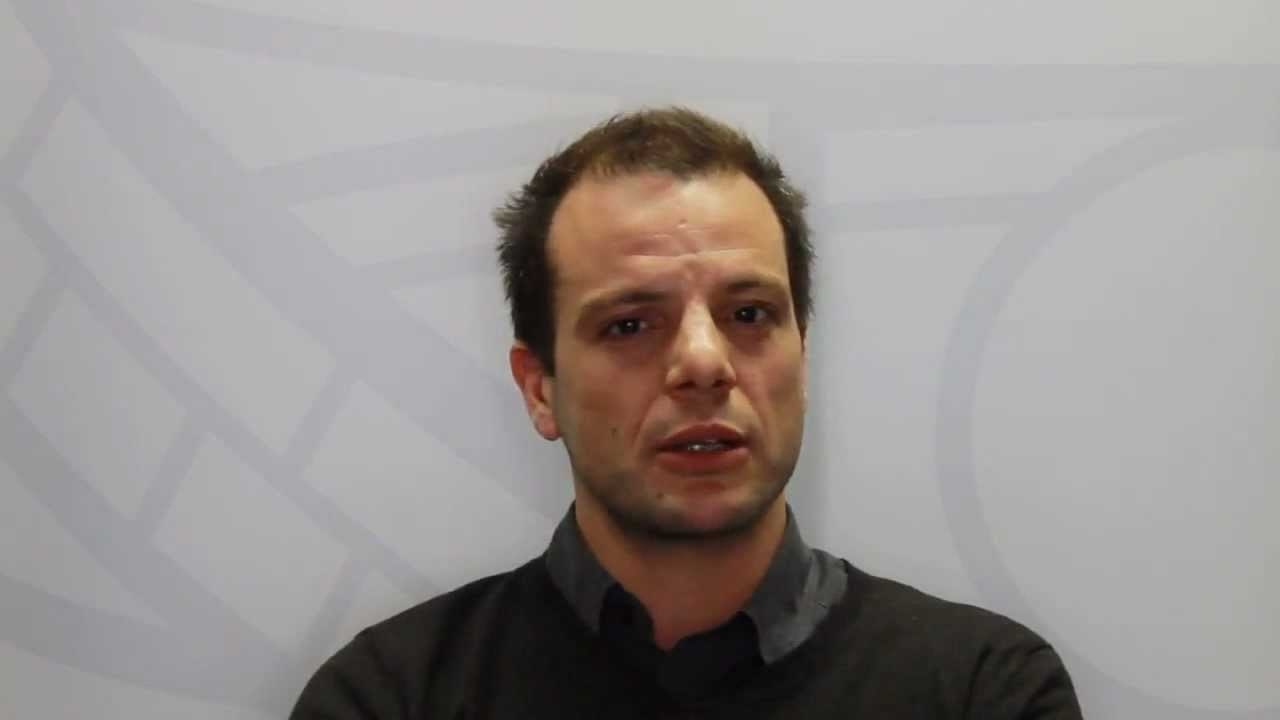
Riccardo Alcaro is Research Coordinator and Head of the Global Actors Programme at the Istituto Affari Internazionali (IAI). His main area of expertise is transatlantic relations, with a particular focus on US and European policies towards Europe’s surrounding regions. He has been a visiting fellow at the Brookings Institution in Washington and a fellow of the EU-wide programme European Foreign and Security Policy Studies (EFSPS). He has coordinated the EU-funded TRANSWORLD project on transatlantic relations and global governance (7th Framework Programme) and the JOINT project on EU foreign and security policy (Horizon 2020). Riccardo is the author of Europe and Iran’s Nuclear Crisis (Palgrave Macmillan, 2018) and co-author, with Pol Bargués, of Conflict Management and the Future of EU Foreign and Security Policy: Relational Power Europe (Routledge, 2025). He also edited The Liberal Order and its Contestations (Routledge, 2018). He holds a summa cum laude PhD from the University of Tübingen. In an exclusive interview he answered our questions like the following:
Gulan: First of all, do you believe that right now Europe is seeking strategic autonomy... have or has strategic autonomy ambition and to what extent this interacts with the evolving nature of U.S. foreign policy, especially with regard to Ukraine and Russian war?
Dr. Riccardo Alcaro: Well, the ambition to pursue greater strategic autonomy has been espoused by European leaders for at least a decade, and even more than a decade, but with two big caveats. First, while the ambition has been spelled out and espoused publicly by some European leaders, other leaders of EU countries have consistently been skeptical about the concept of strategic autonomy and the wisdom of it. Skepticism about the concept means that in order to get the level of strategic autonomy that proponents of the concept want to achieve, the EU would have to integrate to a much greater level than it is integrated today. And that is clearly resisted by a large section of European public opinion across member states. And even if there were political room for achieving greater integration at the EU level, many have questioned the wisdom of becoming more strategically autonomous at a time in which reliance on the United States has been felt more acutely than it has in the last 30 years, so, since the end of the Cold War. This is, of course, something related to Russia's open hostility towards the Western community and towards Europe, the European Union, NATO, and to an extent the US, too. Now the Trump administration's approach to European security is leading to a different kind of debate in the sense that proponents of strategic autonomy feel vindicated that strategic autonomy had to be pursued more vigorously in the past, precisely in order to avoid being caught by surprise and defenseless if the United States had changed its policy towards Europe, and had changed and downgraded its commitment to European security as it is apparently doing right now.
By contrast, critics of strategic autonomy are divided. On the one hand, they realize that they have limited power to influence the United States to remain committed to European security. Before Trump, the Atlanticists in Europe had a much better case to make that by showing more loyalty and greater allegiance to the United States they would have gotten critical security guarantees, assurances. And that was in fact the case, especially with the old Republican establishment. But now they realize that this is no longer so. I mean, they can flatter Trump as much as they can. They can offer him... I mean, a lot in terms of abiding by his desiderata. And still that may well not be enough to get the security guarantees from the United States they are after. So, to an extent, they are okay with increasing European capacity out of necessity. Accordingly, you would say there is now a bigger consensus for strategic autonomy.
But I haven't seen that yet translated into an actual program for making the European Union more strategically autonomous for the following reasons. The first reason is that most European countries are still betting that they can keep the United States committed to Europe by this strategy of flattering Trump, overpromising, even making promises they are perfectly aware they cannot keep. But, you know, that could be enough for the Americans to grant them the minimum they need in order to feel more protected and continue to support Ukraine. And the second reason is that certain European countries still believe that if they can manage and navigate the very agitated transatlantic waters of the second Trump administration, they will be in a better place to reengage the United States once Trump is out of office. There is also a third and last reason, is that there are a number of European leaders, especially from the political far right, which is ascending, who actually share the kind of foreign policy outlook the Trump administration has, especially when it comes to Ukraine.
Gulan: Don't you think that one of the overarching goals of Mr. Trump's administration is to push Europe towards autonomy? And don't you think that this will align eventually with Europe's strategic ambitions to be autonomous? And all in all, do you see that the general direction is towards an equal partnership between Europe and the USA? Or we can say it's a transactional alliance?
Dr. Riccardo Alcaro: Look, I wish that the Trump administration wanted Europe to be more self-reliant. And if you pay heed to the rhetoric of some members of the administration, you would believe that would indeed be the case. But the reality is quite different. When the Trump administration says, we want Europe, to be more self-reliant, to take on a larger share of responsibility for its own security and protection, what they mean is you Europeans have to spend more on military means, but that spending has to be directed at purchasing American weapons. And the more American weapons you buy, the more dependent on the Americans you become, because American weapons are not a matter of quantity, they are a matter of quality. They are extremely sophisticated weapon systems that once you get into a contract to achieve, to attain them, to get them, you basically enter a long-running relationship in which the provider of the weapon system does not just provide the actual weapon, it provides all the technology, all the service, maintenance, logistics, know-how, updates, etc., and that basically keeps you dependent on the provision of the services which are needed in order for the weapon system to continue working over the years, and therefore you have not cut off your dependence, you have just reaffirmed your asymmetric dependence on the United States in the sense that, yes, you spend more money on defense, but that money goes to a large extent to the United States and funds the United States military-industrial complex. And this is not just about weapon systems.
The Trump administration has been making a lot of demands on the Europeans, on tariffs, on digital regulations, on competition regulations, on climate regulations, and this is basically a way by which the United States is leveraging its asymmetric influence over the Europeans in order to get foreign policy or domestic policy objectives that only serve what the Trump administration has defined as its own priorities and interests. And in addition to that, you're seeing how the United States is also leveraging the European desire to keep the U.S. committed to Ukraine in such a way that makes it extremely hard for the Europeans to follow through, and even if they did, that would result in further dependence on the United States, the example being that Trump is now saying that he is, yes, ready to put more pressure on Russia, but only if the Europeans lead the way by adopting impossibly high tariffs on trade with countries such as India and China.
Gulan: To what extent Europe can assert and influence in an era that is marked by a grand geopolitical competition and the declining of multilateralism and disregard for international institutions also?
Dr. Riccardo Alcaro: Well, clearly to a much lesser extent than it could in the past when the European commitment to multilateralism and the upholding of international law and international norms and multilaterally accepted conducts and practices were to an extent bolstered by the fact that the Europeans were still part of a Western system of alliances which, in spite of all the internal differences, still, so to speak, rowed in the same direction. Now, clearly this is not the case. The United States under Trump is utterly not only uninterested in multilateralism but explicitly hostile to it. It is all about aggressive unilateralism and even territorial expansionism, though limited for now to the Western hemisphere. So clearly the European capacity to influence international events by shaping norms is very much reduced.
I would say, however, that the Europeans would be fools if they did not understand that the ultimate goal of bolstering the high-power assets is not so much to turn Europe into a hard power Europe. The first goal is to better protect Europe. The second is to increase European foreign policy influence, which is always made up also of hard-power assets. But the ultimate goal is to keep defending international norms, international institutions, and multilateralism because we have tried the alternative. We tried already the alternative of letting international relations be exclusively shaped by power relations, and the result was World War I. We don't want that; I can assure you. And on this front, I would say that the European leaders have been really, really underwhelming, and they have actually taken measures that have gone in the opposite direction of undermining the legitimacy itself of international law and multilateralism, which has to be based on a subjective adherence to the norm that we need the rule of law in order not to let the word become dominated by those who believe that only might is right. And these examples include, of course, the kind of duplicity, hypocrisy, which the Europeans have espoused on Gaza, although I have to say that there are significant differences among European countries. Spain, Norway, Ireland, others have been pretty critical of what Israel has been doing there. Others, like Germany and the UK and Italy and some Central and Eastern European countries, have been more ambiguous, or even they have actually sided with Israel, not in the sense that they have avowed what Israel has been doing, but they have defended, so to speak, Israel in the sense that they have shown greater understanding toward a context that would make it difficult for Israel not to do what it is doing.
It's an impossible line to hold, but they have done so. Other examples include also, in my opinion, the EU’s approach towards the Iranian nuclear issue, which clearly shows a diminishing commitment to the practice of multilateral crisis management. And even though the E3 (France, Germany and the UK) now are saying that they are strictly defending, for instance, the right of the international community to hold Iran accountable for its failure to meet the obligations under the JCPOA and under its safeguard agreement with the International Atomic Energy Agency, the reality is that they are giving a short shrift to Iran, and they are showing no regard whatsoever towards a country that has been recently attacked while it was engaged in negotiations by two nuclear powers, and the Europeans are acting as if that had not happened.
Gulan: could you elaborate on EU’s positions with regard to these crises in the Middle East? What could Europe have done differently, or should have done differently, vis-à-vis these crises?
Dr. Riccardo Alcaro: Well, they are very different crises, I mean, we cannot address them as if there were a single policy framework for handling Iran's nuclear issue and for handling the Israeli-Palestinian conflict. So, we have to distinguish between them. They are very different crises, very different conflicts. The problem is that the fact that they are interrelated has made it harder for Europe to handle either of them. But they are very different. I mean, when it comes to Israel-Palestine, it is a long-lasting dispute, issue, conflict. I would say it's a long-lasting injustice done on millions of people living in the West Bank, in Gaza and East Jerusalem. And the Europeans, look, the Europeans long time ago, they were critical in lending substance to the very notion of the two-state solution. It was the Europeans who started the whole diplomatic process that eventually totally legitimized the idea of a two-state solution. In 1980, the then nine members of the European Economic Community, which is the forerunner of the European Union, issued the Venice Declaration. And the Venice Declaration was premised on a very simple proposition.
The Palestinians have a right to statehood, and the Israelis have a right to security. For a while the European policy was in keeping with this overall objective of the two-state solution that reflected these two basic principles. But starting already in the late 90s and then ever more so after 9-11, the Europeans have just paid lip service to the two-state solution but have totally refrained from putting any pressure on Israel because of the actions Israel had been consistently taking that went exactly in the opposite direction of the two-state solution. So, while Israel was concretely undermining the conditions for a two-state solution, and while Israel's politics was undergoing a period of radicalization, of right-wing radicalization, the Europeans decided not to do anything about that, but on the other hand they did decide to put pressure on the Palestinians. And this became a mutually reinforcing process that led the Europeans to be utterly paralyzed when the 7-October attacks happened. And the only thing they could say was to express support for Israel and then remain on the sideline while Israel destroyed Gaza and later also turned the screw on Palestinians in the West Bank. So, I mean, the amount of destruction, of utter indiscriminate destruction that Israel has imposed on Gaza is such that after almost two years you now hear more and more voices in Europe, even amongst governments that are critical of Israel, that are willing to take some steps. And recently, the European Commission president, Ursula von der Leyen, said that the European Commission will propose sanctioning the most extremist elements of the Israeli government, and also reducing, suspending parts of the EU-Israel association agreement. This is, however, too little too late, because we have known the kind of rhetoric and we have seen the kind of policy based on that rhetoric, extremist element in the Israeli government, for years. I mean, the Europeans have really not been up to the task. And this would be an understatement. On Iran, the irony is big there, because on Iran the Europeans 20 years ago started a process that eventually led to the JCPOA or the Iranian nuclear deal in 2015. And the Europeans were always supporting actors in that process, but they were essential actors. Without the Europeans you would not have had a JCPOA.
Of course, other elements, other variables needed to be there. But I think, and I've also written extensively about the European role, while a supporting role was still an essential role, in doing so the Europeans defended their own interests in the upholding of the international nonproliferation norm and in regional security. But they also strengthened the authority of multilateral institutions. The UN Security Council was involved. The International Atomic Energy Agency was given a very prominent role in the whole process. And the Nuclear Nonproliferation Treaty was reinforced by the fact that it was it that gave legitimacy to the pressure and the demands that the Europeans and the others were making to Iran. Then after Trump left the deal in 2018, the Europeans have struggled. I mean, initially they struggled to defend the deal, but in the past few years their set of priorities guiding the Iran policy has changed, because they have also been dominated, or they have been more influenced, so to speak, by a different calculation, in the sense they wanted to punish Iran for the support it gave, and it has given Russia in its war against Ukraine, for cracking down on protesters in the fall of 2022, for holding arbitrarily European nationals in Iranian prisons. And, these are very valid reasons to put more pressure on Iran, but they are not valid reasons to change your policy on the Iranian nuclear issue, which the Europeans seem to have done after Israel attacked Iran. At the time, the kind of rhetoric you heard from the Europeans was really, really astounding. It almost sounded Orwellian in the sense that they transformed an act of aggression against a country which, while hostile to Israel, was not preparing an attack against Israel, and was not building a nuclear weapon, according to the latest findings of the U.S. intelligence services. And they transformed that act of aggression into an act of self-defense. And worse, they started putting conditions on Iran which were not in line with what they, the Europeans, had themselves agreed to in the JCPOA. So, basically, they moved their line and narrative very close to that of Israel's, and started making demands that were not in line with their long-established positions.
And, the last instance of this process is that they triggered the snapback mechanism, which is this legal mechanism that would reinstate UN sanctions on Iran based on the JCPOA and UN Security Council Resolution 2231, which is the resolution that incorporated the Iranian nuclear deal. So, giving still the impression that they keep seeing the JCPOA as a legal basis as a source of legitimacy for what they're doing, but after having changed their position on what Iran's rights in terms of nuclear capacities are, because they are making demands that were not included in the JCPOA and that go much farther than what the JCPOA had established on the Iranian enrichment in particular, but also on the ballistic arsenal, which was not part of the JCPOA. And now the Europeans are saying to the Iranians, you have to not just dismantle your enrichment program, which was not part of the JCPOA, but you also have to cut down your missile capabilities. And you're saying that to a country which has no other retaliatory option than missiles. So, it is an absurd demand diplomatically. Why? Diplomatically, even if they're wrapping it up in the language of international law, it is not really that way as far as I can see it.
Gulan: Our last question about the competition between the United States and China. As we saw in the military parade, China flexed its military muscle and displayed sophisticated weapon and technology. So, do you believe that this will eventually and inevitably lead to more intensification and escalation of tension between the United States and China? Or would this competition will remain peaceful?
Dr. Riccardo Alcaro: I very much hope so. I think that the competition between China and the United States is strong and is taking roots. It is becoming sort of socially accepted. The new normal, so to speak, to the point that people do not even question the reason these two countries had to compete with one another. The race for competition has become a race to be what? To be ahead of the other one, not to achieve a specific goal. And this doesn't bode well. On the other hand, Trump seems to be very much keen on establishing an unassailable and ever-deeper American control over the Western Hemisphere. This implicitly leaves open in Trump's eyes the possibility of striking deals with the other powers, Russia in Europe, China in East Asia. But I am not entirely sure that the Trump administration is of one mind on this. China has been demonized in the United States, and the United States is being demonized in China. And there is the issue of Taiwan, which is the one issue on which the two could go to war against one another, because for China it is politically, not strategically, but politically existential. And for the United States, it is strategically not existential, but very close to that. Because if they lose Taiwan, they are no longer the dominant power in the Western Pacific, and that would amount to a massive reduction of U.S. standing globally.
Now, can the United States live with that? Absolutely. Would the United States be less secure for that? Well, if security is meant in terms of, is understood as security of its territory, yes, it would not. No, it would remain as secure as it is now. But geopolitically, it would be a watershed. So, even the Trump administration cannot really afford losing Taiwan to China as much as China can absolutely not afford losing Taiwan to the United States, which is how the Chinese see the current status quo. So that's a really, really difficult hotspot. But you would really need a kind of strategic foresight and internal consensus in both countries for solutions that will make war impossible. But even if you had that, you cannot control all of the events. The greatest reason to argue against a U.S.-China conflict on Taiwan is thus not based on political considerations or strategic calculations. It's based on the simple, mere fact that the costs would be immense. And that still works as a barrier against falling off the cliff. But, I mean, you have to work diplomatically to make that manageable.