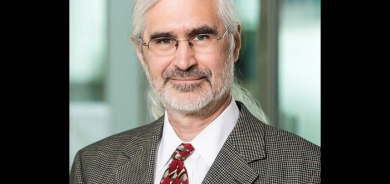
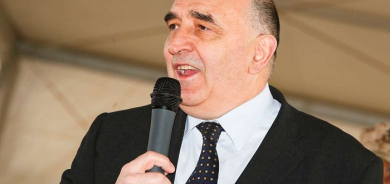
Sir John Jenkins: The most important immediate challenge for the KRG is ensuring a unified Kurdish position within the Iraqi state

Ambassador Sir John Jenkins KCMG LVO is a distinguished British diplomat and scholar specializing in Middle Eastern politics. Over a diplomatic career spanning more than three decades, he served as the United Kingdom’s Ambassador to Saudi Arabia, Iraq, Syria, and Libya, as well as Consul-General in Jerusalem. He was later Executive Director of the International Institute for Strategic Studies–Middle East (IISS-ME) in Bahrain.
Sir John is recognized as one of the UK’s foremost experts on the Arab world, political Islam, and regional security. He has written and lectured widely on Gulf politics, Iran, the Muslim Brotherhood, and the evolving geopolitical order in the Middle East. He is currently Senior Fellow at Policy Exchange in London and continues to advise on Middle Eastern affairs.
Gulan Media: From your long experience and wisdom in this region, do you personally think the Middle East is now moving toward more cooperation and stability, ending the old cycle of conflict? Or do you feel it is still breaking apart into different sides, with new conflicts yet to come, and if so, who do you think would be the main culprits? I ask because during the recent 12-day war we saw most Middle Eastern countries try to stay out of the fighting between Israel and Iran. Apart from Iran’s proxies, no one really joined in—not even Iraq, which in the past stood more firmly with Iran and acted more openly.
Sir John Jenkins: I think the real success story of the region over the last 40 years has been the rise of the Gulf States. They have been the most consistently stable and prosperous countries for decades, with competent governments and adroitly managed external relations. They have oil and gas, of course. But so do Libya, Iraq, Iran, and to a lesser extent Egypt and Syria. And this seems to me the crux of the matter.
The GCC states are now embarking on a new period of social and economic transformation, most obviously in Saudi Arabia but with similar programmes in their neighbours. Is that going to be the model for the future of the region as a whole, or will it instead be the sort of conflict that we have seen in Gaza, Sudan, Iran, Lebanon, or Syria? Economic growth requires peace and stability. That’s one reason Iran’s economy is so bad: they have prioritized a policy of revolutionary confrontation when they’d have been better off concentrating on the welfare of ordinary Iranians.
All the evidence suggests that people are tired of endless conflict, not just in Iran but across the whole region. The GCC can’t make this happen on their own: they need others to come to their senses. Above all that means Tehran. It also means that Israel needs to find a way to accommodate the Palestinian desire for self-determination. If peace were to break out everywhere, it would be wonderful—and good for business. Will that happen? I’m a pessoptimist…
Gulan Media: On Iran’s role after recent events—while it’s under pressure, the world’s focus has been mainly on Gaza and then Ukraine. Do you see a chance for less tension with Iran, given the understanding that any attack on U.S. or Israeli bases will bring retaliation? Or will mistrust still dominate, despite some hope for a deal? Iran’s deputy foreign minister says talks are still possible, and Washington says it’s open, but both refuse to budge on uranium enrichment. In today’s chaos, could this push both sides to an agreement, and could Trump’s “diplomacy through force” make it happen?
Sir John Jenkins: If you look back at the history of Iran—and most particularly the last 46 years—you’ll see that a dominant theme is of Iran as both victim of an unjust and conspiratorial international order and as a uniquely virtuous defender of its own rights and those of the oppressed everywhere. The trouble is that this stance has not made Iran strong: as we have seen, it remains weak, unable even to defend properly its national territory and to avoid the sort of historic national humiliation which Ayatollah Khomeini promised that the 1979 revolution would both prevent and vindicate.
The entire legitimacy of the Islamic Republic is predicated on this position: “Death to America” and so forth. As we saw over the issue of the veil, its leaders fear that if they give an inch, it will undermine this legitimacy. And we see this syndrome again over the nuclear issue. The three European signatories to the JCPOA are threatening to trigger the so-called “snapback” sanctions at the end of this week. The sensible thing for Tehran would be to offer enough to prevent this happening. Instead, they continue to be bellicose and obdurate.
Meanwhile they face chronic economic difficulties of their own making, are unable to provide electricity on a countrywide basis with any consistency, are experiencing water shortages and—as we saw with the failure even of Russia to come to their aid during the recent conflict with Israel—have no real friends. At the same time, Turkey—Iran’s great historic rival—is making progress in Syria, Armenia, Azerbaijan, and further into Central Asia.
It is true that tensions in the Gulf have been dialled down as the GCC states, led by KSA, have sought to insure themselves against being drawn into any conflict involving Iran. But that didn’t stop Tehran attacking targets in Qatar at the end of the conflict with Israel. And Iran will remain a destabilizing factor for the foreseeable future in my view. Exactly how destabilizing depends on whether Iran seeks to rebuild the Axis of Resistance, continues to pursue its policies of aggressive forward defence, and pursues the eradication of Israel. Other regional powers will, of course, seek to manage these risks.
But Iran has consistently made bad choices in the past—as we saw, for example, with the unnecessary prolongation of the Iran-Iraq war after the recapture of Kermanshahr. My guess is that they will continue to choose the wrong course. That is going to be a problem for all of us.
Gulan Media: You have worked on the “Westphalia for the Middle East” project, which aims to help countries rebuild after war and protect their sovereignty. How could this idea work in today’s Middle East, especially in places like Syria—where the al-Sharaa government now faces the challenge of holding the country together after years of civil war, foreign intervention, and sectarian division? Can such a framework realistically prevent outside powers from using countries like Syria as arenas for their own rivalries?
Sir John Jenkins: The Peace of Westphalia in 1648 ended the massively destructive Thirty Years War in Europe and in practice marked the end of a much longer period of religiously-inflected conflict. It represented a recognition that finding ways to resolve such conflict without resort to violence was a much better way of settling disputes. And that in turn was one factor in the extraordinary expansion of European power in the 18th and 19th centuries.
I don’t think there is an exact read-across to the modern Middle East. But there are some very similar challenges: the nature of state authority, the role of religion, the acceptance of difference, the collective creation of institutional mechanisms for resolving disputes between states, the management of a balance of power and so forth. At Cambridge, we are trying to think through with the help of friends in the region what all this might look like, very aware that people have been talking about possible systems of collective security in the Gulf in particular for decades without any very clear answers.
The issue now is much wider—also involving Iraq, Syria, Turkey, and the states of the Caucasus and Central Asia. I think it is in everyone’s interests that weak states do not become theatres where outside actors wage proxy battles. We have seen that too often, from Lebanon to Yemen, Sudan, Iraq and—as you say—Syria.
In the absence of stability, outside actors are inevitably drawn in, as they were in Italy (for example), or the German states in the 16th and 17th centuries. But it is far better to have a system that contributes to peace rather than to war. That requires trust, it requires impartial guarantors, it requires political will and capacity, and it requires resources.
Syria is an interesting test case. So far there are some encouraging signs. But Syria is a complicated place: the essential requirement is that Syrians themselves can find a way to agree on the way ahead and no community feels disadvantaged. We are not there yet. I hope it works: the alternative is that we see a replay of the 1950s when Syria’s political system collapsed and was replaced by various forms of dictatorship. That would be a very bad outcome for us all.
Gulan Media: You have written extensively about the Muslim Brotherhood and political Islam. From your perspective, are these movements truly shifting toward modernization, or are they still holding on to old ideas that divide the region? In many cases, they seem to promise dignity and justice, but in practice they prioritize the power of a few over the needs of the many—often using ideology as a tool to control rather than to serve. Do you see any genuine change in their approach, or are we simply witnessing the same patterns in a new form?
Sir John Jenkins: Islamism in its many forms has certainly had an enduring hold on many people’s political imagination in the region for a century now, from the foundation of the Muslim Brotherhood in 1928, through its repression, metamorphosis, and re-expansion into numerous factions and groups. At its heart, Islam provides a very powerful language with which to critique injustice and political illegitimacy. It also has a strong hold on people’s emotions and loyalties.
The problem is that no Islamist movement—Sunni or Shia—has ever managed to govern a modern nation-state effectively or indeed show that it has the capacity to do so. It is true that Islamists have faced often brutal repression. But they have held power in Sudan, for a brief period in Tunisia and Egypt, and for much longer in Gaza and particularly in Iran. Each—for different reasons—was a disaster. In Iran it has even been a disaster for religious observance, which has declined dramatically, as the IRGC themselves privately admit.
And Islamists themselves can only rule by repression: Savak’s brutality was a pale shadow of that consistently practiced by the security agents of the Islamic Republic. All the evidence of elections and repeat polling over the last decade or so has shown that the vast majority of people in the region want effective and responsive governments that provide good services, make people’s everyday lives easier, and offer a better future for their children. That’s normal.
It’s not about democracy versus tyranny. It’s about what works. Ideology just gets in the way. Islamists still agonize about this. But given a choice, only a very small number of misguided people would ever like to be ruled by AQ, Da’esh, or the IRGC rather than any of the other available options. Islamism isn’t going away any more than Marxism. But in the end neither has any real answers to the modern world, a lesson we seem to have to keep learning over and over again.
Gulan Media: With the war in Gaza and Lebanon’s ongoing political and financial crises, what practical steps or forms of regional cooperation could help bring effective leadership and long-term stability to these places—especially after the intense strain they have endured? In Gaza, there is the urgent need to end violence, rebuild, and create a political framework that prevents another cycle of war. In Lebanon, beyond curbing Hezbollah’s influence, there is the challenge of breaking decades of corruption and restoring public trust. From your experience, what kind of leadership and cooperation can realistically address both security and governance in these two cases?
Sir John Jenkins: In Gaza, the political framework is absolutely the key. Some in the Israeli government would undoubtedly like to displace large numbers. But that doesn’t remove the political problem: it simply moves it to another place. Same in the West Bank.
I don’t see how we can agree on what the framework is if Hamas is determined to regain power. So whatever follows this conflict has to persuade the Hamas leadership that they need to step down in the interests of their own people. And then we have collectively to persuade Israel that a deal that rebuilds Gaza and empowers a Palestinian leadership committed to peace will also bring in security guarantees and new relationships with other key Arab states who share Israel’s professed interest in regional stability and cooperation.
Everyone is going to have make a leap of faith at some point. It’s only then that we can properly deal with Lebanon: the answer there really does depend on an answer to the situation in the lands to its south. I do not believe we are anywhere near this yet. And if we ever get there, the financing demands—for reconstruction, etc.—are going to be huge.
But we need to have a firm view about what is needed and a commitment to work towards it, however long it might take.
Gulan Media: Gulf countries are rapidly reshaping their economies and diversifying away from oil, while also facing growing climate and environmental pressures. Do you think these changes will lead them to redefine their relationships with major powers like the United States, China, and Europe—and if so, in what ways? Will we see them balancing these partnerships more strategically, using economic modernization and climate cooperation as leverage, or will security concerns in the region still dictate the direction of their foreign ties?
Sir John Jenkins: I think we’re seeing a complicated balancing act already—carried out with some skill by the Gulf states. The current situation has also, I am sure, made their leaders reconsider their own security and who can help support it. That practically means the US for the foreseeable future. But that will not stop them diversifying their relationships—with China, India, and even Russia from time to time. Deconflicting all this will be tough. But I’ve been impressed so far…
Gulan Media: Given your deep experience with Iraq and the wider region, how do you see the Kurdistan Region’s position evolving in today’s Middle East? With Baghdad relations often strained over oil, budgets, and political authority—and with regional powers like Turkey and Iran each having their own interests—what steps should the KRG take to protect its autonomy and avoid being drawn into wider regional rivalries? In your view, should the United States play a stronger role in supporting the Kurdistan Region’s autonomy and even its long-term aspirations for independence, or would that risk creating more tensions with Baghdad and the surrounding states?
Sir John Jenkins: The KRG has been the most open and stable part of Iraq for two decades. That’s why it has been able to welcome refugees, stand up to Da’esh, and attract foreign investors. But the challenge for the Kurds in general is that they are distributed across four different countries—Syria, Turkey, Iraq, and Iran—which are all suspicious, for different historical reasons, some good, some bad, of potentially separatist movements and have themselves had highly nationalist regimes for much of their modern history.
The experience of the 1945 Mahabad Republic is an awful warning of the consequences! There are analogies elsewhere in the region. We see something similar in North Africa with the Amazigh. South Sudan and Darfur too. So the difficulties distinctive ethnic groups encounter with overbearing central governments is not just a Kurdish issue.
The 2003 Iraqi constitution actually contained some helpful ideas about how to manage these tensions in the Iraqi context. But it’s been a problem getting any of this implemented since then because of domestic political rivalries. For me the most important immediate challenge for the KRG is ensuring a unified Kurdish position within the Iraqi state and then continuing to build a strong regional economy.
The relationship with Turkey has clearly been significant for Erbil. But that only makes sense in the context of an effective relationship also with Baghdad. I am sympathetic to Kurdish national aspirations. But realistically I don’t see much support from the US or Europe for anything other than a strong Iraqi state which contains a strong and successful Kurdish region.
We saw this at the time of the referendum in 2017: it was also an issue at the 1921 Cairo Conference. So it looks to me like an enduring theme of great power politics in the Middle East.