Dr. James A. Gardner to Gulan: I do not think that federalism provides an effective ultimate defense against central authoritarianism
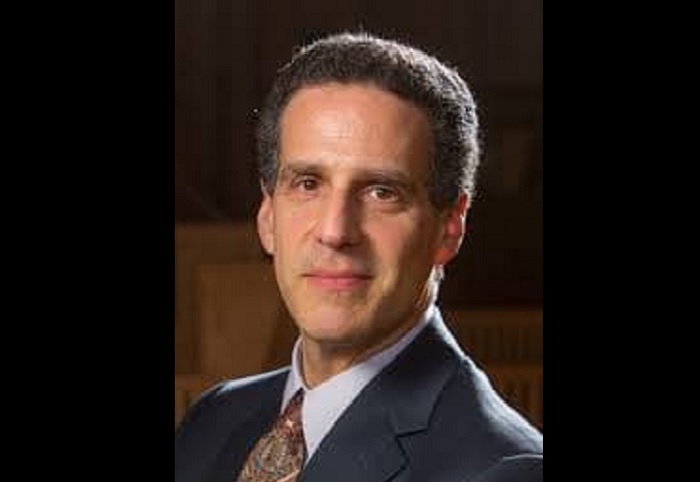
Dr. James A. Gardner is Bridget and Thomas Black SUNY Distinguished Professor of Law, Research Professor of Political Science, University at Buffalo School of Law, The State University of New York. A member of the law faculty since 2001, Bridget and Thomas Black SUNY Distinguished Professor James A Gardner is a highly regarded specialist in constitutional and election law. He is a prolific scholar who has published six books and more than 60 articles and book chapters. According to Election Law Blog and Brian Leiter’s Law School Reports, Gardner is the 8th most frequently cited scholar in the field of election law. Gardner’s books include Comparative Election Law (Edward Elgar Publishing: 2022), Election Law in the American Political System (Aspen : 2020), What Are Campaigns For? The Role of Persuasion in Electoral Law and Politics (Oxford University Press) and Legal Argument: The Structure and Language of Effective Advocacy (Carolina Academic Press). His articles have appeared in Columbia Law Review, Michigan Law Review, Texas Law Review, International Journal of Constitutional Law, American Journal of Comparative Law, and many other venues. He has taught at Western New England University, William and Mary, the University of Connecticut and Florida State University. In 2012, he held the Fulbright Visiting Research Chair in the Theory and Practice of Constitutionalism and Federalism at McGill University in Montreal, and in 2015 was the Federalism Scholar in Residence at the European Academy’s Institute for Comparative Federalism in Bolzano, Italy. In 2018, he was Visiting Professor at the University of Barcelona. Gardner served as interim dean from December, 2014, to June, 2017 and vice dean for academic affairs from 2005-2012. Gardner received his BA from Yale University in 1980 and his J.D. from the University of Chicago in 1984. From 1984 to 1988, he practiced law in the Civil Division of the U.S. Department of Justice in Washington, D.C. in an exclusive interview he answered our questions like the following:
Gulan: Can federalism truly shield subnational liberal democracies from creeping central authoritarianism, or does it merely delay its onset?
Dr. James A. Gardner: I do not think that federalism provides an effective ultimate defense against central authoritarianism. It is possible that federalism can delay the spread of authoritarianism throughout the system, but much depends upon the precise details of the distribution of authority, the motivation of officials who wield power, the relative strength and resources of the two levels of government, and popular opinion. It is possible that what slows the spread of central authoritarianism most, if anything does, is the need of autocrats to be able to claim some sort of democratic pedigree. This demands that they maintain at least the outward appearance of genuinely democratic processes. But this is true regardless of the structure of the state.
Gulan: How should judicial federalism navigate conflicts between national supremacy and subnational autonomy without eroding constitutional balance?
Dr. James A. Gardner: I do not think that, at the end of the day, it is the courts that maintain a desirable balance between national and subnational power (although some courts think that is what they do). I think the balance is actually maintained by the political actors themselves – the national and subnational governments – through a constant struggle to achieve their own goals. Courts may adjudicate a dispute in one context or another, but that never exhausts the ways in which each level in a federal system can act to achieve its ends. It is the end of this intergovernmental struggle that can most damage federalism, not any particular judicial ruling.
Gulan: What lessons from subnational constitutional law reveal the limits—and possibilities—of granting distinct political identities within a federation?
Dr. James A. Gardner: I doubt it is possible to generalize on this issue. Each society will have its own feelings about the nature and divisibility of national identity. Where national identity is understood as indivisible, the assertion of distinct subnational political identities will create problems, and vice versa.
Gulan: In what ways do provisional or evolving constitutional frameworks, such as Canada’s, strengthen or weaken subnational governance?
Dr. James A. Gardner: Again, I don’t think it is possible to generalize. The advantages or disadvantages of an evolving constitutional framework don’t lie along the axis of subnational government. They relate to the advantages or disadvantages of flexibility in the basic law of the state.
Gulan: How can subnational units effectively safeguard minority rights and local self-rule while contributing to national unity?
Dr. James A. Gardner: I don’t think this it is truly possible to do both of these things at once. Any subnational variation has the potential to detract from feelings of national unity. The issue isn’t that, but rather the degree of tolerance for internal diversity that the people of a given state possess. Everyone has their limits. The Swiss, for example, are deeply committed to cantonal autonomy and the federal structure of the state, yet even the Swiss become exasperated when cantonal variations in elementary and secondary education requirements impede their ability to resettle from one part of the country to another.
Gulan: What structural safeguards—legal, judicial, or political—are most effective in preventing central overreach in federations like the U.S. and Canada?
Dr. James A. Gardner: An independent judiciary is certainly helpful, but again, I’m inclined to think that the ability of political actors within the system to pursue their own favored initiatives and resist ones at the other level which they dislike, is the real defense. This is a question of the genuineness of subnational autonomy: do the units actually have the capacity to achieve their goals without central help, or to resist and impede disliked central initiatives?
Gulan: To what extent should federalism accommodate deep diversity without threatening the integrity of the larger political community?
Dr. James A. Gardner: This is a really difficult question, and I’m not sure there is a single answer. Much depends upon how much the people of the larger political community believe that collective association continues to provide benefits large enough to outweigh the inconveniences and costs of dispersed power. In Catalonia, Quebec, and Scotland, for example, many have questioned the cost-benefit analysis. The more interesting question, it seems to me, is: what are the conditions in which it is permissible for the central state to use force to resist a secession movement by one or more of its units? This is much debated in the literature.
Gulan: Can the experiences of North American federalism offer a blueprint for divided societies elsewhere, like Iraq, or are their lessons too context-specific to travel well?
Dr. James A. Gardner: The experience of others is always illuminating, even if it isn’t wholly relevant. My work in comparative federalism convinces me that there are general patterns and tendencies, but it is possible to extrapolate only so far into different sets of conditions. To a great degree, the question for Iraqis is how strongly they feel the continued existence of the central state benefits them as presently constituted, and whether changes to the structure might bring additional benefits or lower costs.