Peter Galbraith: The people of Kurdistan should not be forced to be part of Iraq
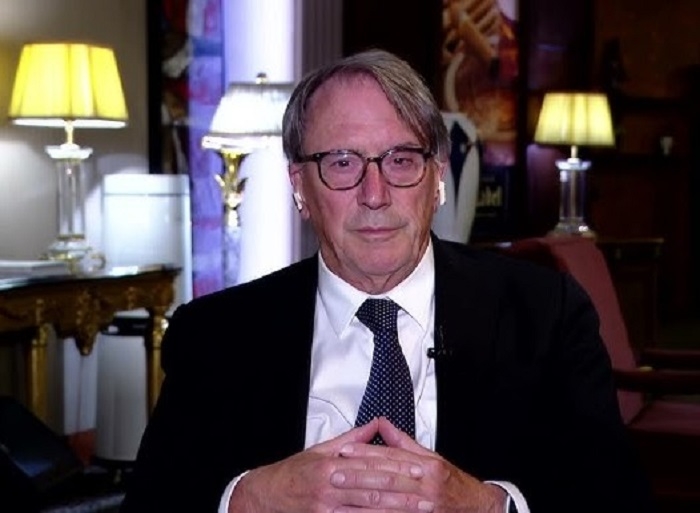
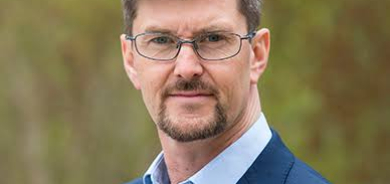
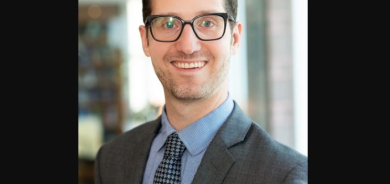
Peter W. Galbraith is an American diplomat, author, and longtime advocate for Kurdish rights. He served as the first U.S. Ambassador to Croatia and was a senior adviser during the drafting of Iraq’s 2005 Constitution, working closely with Kurdish leaders. In recognition of his steadfast support, he received the Medal of Honor of the People of Kurdistan in 2004. Galbraith is also the author of The End of Iraq and has been a trusted friend of the Kurdish people for over four decades.
Gulan Media: Dear Ambassador Galbraith, you have long been a trusted friend of the Kurdish people, and we take great pride in the fact that after the Anfal campaign and the chemical bombardment of Kurdistan, you stood up in defense of the Kurdish cause. Could you share with us how you first became acquainted with the Kurdish cause, and what inspired you to take such a strong stand in its defense?
Peter Galbraith: Well, I was working for the Senate Foreign Relations Committee of the U.S. Senate, and my responsibilities included the Near East and South Asia. As somebody who was trained as a historian, of course, I knew about the Kurds, and I knew something of the history of the Kurds, including the various rebellions, the role of Mullah Mustafa Barzani, and then the betrayal by Henry Kissinger in 1975. So I was always interested in the Kurds.
But what really attracted me to the Kurdish cause were my trips to Iraq on behalf of the Senate Foreign Relations Committee. The first one was in 1984, and in addition to Baghdad, where I saw Tariq Aziz and Ramadan, I also went to Mosul and then to Erbil. In Erbil, I met with a Kurdish sheikh who took me up to Salahaddin and then to Shaqlawa.
All of this was interesting, but what really got me involved was a second trip in 1987. For strange reasons, I actually got permission to go to Sulaymaniyah. I went with Hayward Rankin, who was the political counselor of the embassy. We went through Baquba, and we got to Chamchamal. I think they were very surprised that we had permission, but we did.
As we proceeded, crossing from the Arab areas to the Kurdish areas, there was something very strange. Namely, we had villages that showed on our maps — and we had very detailed U.S. military maps — but they weren’t there. Then we could see towns and villages that were abandoned. On one side of the road there would be rubble, and on the other side, bulldozers waiting to destroy the buildings. Later, I could see people being relocated to Victory City, which were really concentration camps. This made an impression on me.
When I wrote the report for the committee, which was published, I added just two or three paragraphs about this, because the report was about the war in the Persian Gulf — the Iran-Iraq War, the U.S. decision to escort Kuwaiti tankers, and many other things.
But the report was read by a Kurdish-American doctor, Najmaldin Karim. He got in touch with me and came to my office. He really was the person who introduced me to the Kurdish leaders. I admired him greatly as a person, and I miss him. He was a person of great integrity and deeply committed to the cause of Kurdistan.
This began with Jalal Talabani, who came to the United States in April of 1988, and also Sami Abdul Rahman, Kosrat Rasul, and others. Then, in August of 1988, I read in the New York Times about refugees fleeing to Turkey from chemical weapons attacks. We had already seen some attacks earlier in March, but these were the attacks that took place after the Iran-Iraq War was over, between the 25th and 28th of August.
At that time, I was convinced it was genocide, and I was determined to do something to stop it.
Gulan Media: In 2004, when Mr. Nechirvan Barzani presented you with the Medal of Honor of the People of Kurdistan, recognizing your stance and support for the Kurdish cause, did that moment make you feel that the people of Kurdistan never forget their true friends and always take pride in having them?
Peter Galbraith: Yes, but this is something I knew before I received the medal. It’s something I have known in the 21 years since then. One of the things that has so attracted me to the cause of Kurdistan is the Kurdish people. The fact is, they are very good friends. They will do almost anything for their friends, and that is a wonderful feeling. So yes, I very much appreciate the warmth and loyalty of my Kurdish friends.
This comes from my own personal experience. I have been involved with the Kurds since 1984 — for 41 years.
Gulan Media: In a 2004 interview with Gulan’s editor-in-chief, conducted in the presence of Dr. Mohammed Ihsan, you said that the future of the Kurds in the new Iraq should be bright. Yet today, relations between Baghdad and Erbil remain tense, with the Iraqi government withholding Kurdistan’s salaries and budget. In your view, how should we approach and deal with Prime Minister Mohammed Shia al-Sudani’s government under these circumstances?
Peter Galbraith: Well, 21 years ago, I was hopeful about the future of the Kurds in Iraq, because I believed that Kurdistan could achieve complete self-government within Iraq. The idea of complete self-government — or independence — has always been the dream of the people of Kurdistan.
As you know, the history of Iraq, from its founding in 1923 until 1991, was characterized by the brutal oppression of the Kurdish people, denying their identity and ultimately culminating in the genocide of the 1980s. So in 2004, with Saddam Hussein and the system that came before him swept away, there was reason to be optimistic that the people of Kurdistan could achieve their goals in the Iraqi Constitution. And in fact, they did achieve those goals in the Constitution.
The Iraqi Constitution gives Kurdistan almost complete independence, meaning the power to decide its own future — which is really what independence is about. It permits Kurdistan to have its own parliament, its own prime minister, its own military — the Peshmerga are explicitly recognized in the Constitution. It makes Kurdistan law superior to Iraqi law in all but a few very narrow areas, and it gives Kurdistan the power to amend or cancel the application of Iraqi law in Kurdistan.
This was an enormous power that fulfilled a dream the Kurds had long held.
With regard to revenues, at that time — and even today — Iraq’s main source of revenue comes from oil. The Constitution provides that of the oil in production in 2004–2005, Kurdistan should receive a share of those revenues based on its population, and actually something a little extra since Kurdistan had suffered under Saddam Hussein. That money should go directly to Kurdistan, and it is for the Kurdistan Parliament to decide how it is spent — whether for salaries, infrastructure, more police, or more teachers. This is not a decision for Baghdad.
But that system, which is in the Constitution, has never been implemented. Baghdad should not be paying the salaries of civil servants in Kurdistan. Kurdistan should be paying them, because it is supposed to receive its share of Iraq’s oil revenues automatically. But that never happened.
I think the Constitution has not been implemented as everyone understood it was meant to be.
Gulan Media: Regarding the 2005 Iraqi Constitution, you served as one of the international advisers during the drafting process and are well-acquainted with its details. Why do you think the Constitution has not been implemented as it was written? And why hasn’t Iraq evolved into the federal state you had envisioned?
Peter Galbraith: Well, first, Iraq is a federal state. But under the Iraqi Constitution, Kurdistan has its own parliament, its own president, and the Peshmerga are recognized in the Constitution as the guards of the region. Under Article 115, if there is a conflict between Kurdistan law and Iraqi law in Kurdistan, Kurdistan law is superior. And under Article 121, the Parliament of Kurdistan has the right to amend or cancel any Iraqi law, except in just a few areas of jurisdiction.
With regard to oil revenues, Kurdistan has the right to develop new oil fields — and every oil field in Kurdistan is new, because there was nothing in production in 2005 (leaving aside Kirkuk) — and to keep the revenues. Kurdistan is also entitled to a share, based on its population, of Iraq’s overall oil revenues.
Although this Constitution was agreed upon in negotiations, adopted by the elected Council of Representatives, and approved by the people of Iraq in a referendum, major parts of it have not been implemented — specifically, the provisions on revenue sharing.
There are also other provisions important for a federal state that have not been implemented. For example, the Constitution says there should be a second chamber of the legislature — not just the Council of Representatives, but a Council of Governors and Regions, similar to the U.S. Senate. That was supposed to be established, but it never was.
The Constitution also requires a Supreme Court, which should operate according to a law passed by the Council of Representatives, with members appointed in accordance with that law. That law has never been passed. So, in fact, there is no legitimate Supreme Court in Iraq.
Why has the Constitution not been implemented? Because the people in the bureaucracy in Baghdad, and particularly the Shia political leaders, do not want to keep the bargain they made. They made a bargain, and they don’t want to honor it. They still have the mentality of Saddam’s time, even though they are different people.
They have the same mentality — that they are in charge and hold all the power. They cannot understand the idea of sharing power, of federalism, of respecting the rights of different communities within Iraq. Their policies are basically leading to the breakup of Iraq.
You can keep a country together if you respect the rights of the different communities, if you recognize differences, if you honor the bargains you make, if you respect the Constitution. But when they constantly fail to do that, when they insist on exercising all power themselves, it provokes great resentment in Kurdistan and other parts of Iraq. Almost certainly, someday, it will lead to the breakup of Iraq.
Gulan Media: By breakup, you mean a separate Kurdish state?
Peter Galbraith: Yes, a fully independent Kurdistan, and possibly a self-governing Sunni area as well.
Gulan Media: During the drafting of the Iraqi Constitution, you met several times with President Barzani and the late President Jalal Talabani, often urging the KDP and PUK to maintain a united stance. At that time, was it possible to secure the Kurdish demands you hoped to see firmly enshrined in the constitution?
Peter Galbraith: I can’t take any credit for urging President Barzani and President Talabani to have a united front — because they made that decision. They were the ones who had a united front, and they maintained it throughout the negotiations.
They had a very important division of labor. President Barzani (Masoud Barzani, at the time) was responsible for negotiating the federalism provisions of the Constitution. I was with him many times every day during those negotiations. President Talabani was negotiating the structure of the federal government — not the federalism part, but the structure of the Council of Representatives, the Parliament, and the Presidency.
It was a very good division of labor. They cooperated very well. As a result, Kurdistan achieved everything it wanted in the Constitution. Yes, I think everything was achieved in the Constitution.
Gulan Media: In 2006, following the assassination of Al Arabiya’s correspondent Atwar Bahjat, you wrote the book The End of Iraq. What motivated you to write that book?
Peter Galbraith: Well, you know, I had been following Iraq for many years. It was the number one issue that Americans were focused on during President George W. Bush's administration. I felt the situation had been misunderstood and that U.S. policy was being directed by people who knew very little about Iraq. They were not dealing with the real country of Iraq; they were dealing with a fantasy country of Iraq — the Iraq they wished it was, not the Iraq that really was.
So my book was intended to describe some of the modern history of Iraq, to describe America’s involvement in Iraq — including the fact that the Reagan administration basically gave Saddam Hussein a green light to use chemical weapons against the Iranians. It provided intelligence that enabled Saddam to target the Iranians with chemical weapons. It then tried to blame Halabja on the Iranians, even when it agreed that Saddam had used poison gas in August of 1988.
After the Iran-Iraq War was over, the U.S. didn’t even want to cut aid to Iraq. Under George Bush Jr., his administration wanted a federalism based on 18 governorates, not with the separate Kurdistan Region. So, for all those reasons, I wrote the book — to try to educate Americans.
Of course, it also recounted my own experiences in Iraq. I wanted to describe how the Bush administration denied there was a civil war in Iraq when it was so obviously a civil war. That’s why I began my book with the destruction of the Askari Shrine in Samarra, which was followed by the murder of Atwar Bahjat, and then gunmen attacking her funeral.
The point I wanted to make was that many Americans said Iraq should be partitioned. I never wanted to partition Iraq. My argument was that Iraq had already broken up, and I was against trying to put it back together. That was the point of my book — Iraq had broken up, and it should not be put back together against the will of the people of Kurdistan and other peoples in Iraq. We should accept it for what it is.
There is an American tendency to think everything is about America. Should we partition Iraq? No — that’s not our business. It’s for the peoples of Iraq to decide their future, and we should respect those decisions. One of my points was that the people of Kurdistan do not want to be part of Iraq, and they should not be forced to be part of Iraq.
Gulan Media: What motivated the U.S. policy of insisting on keeping Iraq united?
Peter Galbraith: I would say mostly ignorance, but also arrogance. The Bush people, the neoconservatives, and Bush himself knew very little about Iraq. They didn’t grasp that Iraq was a country of Kurds and Arabs. They knew it nominally, but they pretended the Kurds wanted to be Iraqi — when, in my more than 40 years of involvement with Iraq, I have never met a Kurd who has told me he would prefer to be a citizen of Iraq rather than a citizen of an independent Kurdistan.
And that includes all four of the Kurds who were president of Iraq. But the Bush administration didn’t understand that.
My view is that God didn’t create any country. If people in a geographically defined area want independence, then they should have it.
Gulan Media: Thank you, sir. Turning to the issue of independence — you closely followed the Kurdistan Region’s 2017 referendum, in which 92.7% of the people voted “yes” to independence. Yet the international community in general, and the United States in particular, did not respect the will of the Kurdish people. Instead, they allowed the Iraqi army and the Popular Mobilization Forces to retake disputed territories and even launch attacks on Kurdistan. Why does the world oppose the Kurds having their own state? During the referendum, you once again strongly supported independence and firmly opposed the Albright–Hadley report. Why then did the first Trump administration fail to support the Kurds during this critical moment?
Peter Galbraith: Again, my belief is that when people in a geographically defined area want independence — especially if they overwhelmingly want independence — they should have it. That makes for a better, more stable world.
Clearly, things are better off in the Balkans because the countries broke apart. Now it is stable: you have Slovenia and Croatia as part of the European Union, and others from the former Yugoslavia as part of NATO. The world is better off with 15 independent countries instead of one Soviet Union.
Why should East Pakistan — now Bangladesh — have remained part of Pakistan? We have to respect the desire of people who want their own state.
The people of Kurdistan turned out in huge numbers, with great enthusiasm, and voted 92.7% in favor of independence. I was there for the referendum, and I think that decision should have been respected.
As to why the international community doesn’t accept that — particularly the United States — it is part of a consistent pattern. George Bush Sr. didn’t want the Soviet Union to break up. In fact, he went to Kyiv in August 1991 to oppose Ukraine’s independence. Yet, by the end of that same month, Ukraine was independent.
The U.S. also tried to keep Yugoslavia together after the people of Slovenia and Croatia had already voted for independence. James Baker went there on June 21, 1991, and just four days later, Croatia and Slovenia declared their independence.
So this is the normal reaction of the United States. And of course, it is also influenced by opposition to Kurdistan’s independence from Turkey, Iran, and Iraq.
But what happened on October 16, 2017, was a disgrace. It wasn’t just that the Trump administration opposed Kurdistan’s independence — it actually permitted Abu Mahdi al-Muhandis, leading not the Iraqi army but a Shia militia, to use American Abrams tanks to attack America’s friends and allies, the Kurds.
And who was Abu Mahdi al-Muhandis? He was a terrorist who had been convicted and sentenced to death in absentia for blowing up the American embassy in Kuwait in December 1983. So the Trump administration sided with a terrorist — allowing him to use American tanks to attack our friends, the Kurds. That was a disgrace. Of course, the operation was directed by Qassem Soleimani.
Gulan Media: This naturally begs the question — why?
Peter Galbraith: It is in the nature of Trump’s character. He is an ignorant person, a man without principles. I think he knew nothing about the people he was allowing to use the American tanks.
Gulan Media: As a U.S. ambassador, you played a role in the independence of East Timor and Kosovo. In your view, could similar mechanisms be applied now in the Kurdistan Region in dealing with Iraq?
Peter GalbraithPeter Galbraith: The East Timor and Kosovo cases are different. First, I was very involved in the independence of Croatia and Bosnia, but not so much in Kosovo. I was, however, very involved in East Timor.
I think there is an analogy to the situation in Kurdistan. Indonesia had seized East Timor in the way Iraq had seized Kurdistan in the 1920s. Indonesia brutally repressed Timorese resistance in the same way Iraq repressed Kurdish resistance movements. During 25 years of occupation, about a third of East Timor’s population — 200,000 people — died. In Iraq, under Saddam, about 200,000 Kurds also died in the Anfal campaign.
Then in East Timor, there was a referendum — a UN-sponsored referendum on independence — which Indonesia lost. Some elements of the Indonesian military didn’t accept the result, and they burned everything down. That’s when you had UN administration.
In Kurdistan, there was also a referendum. It wasn’t sponsored by the UN, but it was clearly free and fair, with a very clear result. So those are the comparisons.
But there is no need for UN administration in Kurdistan. Kurdistan already has a government. The only role the UN could play would be to help negotiate the terms of divorce between Iraq and Kurdistan, because there are a lot of issues that go with such a divorce:
· dividing the national debt,
· dividing national assets,
· the status of students (Kurdish students in Iraq and Iraqi students in Kurdistan),
· the electric grid, and many other practical details.
These are things the UN has experience with, so it could be helpful.
Gulan Media: In May 2025, with the presence of Kurdistan Region Prime Minister Masrour Barzani and U.S. Secretary of Energy Chris Wright, the Kurdistan Region signed a $110 billion agreement for investment in the energy sector with two American companies. In your opinion, could relations between the Kurdistan Region and a second Trump administration reach the level where the U.S. treats the Kurdistan Region similarly to how it deals with Taiwan?
Peter Galbraith: Yes, it could happen, and it should happen. Will it happen? The most I can say is that it could happen and it should happen.It is hard to predict how things will develop, but Kurdistan is a more natural ally to the United States — and a more natural ally to the Trump administration — than is Iraq, which is basically aligned with Iran.
Gulan Media: Ambassador after being interviewed by our magazine and becoming acquainted with it, what are your thoughts on Gulan Weekly Magazine and its work?
Peter Galbraith: Well, it is an honor to be interviewed by this magazine. It is excellent that it continues to publish, because we live in a media world where many publications do not last — particularly in a relatively new country like Kurdistan.
I believe the people of Kurdistan, and your readers, benefit greatly from the kind of reporting and analysis that you provide.