Professor Dr. Matt Zierler to Gulan: The biggest challenge right now is the lack of clear global leadership

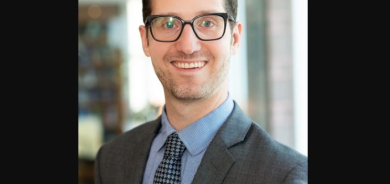
Matt Zierlers -Ph.D., University of Wisconsin-Madison- is an Associate Professor of International relations at James Madison College of Public Affairs at Michigan state university. Professor Zierler’s research and teaching are in foreign policy, international security, international relations theory, international law, and international cooperation. His dissertation, Failing to Commit: The Politics of Treaty Nonratification, examined the numerous cases throughout U.S. history when the United States has signed a treaty only to never ratify it. With Professor Mohammed Ayoob, he published The Unipolar Concert: North-South Divide Trumps Transatlantic Differences in the World Policy Journal. With Michael Schechter, he has published Multilateralism: Does it Still Matter? in the Information Memorandum published by the Academic Council on the United Nations System (ACUNS). He also has co-authored an article in the Journal of European Integration titled Barriers to Socialization: Turkey and Regional International Organizations. He spent the spring 2014 semester, March 2015 and 2016, and spring 2024 as a visiting professor at ADA University in Baku, Azerbaijan; he also regularly leads the International Relations in Brussels study abroad program. In an inclusive interview he answered our questions like the following:
Gulan: Many describe today's world as entering a new age of fragmentation. Do you see current global tensions as fundamentally different from past eras, or are we witnessing a familiar cycle in international politics?
Professor Dr. Matt Zierler: I think we are seeing things that are reoccurring. I'm doing some research now on the return of imperialism. A lot of the issues that we have today aren't necessarily new issues. So, issues related to the environment, or social unrest, or nationalism, or competition, have been with the international system for a long time.
The biggest challenge right now is the lack of clear global leadership. And that's why we see the fragmentation much clearer. We've always had these pressures of how individual states want to do their own thing, or how there's environmental or economic pressures that fuel conflict. But in the past, whether it was the Cold War in the East-West system, or in the post-Cold War system where, say, the liberal international order helped maintain some of these pressures, what we're facing now is a lack of trust that both people and states have with each other to find a united way forward. And even where the institutions are the strongest, say the European Union, there's even more challenge within Europe about who's meant to lead. So, there's less deference or trust played in the major powers. And we see that especially with the Trump administration in the United States, not interested in being a global leader in terms of building coalitions or bringing others together. And so, that dynamic that you see, you know, again, China is a major player. Obviously, it's increased its place in the world. But it's not, you know, doing so through necessarily existing international organizations. It either leads by itself or building smaller institutions. It's not as if other countries are flocking to it or inspired by it.
Even at the international organization level, while you have a very competent Secretary General of the UN, you know, he's not seen as a global figure, a global leader like previous Secretary Generals have been. And so, I think one of the problems is whether it's a state or an organization or a person, what the world is lacking now is a clear leader. And a leader doesn't mean, in my sense, dictator or authoritarian.
But I'm saying leader in terms of an inspirational figure or an inspirational organization that's going to unite people and states to solve common problems. And we see that, you know, again, I hope to see some changes there. But I think whether it's in Europe, the United States, the global level, yeah, we're in a vacuum right now where we're going back to the cycle where states are a little bit more concerned about themselves than others.
We're in a period domestically with increased nationalism and populism, which means that publics around the world are more skeptical of being involved in the rest of the world. There's a lot more looking inward than looking outward. So, you combine all of those domestic or internal factors with sort of the lack of clear leadership or clear trust in any existing organization at the global level is why we're seeing these fragmenting tensions be more prominent.
Gulan: you have pointed out to the erosion of the post-Cold War order or what has been called liberal rules-based order. So, do you believe that the crises, the challenges the world is facing now is the consequences of the erosion of this order or this order is the causes of these difficulties and these troubles?
Professor Dr. Matt Zierler: There's always going to be troubles in the world, right? The world of politics and economics is such that there's always going to be tensions, there's always going to be problems. The question is what's going to be done to solve those problems or at least lessen those problems? And as we see around the world, there's less global responsibility to go and help each other. And whether it's the social problems or the big political problems, we've seen in the last, I would say, 10 or 15 years, a decreasing desire of the world to help others. And it's both a symptom of the decline of the liberal rule-based order, but I think it's even more so a consequence of the lack of the rule-based order.
So whether it's Russia invading Ukraine and threatening state sovereignty and our norms about territoriality, whether it was the lack of interest a decade ago for the U.S. under Obama to address Syria and chemical weapons, whether it's about the struggles the international community has in Southeast Asia and Myanmar to deal with the Rohingya crisis, whether it's the utter destruction and devastation going on in Sudan right now, and the lack of interest of everyone else in the world, the global order, the U.N. system to contribute, the ending of USAID funding, which has weakened those areas. So, there's always going to be that competition and unfortunately always going to be these natural disasters and tensions. But in the past, we can sort of rely on the international community coming together to at least lessen the challenges or lessen the difficulties.
Right now, we see them even more exposed because states are less willing to get involved. Being here in the United States, obviously the last 20 plus years of being in Afghanistan and Iraq and not being largely successful in the long term, I mean, the immediate term we're successful at least on the U.S.-defined terms, but the long-term effect has shown to be non-successful and that's increased public discontent with being involved in others' affairs, has mean that these problems are going to be exacerbated. And so, what's the weakness of the liberal international order? It's not that these rules are illegitimate.
It's not that we don't generally agree. It's not that the international economic order shouldn't exist. But in order for that to work, you need people, organizations, and countries to constantly reaffirm the importance of these institutions and these ideas. And we happen to be in a situation where the big global powers, the U.S., Russia, China, are less interested in doing something more for the collective than for themselves.
Gulan: You have brought up an important topic, which is the possibility of a return to nationalism. Do you think it will ultimately reduce rivalries and problems and offer solutions for some of the existing crises? Or, conversely, may it worsen the existing issues and spark further disputes and confrontations?
Professor Dr. Matt Zierler: It could, and this is where the other global drivers matter. And so, this is where climate change matters, because it means challenges of ensuring there's an equitable supply of food, the challenges of proper rainfall that can be well-contained. Because if that continues to fail with the increasing global temperatures, the inefficiency of the trade system, the inefficiency of the national aid system, that means it's going to increase movements of people, whether it's internal migration within states or across states.
And we know that's what causes international conflict. Therefore, it's not that nationalism itself will lead to conflict or war. It's why does excessive nationalism occur? Nationalism in itself is not a bad thing. People should be proud of where they're from and proud of their culture. But excessive nationalism, to the extent that that means you're excluding others or you're afraid of others, is what hurts humankind. And why do people move? Why do people migrate? Most people don't want to move. They move because they have to, because the international system is such. We're not achieving the environmental success as we want.
Just this week it was reported that this international treaty to reduce plastic didn't reach an agreement at this point. And, if we want to understand the root causes, why is there challenge or discontent? Why do people move around and thus increase excessive nationalism or populism? It's because collectively as an international system, we haven't made enough progress on precisely those issues that require collective action. No one country could do environmental protection just on their own, no one country could provide all the food or natural resources it needs. Consequently, we have a world, we're living in a world that's fragmented by design. We have over 190 countries. That requires interstate interaction. But, you know, people think our institutions are weak. The UN system is seen as less legitimate or weaker now.
The global trading order is not only divided in the north-south, the global north and the global south, but even across the global south. There are divisions. And if there isn't the leadership of Europe or the United States or some other countries to promote liberal international political and economic ideas, then, again, it's this failure of leadership that's going to cause more tension.
Gulan: You brought up the war or disputes between Russia and Ukraine. Therefore, do you think that Russia's main motivation is the desire for dominance? Can the Russian battle and this war be seen as an attempt by that nation to change the so-called rules-based order or world liberal order?
Professor Dr. Matt Zierler: Clearly Vladimir Putin, wants to increase Russian resurgence, dominance, respect. He wants to reclaim the Soviet Union or reclaim the Russian empire. But he's clearly motivated less by security and more about prestige and power. That said, it's unclear what their end motives are. Will taking part, if even parts of Ukraine suffice? I don't see at this point Russia really trying to be a globally dominant body that it was during the Cold War.
I think we've seen in Syria it failed to lead there, where it could have. Because it had interest to do so. I think even in Eastern Europe, where it's clear it could build allies with some of the populace in Eastern Europe, they don't really want to be in bed with Russia.
I think we see Turkey's regional dominance in terms of its desire to create a pan-Turkic identity. A pan-Eurasian, pan-Turkic identity is going to put pressure on what Russia could do in its southern borders. And I see China as a type of model for a global competitive order where states, or other countries are going to align with China more than they're going to align with Russia.
Because if you look at, for example, when the United Nations over the last couple of years has voted about Russia's invasion of Ukraine, there were very few states that have supported Russia. And they've been states that have either been pariah states or states that are hedging their bets. It did surprise me that as many sub-Saharan African states would at least not vote against Russia in the UN.
I thought they would vote more against them. So that's a little puzzling. But at the same time, they're supporting China's interests, so I don't see them aligning with Russia so much as showing they're willing to align with others than the West.
But I think that's more of an opening for China to lead than Russia to lead. Because I think, especially since the war has gone so badly for them in terms of taking so much time and costing so much money, that they don't have the resources to expand more.
And you see finally an agreement to resolve Nagorno-Karabakh, the Armenia-Azerbaijan situation. Whether that holds or not, I don't know. But the fact that, Trump was part of that signing ceremony, it likely means the end of the Minsk process, which Russia had been leading for the most part because the U.S. has stayed out of it for the most part. And this is suggesting that Russia is having troubles.
Gulan: As you know, Mr. Trump harbored a strong contempt for international organizations. What practical options are there for group problem-solving, or do you think Trump's transactional, personal-level participation strategy would be effective?
Professor Dr. Matt Zierler: No, because I think, to the extent that he's trying to make deals, others are trying to make deals with him in the sense that, but the problem of transactional deals is they're not long-term.
In a country like the United States, where we have competitive elections and the president serves shorter terms than in, other parts of the world, that means we're not building anything for the future. Thus, would some of his deals be successful in the short run? Potentially. But everyone, around the world, especially, countries that are not democratic, realize that once he's gone, those deals are going to end, and again, there's no stability. Accordingly, we don't have this long term. Now, can the EU balance that? Potentially. So, is it a good thing that Trump is pressuring our NATO allies to spend more on their national security and their defense spending? Yes, Europe should spend more on its national security. I mean, obviously the U.K. and France have had nuclear weapons for a long time. But at what point does France, which has global interests and has been willing to use them in North Africa, in the Caucasus, in the Middle East, or at what point does now a Germany that could have a bigger army and who knows what capabilities – what does that mean if they don't feel that their number one commitment is to NATO and the collective as opposed to their individual interests? And, if you extend this to Europe and if Europe is spending more on their own, again, I still believe in NATO. I still believe in the collective. But the more that the collective is hurt, I think the worse every state will be because there'll be increased global competition across the world in places where we're not even thinking about it now.
Gulan: what about Trump’s transactional approach?
Professor Dr. Matt Zierler: Actually, the U.S. strategy, Trump strategy of the transactional stuff could actually backfire by creating even more global fragmentation with stronger militaries. We've seen China, for example, spend all of these resources on military spending. Most people in the U.S. don't see China as a military threat. We see China as an economic threat. But they've been spending a lot of money on it.
Gulan: you stated that its main danger is economic. Do you not think that it has, in a sense, evolved into a technological threat as well? And AI in particular has emerged as a key element of so-called great power competition? Therefore, do you think that the future will be more dire and that the competition between the United States and China will eventually intensify?
Professor Dr. Matt Zierler: I think you're right. I'm still seeing the AI through the economic lens. But you're definitely right. And you saw this even under the Biden administration in the U.S. where we're opposed to Huawei's expansion into the U.S. or TikTok, right? And so, we are seeing the national security threats. I think we've seen AI over the last decade play a big role in global disinformation campaigns. I think people don't know where to trust information, and that creates security threats because we don't know where we're getting our information. Is our data protected? I think, the line between security and economics, is eroding a lot, especially with these new technologies. I mean, we still have to look at China as a traditional security power, which it wasn't a big traditional military security power. With regard to AI, I don't know where AI is going to go. This competition over the production of chips for technology is big, and it's not just a Trump thing, Biden made big investments in that. Obviously, we worry about where Taiwan fits in all of this. Taiwan is big in the semiconductor industry, yet Taiwan's political and security independence are weak. So, I think that when you think about the role of AI, it gets back to your first question about what are the drivers of global change today.
And part of that is informational campaigns, lack of trust in your own domestic institutions because you don't know what truth or not anymore. So, even as information technology in the last 25 years with the Internet and everything has increased information around the world and democratized information and allowed more people, whether it's the fact or not, and that most places around the world, people have cell phones and can be connected to the Internet, which is amazing and great, now with AI and with state propaganda, it's harder to trust truth. And, that occurs equally in a good, solid democracy like the United States, as well as, countries in the Western world where the norms of trust in political institutions aren't as strong.
Gulan: Are regional actors and middle powers becoming more influential in determining the global agenda, or are they still mostly limited by the actions of major countries?
Professor Dr. Matt Zierler: I think they're seeing an opportunity, whether it's Turkey, India, maybe South Africa, maybe Brazil, even you could say Australia. They're less constrained by the great powers than they were before. For example, Turkey has been in NATO since the early 1950s, and that's been a big advantage for them because they, quote unquote, get more legitimacy by being seen as part of the West, even though, even if they're not, or, you know, even if the European Union wants to keep them out. And because Russia is more distracted than it used to be, we saw the resolution of Nagorno-Karabakh in the last couple of years, and that gives the space for Turkey to exert its authority. Now, Turkey, had some issues in Israel and that area, but I'm still not sure how that's going to end up. We've seen with Turkey, especially with the use of drone technologies. Again, my interest in Azerbaijan, why was Azerbaijan successful finally after fighting Armenia since 1988? Why have they been so successful? Partially because of their ability to get inexpensive drone technology that's allowed them to be successful on the battlefield. And where are they getting those resources, right? So, whether its technology coming out of Russia or Turkey or Israel or China, it's enabling smaller countries to have increased military influence, which is a big change in the current world.
As the result, I think there's more opportunity for Turkey to act unconstrained. They are less worried about either the West, that's NATO allies, or they don't care as much about their NATO allies criticizing them as much. And at the same time, you know, Russia isn't as there. Now, Iran obviously has historically been a threat, whereas Iran right now, it seems weak. And obviously the U.S. is more concerned about Iran, and this could advantage Turkey. As far as India is concerned, this country has often played, even during the Cold War, this middle path between the U.S. and Russia and China, but in the last two weeks, all of a sudden Trump puts a greater tariff on India, which came as a surprise for India, because I think, Modi seemed to understand, or felt he understood exactly what Trump was about and he thought he was maneuvering properly. On the other hand, the Indo-Pakistani conflict, hasn't really died down.
And, if I could predict the future, I believe, the topic we talked about in the early post-Cold War world in the early 1990s about whether the world will be, unipolar around the U.S. or sort of multipolar, and if the last 30 years have been more unipolarish with more of U.S. dominance, I think we are seeing where the multipolar is sort of emerging. I'm not predicting that's where we'll end up, but if we're looking at a snapshot in time of right now, we can see, the increase of these multipolar power centers in a way that hasn't happened, which has enabled middle-range powers to both be a little bit more independent of the great powers and to exert more authority to set their own terms.