Professor Henry Laurens: The Middle East’s Curse Lies in Illusions of External Solutions
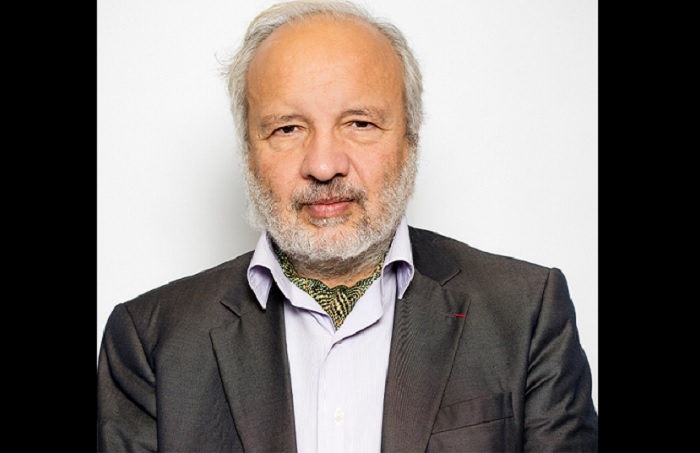
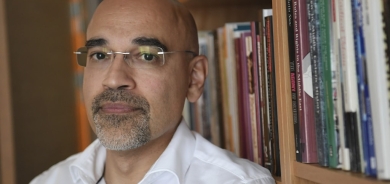
Professor Henry Laurens is one of the world’s foremost historians of the Arab world. Since 2003, he has held the Chair of Contemporary Arab History at the Collège de France. He is widely respected for his monumental multi-volume work La Question de Palestine, which traces the history of the Palestinian question across more than a century. His research and writings bridge scholarly depth with contemporary relevance, making him an authoritative voice on the enduring challenges of the Middle East.
Gulan Media: In your work La Question de Palestine, you explored the deep historical roots of the conflict. Which historical realities do you believe are the most overlooked or distorted in today’s political debates?
Professor Henry Laurens: For the general public, the impression is often that everything began on October 7, 2023, but in reality, this conflict has more than a century of history behind it. The roots go back to the British Mandate and the competing national movements of Jews and Arabs, and they are especially tied to the Nakba of 1948, when hundreds of thousands of Palestinians were displaced. Since then, Israeli policies in Gaza — blockades, military operations, and systemic restrictions — have perpetuated a cycle of violence. To focus only on recent events is to ignore this long historical trajectory that continues to shape both perceptions and realities on the ground.
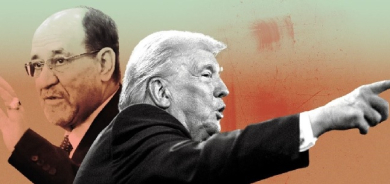
Gulan Media: In light of the 12-day war, shifting regional alliances — including the recent normalization agreements between some Arab states and Israel — and the role of major powers such as the United States under Donald Trump, how do you view the Palestinian cause today?
Professor Henry Laurens: By its very nature, the political system of the Middle East operates through constant interference and external involvement. Regional dynamics rarely remain confined to local actors; instead, they almost inevitably draw in international powers. This dependence on outside intervention has become something of a curse for the region. There is always the illusion that the internationalization of crises will lead to their resolution, but in most cases, it only complicates matters further.
Gulan Media: Considering today’s conflicts, shifting alliances, and regional rivalries, what do you see as the most realistic paths to peace and stability in the Middle East over the next decade?
Professor Henry Laurens: I see no immediate solution to the seemingly endless war between Israel and the Palestinians, which remains deeply entrenched in unresolved historical and political grievances. At the same time, we can observe countries like Iraq and Syria moving toward a fragile form of stability after years of devastating conflict. But such stability will only endure if these states recognize and embrace the ethnic and religious diversity within their borders, and adapt their political systems accordingly.
Gulan Media: With Donald Trump’s return to the presidency and his doctrine of “peace through strength,” how do you assess its impact on Iran and the region?
Professor Henry Laurens: The weakening of Iran has reduced the Gulf states’ dependence on the United States. Rather than relying solely on Washington’s protection, they are increasingly inclined to pursue a pragmatic form of accommodation or appeasement with Tehran, seeking to lower tensions and safeguard their own stability.
Gulan Media: How have internal divisions among Palestinian leaders influenced their ability to advance the national cause?
Professor Henry Laurens: The Palestinian Authority understood during the Second Intifada that it was impossible to combine armed struggle with the daily management of society. It therefore chose the path of governance, but without achieving real progress toward national independence. Hamas, on the other hand, made the opposite choice by privileging armed resistance, which ultimately resulted in the destruction and fragmentation of Palestinian society itself.
Gulan Media: How do you see the future of the Kurdistan region in light of regional changes?
Professor Henry Laurens: The autonomy of the Kurdistan region must paradoxically be pursued in tandem with a clear affirmation of belonging to the Iraqi state. Without this balance, there will always be suspicion—both in Baghdad and beyond—that autonomy is merely a step toward secession.
Gulan Media: The recent meeting between Donald Trump and Vladimir Putin in Alaska was seen by some as part of a recalibration of U.S.-Russia relations. How could this affect the Middle East?
Professor Henry Laurens: Countries of the Middle East have long developed the habit of balancing their foreign relations by engaging with several international partners at once. This practice is less about loyalty to one power than about preserving a margin of independence and maneuverability.
Gulan Media: Beyond politics, what social or cultural changes in the Arab world deserve more international attention?
Professor Henry Laurens: The Arab world is undergoing profound demographic shifts, with declining birth rates and expanding access to education acting as key drivers of change. At the same time, the region embodies a paradox: it is among the most open to the outside world, through widespread multilingualism and the presence of large diasporas in Western countries, yet it often remains deeply closed in on itself, drawing on religious values and appeals to authenticity as sources of identity and legitimacy.