Baghdad and Erbil Report "Significant Progress" on Key Oil and Revenue Dossiers
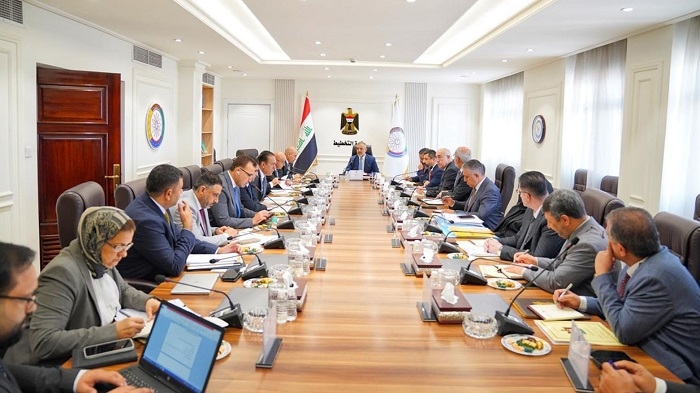
In a high-level meeting chaired by Deputy Prime Minister Mohammed Ali Tamim, officials from the federal government of Iraq and the Kurdistan Regional Government (KRG) announced Tuesday that substantial headway has been made on resolving long-standing disputes over oil, revenue, and public salaries.
The expanded joint meeting, which brought together numerous ministers and senior directors from both sides, was convened to assess progress on several shared dossiers that have been central to a decade of political and economic friction.
A primary focus was the resumption of oil exports from the Kurdistan Region. Officials reported that "significant progress" has been achieved, with all necessary conditions met to begin production and export through Iraq's state-owned marketer, SOMO (the Iraq National Oil Marketing Company). This development signals a potential breakthrough in a dispute that has halted nearly 450,000 barrels per day of Kurdish oil exports for over a year, costing both governments billions in lost revenue.
"The meeting reviewed advances on long-standing files between Baghdad and Erbil, including the production and export of oil, non-oil revenues, and the integration of KRG employees into the federal payroll system," read a statement following the discussions.
The parties also agreed to continue talks to finalize requirements on other pending issues, indicating that while progress is notable, a comprehensive final agreement is still being negotiated.
The meeting underscored the importance both governments place on the negotiations. The federal delegation included the Ministers of Housing, Higher Education, Health, and Justice, alongside high-ranking officials from the Oil and Finance ministries and the Financial Control Bureau.
The KRG was represented by its Minister of Natural Resources, the Chief of Staff, the Secretary of the Council of Ministers, and the head of its representation office in Baghdad.
The coordination on oil, finance, and civil service matters has been a persistent challenge in Iraq’s federal-regional relations. The relationship has long been fraught with tension, as successive federal governments in Baghdad have repeatedly sought to restrict the Kurdistan Region’s economic autonomy.
Baghdad has frequently moved to block independent Kurdish oil exports and has delayed or halted the disbursal of salaries to KRG public sector employees, actions that have severely undermined the region's financial stability.