Professor Yannis A. Stivachtis: The Middle East and the Global System Are in Transition—Stability Depends on Strategic Balance, Not Immediate Peace
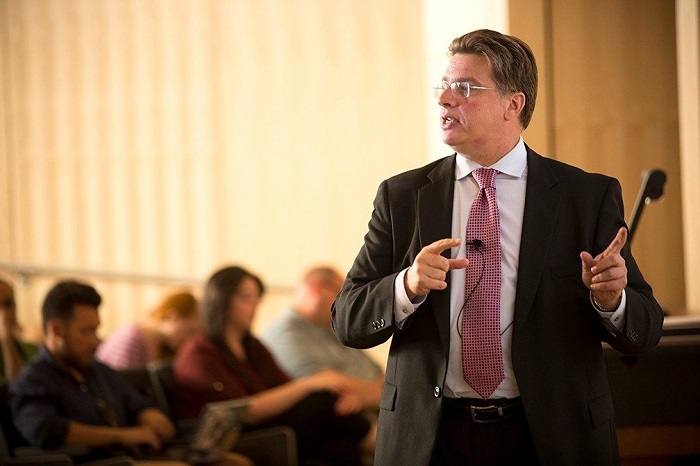
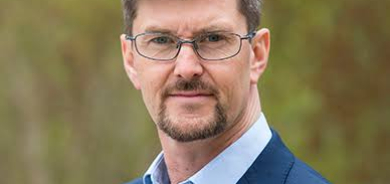
Professor Yannis A. Stivachtis is a distinguished scholar in European Studies, currently serving as Professor of Political Science and the Jean Monnet Chair at Virginia Tech, where he directs the International Studies Program, oversees the Diplomacy Lab initiative, and heads the Center for European Union, Trans-European and Trans-European Space Studies (CEUTTSS)—a Jean Monnet Center of Excellence.
Gulan: Currently, in several parts of the world, ongoing wars persist. In the Middle East, there is both an intense interstate conflict and internal wars. Meanwhile, the United Nations merely observes these wars. At present, the central figure influencing these wars is Donald Trump. How do you see the future of the Middle East? Is it possible to predict that the region might return to stability once again?
Professor Yannis A. Stivachtis: The global international system is composed by a set of sub-global/regional international systems. As a result, changes in the global international system affect changes at least in some sub-global/regional systems. By the same token, changes in at least some of the sub-global/regional international systems affect changes in the global international system.
The current international system is in transition. The post-World War II has been associated with the liberal international order, which has been dominated by the United States. The hegemonic role of the United States was further strengthened in the post-Cold War era following the dissolution of the Soviet Union. However, for more than a decade, we have started witnessing the emergence of a new distribution of world power that brought China (economically) and Russia (militarily) to the forefront. More recently, we have observed the rise of India which has the potential of becoming a new global power, while some regional states, such as Iran, Brazil, and South Africa have also emerged as regional powers. To this, one should add the strengthening of the BRICS that have challenged the dominant economic position of the West and its associate liberal international order.
As a result, the dominant position of the West, in general, and the United States, in particular, has been challenged; not only globally but also regionally. The Middle East is one of the most important world regions and, therefore, one should expect that what happens at the global level will affect relations at the sub-global/regional level (Middle East). The United States is eager to preserve its interests in the Middle East and most importantly, protect and defend its most important ally in the region, namely Israel.
So, one should not expect stability to return to the Middle East until global strategic stability is achieved.
Gulan: From the beginning of his campaign, Donald Trump pledged that the war between Russia and Ukraine must end. However, that war continues, and each day it becomes bloodier. To what extent will the continuation of this war impact the global system, and to what extent might it lead to another period of global instability?
Professor Yannis A. Stivachtis: President Trump could have ended the war in Ukraine easily by simply denying the provision of any assistance (economic, military, and intelligence) to Ukraine. However, no U.S. President could stop the war in Ukraine without satisfying the majority, if not all the Russian strategic goals, which has the upper hand in the Ukrainian battlefield. At the same time, this would mean that the interests of Ukraine would have to be sacrificed. In addition, this would imply the acceptance that not only Ukraine lost the war but also NATO, the European Union, and the United States. This is what President Trump tries to achieve, namely, to make the United States appear as not being part of the war in Ukraine so that the United States does not appear as a strategically defeated power.
For Russia, the war in Ukraine has not been about Ukraine but about global strategic stability and a new European security architecture. Therefore, unless, the United States and Russia find a way to agree on issues pertaining to strategic stability and establish a new security system in Europe where all sides would feel secure, the war in Ukraine has the potential of escalating further.
Gulan: In 2003, the United States overthrew Saddam Hussein’s regime in Iraq. However, it failed to bring peace and democracy to the country, and now Iraq is engulfed in sectarian and religious conflict. In this unstable region of the Middle East, where do you think Iraq’s fate is heading?
Professor Yannis A. Stivachtis: As long as there is a widespread instability in the Middle East, all countries in the region will be affected by it either domestically or in their relations with other regional states and great powers. Iraq is not an exception. For example, the conflict between Israel and the United States, on the one hand, and Iran, on the other would certainly affect Iraq since the United States has military bases in Iraq and operates militarily from within Iraq. At the same time, the Turkish and Israeli involvement in Syria has significantly implications for the Kurdish population that has the potential of spreading to Iraq.
Gulan: Since the establishment of the Islamic Republic of Iran in 1979, Iran and Israel have never engaged in direct warfare. But as we witnessed during the 12-day war, a significant direct conflict took place. At the same time, Hamas, Hezbollah, and the Houthis launched attacks, and Israel intensified military strikes against Syrian regime sites. In light of these recent events, do you think a new Middle East is emerging? Or are we witnessing a major regional shift that may eventually dismantle the colonial-era Sykes-Picot borders?
Professor Yannis A. Stivachtis: I think that with the current developments in the Middle east, one could argue that slowly a new Middle East is emerging both in terms of state borders but also distribution of power. For example, would the Syrian borders remain as before Assad’s departure or some territories will now be annexed by Israel and Turkey? And what about southern Lebanon or the West Bank? Iran appears to be a serious challenge to Israel and so is Yemen! Thus, one may very well expect that current developments in the Middle East would slowly pave the way for a new Middle East both in terms of state borders but also distribution of power.
Gulan: You’ve written extensively on the “English School” of international relations. Do you believe today’s global politics still reflect the norms and values of an international society—or have we entered a post-normative age?
Professor Yannis A. Stivachtis: International society is characterized by the degree of cooperation among states. At the same time, international society is dynamic in the sense that when cooperation reaches a high level, we could witness a convergence of rules and norms among states. This is what the English School calls ‘world society’. On the other hand, when cooperation among states, and especially great powers, is weakened, we could observe what the English School calls ‘international system,’ where the relations between states are about survival and coexistence.
International society has also a geographic dimension. For example, within the global international society, which is rather heterogeneous and lacks a significant degree of cohesion, there are some sub-global international societies, which are more coherent and homogeneous. For example, during the Cold War, the global international society was politically heterogeneous and lacked a high degree of coherence. But within the global, Cold War international society, one could observe the existence of at least two sub-global international societies associated with the United States and the Soviet Union respectively. I have also argued that there was a third sub-global Cold War international society composed by the states of the Non-aligned movement. These sub-global Cold War international societies were more coherent and homogeneous in terms of interests, practices and norms. Later on, and during the first part of the post-Cold War era, one could observe the rise of a global international society associated with the political, economic, and normative dominance of the West. However, due to the recovery of Russia, the rise of China, India and other regional powers, and the cooperation among them (i.e., BRICS), we have now witnessed not only the emergence of a less homogenous global international society but also the emergence of two sub-global international societies: the Western global international society led by the United States and the Global South, both of which are more homogeneous.
Last, but not least, some regions of the world may not have an international society in the sense that regional states have not developed common rules, norms and institutions to manage their relations. The Middle East has been one of those regions.
Coming back to your question. The norms and rules (which are different from international law) of the global international society that has been associated with the liberal international order are not only globally unacceptable but there are efforts of major non-Western powers (i.e., China, Russia, India, etc.) and the Global South to replace it with a new global order based on international law and a new set of norms that would be globally acceptable. Therefore, we are in a period of transition waiting to see what new institutions and norms may emerge to govern the new international order.
Gulan: Do you believe the concept of “international society,” as proposed by th English School of IR, still holds relevance in today’s chaotic global system? Or has the world shifted toward pure power politics?
Professor Yannis A. Stivachtis: As I mentioned above, international society is characterized by the degree of cooperation among its members. Since the liberal international order is challenged and the West is in need to defend it, this means that the global international society moves towards what the English School calls ‘international system,’ where the relations between states and especially great powers are about survival and coexistence rather than cooperation and convergence. In other words, the question is not whether a global international society exists but how strong it is. One could compare the situation with the society of a state that experiences (un)civil strife. On the other hand, the sub-global international society associated with Russia, China and the Global South appears to become stronger while the war in Ukraine and the question of its management by the United States and its allies seems to challenge the coherence of the Western international society.
Gulan: Some argue that today’s conflicts—whether in Ukraine, Gaza, or Yemen—are part of a larger civilizational struggle. Others say they’re merely geopolitical. How do you interpret the ideological versus realist dimensions of these conflicts?
Professor Yannis A. Stivachtis: In my opinion, international conflicts have been mainly geopolitical but for political reasons or the need for a political mobilization are masquerading as ‘civilizational’; at least from one side. However, when they are effectively presented as such, geopolitical conflicts take over a civilizational character. The same applies with ideologies. For example, the Cold War received two interpretations. First, that it was an ideological conflict between two different political, economic and social systems. According to the second interpretation, the Cold War was nothing more than a struggle of power between two states which happen to have different ideologies. If the Cold War was mainly ideological, then why are we where we are today in the relations between the United States and Russia? Russia is not a communist country and until very recently Russia’s relations with the West were good and constructive. But a powerful Russia is another thing. And so is China. In this context, and for political mobilization purposes, the relations between the United States on the one hand, and Russia and/or China, on the other, have been presented as ideological (democracy vs. autocracy) or even civilizational.