“Peace Must Be Intentionally Engineered and Nurtured Through Social Institutions and Networks” – Dr. Cedric de Coning on Global Conflicts and Fragile International Systems
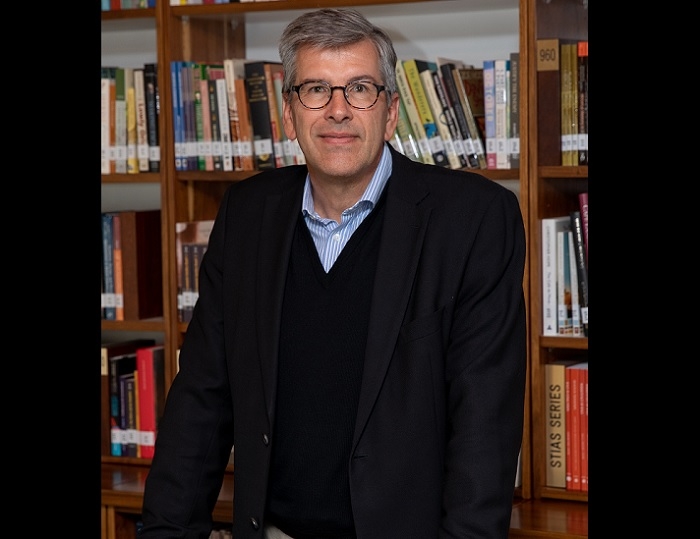
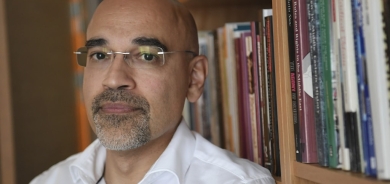
Dr. Cedric de Coning is a distinguished Research Professor within the Peace, Conflict and Development Research Group at the Norwegian Institute of International Affairs (NUPI). He co-directs the NUPI Center on United Nations and Global Governance and leads the Climate, Peace and Security Risk project. He also coordinates the Effectiveness of Peace Operations Network (EPON) and contributes significantly to the UN Peace Operations project and NUPI’s Training for Peace programme. Additionally, he serves as a Senior Advisor for the African Centre for the Constructive Resolution of Disputes (ACCORD)
Gulan: Currently, in several parts of the world, ongoing wars persist. In the Middle East, there is both an intense interstate conflict and internal wars. Meanwhile, the United Nations merely observes these wars. At present, the central figure influencing these wars is Donald Trump. How do you see the future of the Middle East? Is it possible to predict that the region might return to stability once again?
Dr. Cedric de Coning: If we are serious about preventing and ending conflict, our strategies must shift from crisis management to the proactive, systematic construction of positive, resilient peace systems.
Why? Because studying societies that remain peaceful under stress reveal that they have developed and maintain a system of intergroup reciprocity.
Implication? To sustain peace, societies must intentionally engineer and cultivate positive reciprocity networks - not wait for conflict to emerge before they start to invest in peace.
The aim of Adaptive Peacebuilding is to facilitate the emergence of social institutions and networks - in other words, formal and informal state and local community groups and civil society organisations, including religious, sport and cultural groupings and networks - that proactively promote social cohesion, public trust, tolerance and proactive conflict resolution.
The decline in public trust, social cohesion and democracy that we are witnessing in many of our countries, has come about because we have lost this knowledge and took peace for granted.
What we are (re)learning now is that for peace to be sustained we need to intentionally invest in, and nurture social institutions that promote tolerance of diversity of opinion, religious beliefs, cultural practices, etc. in ways that build social cohesion and trust.
It also means we need to disincentives negative social behavior, and where needed disrupt the emergence of groupings that promote bigotry, intolerance and hate.
Peace is not something that is relevant only for countries at war, or that are suffering from conflict. Investing in peace is what is needed in every country - including especially those that are relatively prosperous and democratic.
What is happening in the United States is a reminder to all of us of how fragile our peace is, and why it is important to keep investing in those values and institutions that sustain peace.
I don’t agree that the UN merely observes. In some cases, eg Lebanon and Cyprus, UN peacekeepers have a mandate to do that because that is what all the key stakeholders have agreed would be useful – that a neutral third party builds trust in a ceasefire by helping to implement the agreement through observation. However, even in those cases they do much more than just observe. They facilitate and build trust by gathering and sharing information and by organizing processes where the parties can meet to deal with alleged breaches of the agreement, etc. It is unrealistic to expect that the UN can deploy a peacekeeping force that can be stronger than the warring parties and use force to keep the peace. That is like fighting fire with fire. You don’t build or keep the peace on a philosophy based on the strongest rules, and thus the UN has to be the strongest.
What the UN is doing in all the countries you mention is alleviate suffering and preventing deaths through humanitarian assistance. Support to people that are displaced or who have become refugees. Invest in education and health and help with improving governance. Help to mitigate and adapt against climate change, and help with mediation, peace processes, national dialogues, etc.
But the UN and other outside actors can only help. It is always up to the people affected to make the real difference in their own lives and societies.
Gulan: From the beginning of his campaign, Donald Trump pledged that the war between Russia and Ukraine must end. However, that war continues, and each day it becomes bloodier. To what extent will the continuation of this war impact the global system, and to what extent might it lead to another period of global instability?and also In 2003, the United States overthrew Saddam Hussein’s regime in Iraq. However, it failed to bring peace and democracy to the country, and now Iraq is engulfed in sectarian and religious conflict. In this unstable region of the Middle East, where do you think Iraq’s fate is heading?
Dr. Cedric de Coning: The wars in Ukraine, Gaza and elsewhere are symptoms of the changing global order we are now living through. Opportunists fill the power vacuum by pursuing their own interests in ways they were not able to do before. This period of turbulence and insecurity will persist for the foreseeable future, perhaps several decades, until some new order emerges. Our focus thus must be on how best to navigate this period of uncertainty. I have written about that here:
Gulan: During the war against the terrorist group ISIS, many people became victims of genocide at the hands of those terrorists, among them the Yazidi Kurds. Although the war ended and the ISIS caliphate collapsed, the United Nations has not yet been able to return the displaced to their homes, identify the missing, or even exhume and document mass graves. At this point, what can be done at the international level for the Yazidi victims?
Dr. Cedric de Coning: We have just published a new book that may have some suggestions: Resilience, Peacebuilding, and Preventing Violent Extremism: A Complex Systems Perspective on Sustaining Peace
Our new book offers a comprehensive analysis of the complex drivers of violent extremism, along with recommendations for strengthening social and institutional resilience through peacebuilding and development efforts.
By presenting a theoretical and empirical argument that places the emphasis on social cohesion, resilience, and adaptive peacebuilding, this book challenges the conventional security-led approach to countering violent extremism.
Through a range of case studies from Africa, Asia, and the Middle East, including Syria, Iraq, Mozambique, Niger, Sri Lanka, and the Philippines, it explores the complex dynamics of violent extremism and the ways in which it can be prevented and countered.
Drawing on complexity theory and adaptive peacebuilding, the volume provides insights into how complex social systems adapt and respond to stress, and how peacebuilders can support societies in uncertain, volatile, and unpredictable contexts by improving their resilience and their adaptive capacity to sustain peace.
Gulan: Before the eyes of the entire world, the residents of Gaza have reached a level of devastation where mass deaths of women and children have become a threat. How much longer will the world remain silent in the face of Israeli attacks on civilian populations?
Dr. Cedric de Coning: What is happening in Gaza is totally unacceptable and in contravention of international law and the basic values of all societies and cultures. However, for the reasons I have explained before – the power vacuum that have come about as a result of the changing global order – we don’t have an international system in place that can stop Israel. It is thus up to individual countries and regional organisations like the African Union and European Union to exert pressure on Israel. Many are doing so, but it is not enough. All we can all do is work together to build a strong coalition of people, organisations and governments to bring an end to the war in Gaza.
Gulan: Without a doubt, the International Criminal Court has labeled Netanyahu as a war criminal, but the United States has rejected the authority of that court and dismissed its decisions. When war crime rulings are disregarded, where does the fate of peace in the world stand?
Dr. Cedric de Coning: For the reasons I have explained before – the power vacuum that have come about as a result of the changing global order – we don’t have an international system in place that can enforce the decisions of the ICC. However, the fact that we have the ICC is already a great step and now we must all support it and other such international agreements and bodies that are attempting to bring about a more just and peaceful world. Pointing out that they are not as effective as we would like is necessary as long as it is part of a process of making them stronger, not as part of a process to deconstruct the progress we have made to bring about international agreement on values and norms of acceptable conduct.