François Burgat: "The Retreat of Western Influence—and of French Influence in Particular—Appears to Be a More Serious Axis of Transformation"
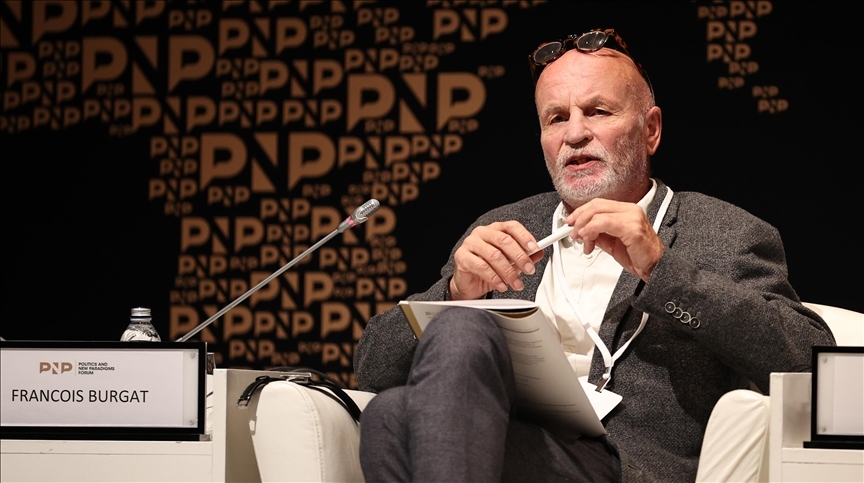
François Burgat is a leading French political scientist and senior research director at CNRS. With over four decades of fieldwork across the Arab world—including Algeria, Egypt, Yemen, Syria, and Lebanon—he is internationally recognized for his work on political Islam and post-colonial power structures. He is the author of Understanding Political Islam and former director of the French Institute for the Near East (IFPO). This interview was originally conducted in French.
GULAN: Syria and Lebanon, two Middle Eastern countries, have long maintained close relations with France. France has consistently played a role in peace initiatives and assistance during times of crisis. Today, however, both countries are in a state of instability. In Syria, the Assad regime has fallen , while in Lebanon, following the weakening of Hezbollah’s armed dominance, the country is facing a major economic crisis and severe political dysfunction. In your view, how is France dealing with the current chaotic situation in Syria and Lebanon, and the broader issues in the Middle East?
François Burgat: Several key considerations must be taken into account to address such a question.
First, it is important to recognize the clear—though rarely acknowledged—break in French policy toward the State of Israel that occurred after President Chirac’s departure. The relative autonomy from the United States and Israel, once maintained by General de Gaulle and, to a lesser extent, by some of his successors, including President Jacques Chirac, came to an end with the arrival of President Sarkozy. Since then, it has remained more a memory than a guiding principle.
Second, it must be kept in mind that French foreign policy today is shaped less by coherent strategic thinking than by domestic electoral considerations. This is largely due to the unprecedented fragmentation of Parliament into three rival blocs, which has deprived the executive of meaningful autonomy. As a result, relations with Palestine—as well as with Algeria—have become domestic political issues, at least as much as, if not more than, matters of foreign policy.
In an effort to solidify his position on the far right, Interior Minister Bruno Retailleau—a candidate to succeed President Macron—has leaned into old colonial resentments, particularly among those nostalgic for "French Algeria," through inflammatory rhetoric. Unfortunately, the same dynamic applies to the Palestinian issue and broader Middle Eastern policy. Unwavering support for Israel is driven less by an objective assessment of the parties’ claims, in line with international law, than by the rising wave of Islamophobia within French society.
Structurally, France’s relations not only with the Middle East but with the broader Global South have lost much of the distinctiveness they once had under Charles de Gaulle’s Third World-oriented diplomacy. Finally, the Syrian crisis serves as a prime example of French diplomacy’s marginalization—supplanted by the influence of Russia and regional actors such as Turkey, Iran, and at times, Saudi Arabia, once considered secondary players.
GULAN: Since the establishment of the Islamic Republic of Iran in 1979, Iran and Israel have never engaged in direct warfare. But as we witnessed during the 12-day war, a significant direct conflict took place. At the same time, Hamas, Hezbollah, and the Houthis launched attacks, and Israel intensified military strikes against Syrian regime sites. In light of these recent events, do you think a new Middle East is emerging? Or are we witnessing a major regional shift that may eventually dismantle the colonial-era Sykes-Picot borders?
François Burgat: A few observations are in order. To begin with, I do not place much weight on the phrase “New Middle East,” as the region has been in a constant state of transformation over the past fifty years.
What deserves more attention, however, is the lasting significance of Iran’s controversial 2012 decision to support Bashar al-Assad. That move arguably marked the beginning of a “new Middle East,” well before the Abraham Accords, by initiating the fragmentation of the so-called “resistance front” against the State of Israel.
It remains uncertain whether this trend toward normalization will persist and culminate in what appears to be a Pyrrhic victory for the Israeli camp—a scenario that could, indeed, represent a genuine regional shift. Personally, I am not convinced.
Rather, I would suggest that the most substantial and lasting change may lie in the retreat of Western influence more broadly—and of French influence in particular—which appears to be a more serious axis of transformation in the near future.
GULAN: After the fall of the so-called Islamic State (ISIS), a major international conference was convened in Baghdad under the initiative of President Emmanuel Macron, aiming to rebuild Iraq and restore essential services, while also promoting reconciliation between the Kurdistan Regional Government and the central government in Baghdad. However, that initiative did not achieve its intended outcomes. Was France not serious enough in its efforts, or was Iraq incapable of overcoming internal divisions and misgovernance ?
François Burgat: Let’s put it more realistically: France no longer has the scale or weight to influence the political dynamics of the Middle East on its own. Any realistic assessment must therefore be made at the level of the European Union—which still holds a degree of influence—or in the context of other major regional players, such as the United States, Russia, China, and Turkey.
GULAN: When the Kurdish question is discussed in the context of the Middle East, France is often described as a close friend of the Kurds—particularly the Kurdistan Region of Iraq. France played a key role in the adoption of UN Security Council Resolution 688 in 1991 for the protection of the Kurds. Following the ISIS attacks on Kurdistan, France strongly supported the Kurdish Peshmerga forces, and President François Hollande visited Erbil. President Macron has also made several visits to the Kurdistan Region. The question here is: to what extent does France maintain its historical commitment to the Kurdish cause?
François Burgat: In my view, we must have the courage to confront the ambivalence of France’s long-standing support for the aspirations of the Kurdish people. These aspirations—at times very sincere—have also, on occasion, been instrumentalized in keeping with an old European practice, and often to the detriment of the Kurds’ own well-understood interests. This has been done by actors whose deeper objectives were not truly—or not solely—“pro-Kurdish,” but sometimes “anti-Arab” or even pro-Israeli. The positions of the French Zionist activist Bernard-Henri Lévy are a clear example of this.
For my part, I believe that France’s stance toward the State of Israel now partly determines the fluctuations in its support for the legitimate aspirations of the Kurdish people.
GULAN: Within the European Union, following the United Kingdom Brexit has increasingly taken a leadership role. This comes at a time when a major war is taking place on European soil—between Russia and Ukraine—the first such conflict of its scale since World War II. Meanwhile, the EU’s positions are often at odds with those of Trump-era U.S. policies. In this context, what can France do to help bring this war to an end?
François Burgat: We must remain clear-eyed and avoid attributing to France a level of influence it no longer holds. In the current domestic context, foreign policy has become something of a refuge for a president who, having lost his parliamentary majority, finds himself largely sidelined from real power.
If there is a glimmer of hope, it lies—somewhat paradoxically—in the extremist drift of the Trump–Netanyahu axis, which has created space for renewed European engagement, and perhaps even French leadership, to fill the universalist vacuum left by the “Make America Great Again” approach.
France’s recent decision to recognize the State of Palestine—an explicit break from the Israeli-American stance—may well signal the beginning of such a shift.